




Repeat Offender Arrested for Attacking NYU Student in Manhattan
In a troubling incident that has sparked renewed concerns about public safety in New York City, 45-year-old James Rizzo was arrested by the NYPD this week after allegedly assaulting a 20-year-old NYU student near the university’s Manhattan campus. The attack, which was caught on surveillance footage and later shared on social media by the victim, Amelia Lewis, occurred around 9:20 a.m. on Monday as Lewis was walking to her morning class. According to police reports, Rizzo approached Lewis from behind, slapped her head and buttocks, yanked her hair, and threw her to the ground before fleeing the scene. What makes this case particularly alarming is Rizzo’s extensive criminal history—he had been arrested 16 times before this incident, with charges including sexual abuse, forcible touching, assault on women, and burglary. Perhaps most concerning is that Rizzo was on active parole at the time of the attack, having been released just last September after serving a two-year sentence for persistent sexual abuse.
The victim’s account of the attack paints a vivid picture of the sudden, unprovoked nature of the assault. “When I turned around, I saw this old, White guy, and, like right when I turned around, he like grabbed my hair like this and like yanked me and threw me to the ground,” Lewis recounted in her social media posts. Surveillance footage from a nearby liquor store, obtained by one of Lewis’s friends, captured the moment of the attack and showed several young women coming to her aid after she was knocked down. Lewis described her attacker as a tall man with long brown hair and beard, wearing gray sweatpants, a black puffer jacket, and a blue towel around his neck. After the incident, she promptly reported it to NYU security, who forwarded the evidence to police, ultimately leading to Rizzo’s arrest and charges of persistent sexual abuse, forcible touching, and assault.
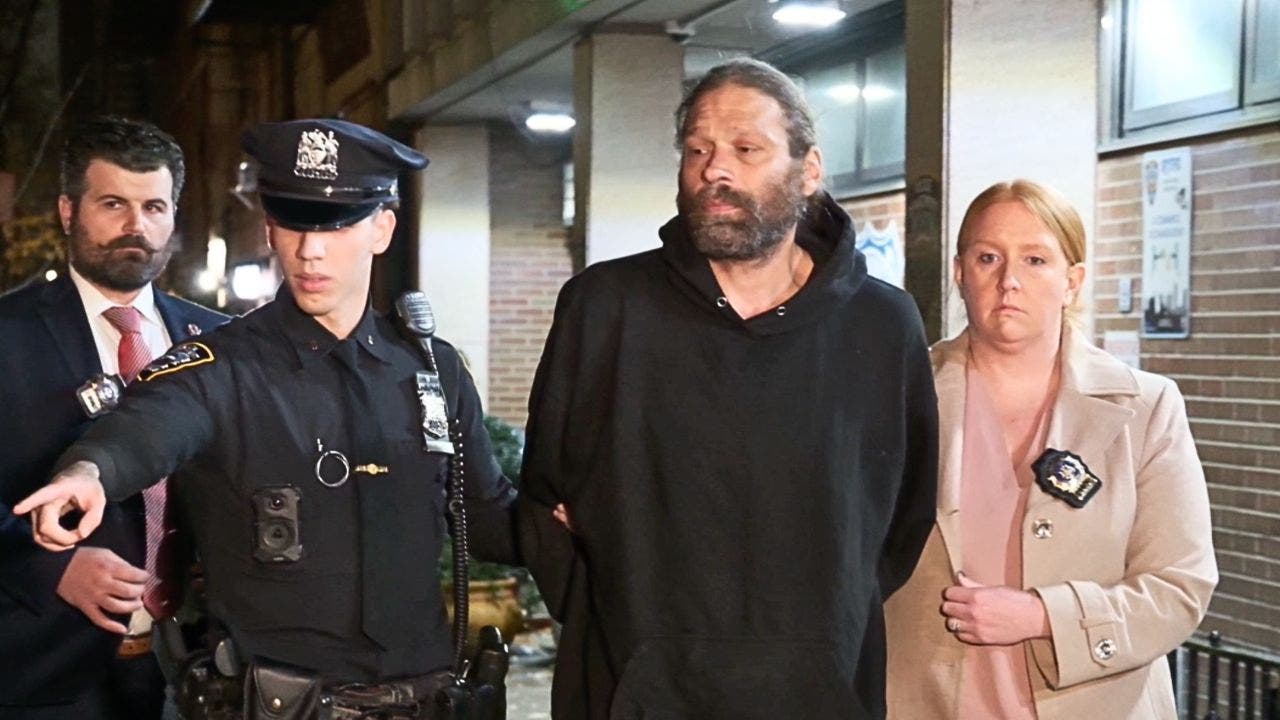
The aftermath of the attack was documented when Rizzo was “perp-walked” out of a Manhattan police precinct on Tuesday evening, dressed in a black hoodie and gray sweatpants. As reporters shouted questions, he remained silent while being escorted to a police vehicle. This public display of his arrest came as small comfort to the victim and the NYU community, who were shaken by the brazen daylight assault. John Beckman, an NYU spokesperson, stated, “The University is pleased that a suspect has been apprehended in the attack on one of its students that took place Monday morning on a Broadway sidewalk. We take this incident very seriously.” Beckman added that the university continues to offer support to Lewis while their Campus Safety Department assisted with the police investigation.
For Lewis, the attack has transformed her perception of safety in the city where she attends college. In her social media posts, she expressed not just shock but profound anger at the conditions that allowed such an incident to occur. “I just really want to emphasize how not OK this is. I am a student at NYU. I should not be scared to be walking the street to go to my 9:30 a.m. class,” she declared passionately. Her frustration was compounded by information suggesting that Rizzo may have committed similar attacks in the recent past. “I’m honestly still in shock, but I’m more enraged that things like this are able to happen in this city, and we really need to do something about it because this is unacceptable,” she continued, her words resonating with many other young women who navigate urban spaces with a constant awareness of potential threats.
The case highlights ongoing concerns about public safety in New York City and the effectiveness of the criminal justice system in dealing with repeat offenders. Rizzo’s extensive criminal history and the fact that he allegedly committed this assault while on parole raise serious questions about supervision and rehabilitation of offenders with patterns of violent or sexual misconduct. While details about his previous 1997 murder arrest mentioned in reports remain unclear—state prison records show no murder conviction—the pattern of sexual abuse and assault charges paints a picture of an individual who has repeatedly endangered women in public spaces. This reality underscores the challenges faced by law enforcement and the justice system in balancing offender rights with public safety, especially when dealing with individuals who demonstrate persistent dangerous behavior.
Lewis concluded her social media statements with a political observation that reflects the growing frustration many New Yorkers feel regarding public safety: “This just shows that you really need to reflect on who you’re voting for and supporting right now because New York needs help, and we’re just not getting the help we need, and this is crazy.” Her comments tap into broader debates about criminal justice policies, bail reform, and how to address the complex factors that contribute to street violence. While city officials and police continue to grapple with these challenges, cases like Lewis’s serve as stark reminders of the human impact of crime and the fundamental expectation of residents to feel safe in their communities. For now, the NYU community and Lewis herself are left processing not just the physical attack, but the psychological aftermath of a violent encounter that transformed an ordinary walk to class into a traumatic experience that has rippled through social media and renewed conversations about women’s safety in urban America.