





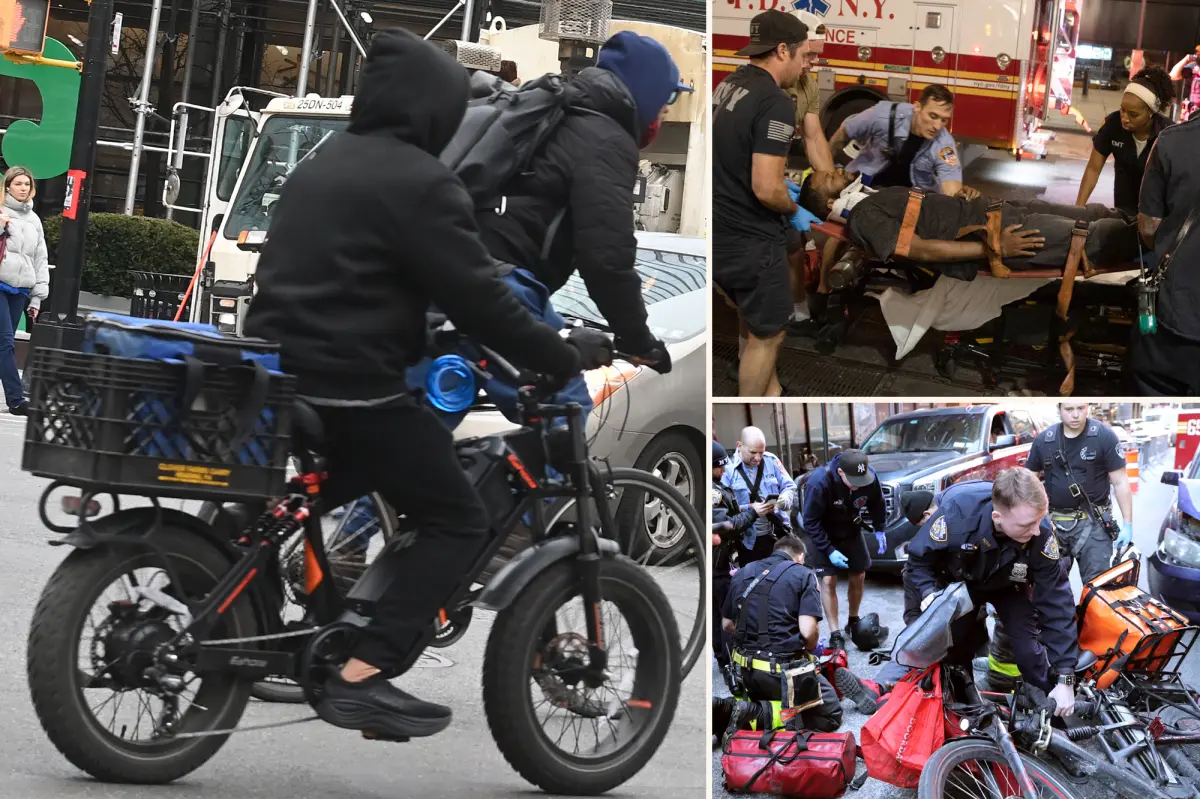
Imagine strolling down a bustling New York City sidewalk on a crisp autumn morning, the air filled with the hum of coffee vendors and the chatter of pedestrians weaving through the crowded streets. You’ve got your phone in hand, perhaps glancing at emails or scrolling through social media, when suddenly—a blur of speed, a deafening whir, and chaos shatters the moment. An e-bike zooms by at reckless speeds, clipping a cyclist or worse, sending someone sprawling onto the pavement. Scenarios like this have become all too commonplace in the Big Apple, thanks to a surge in electric bikes that has turned our shared urban spaces into potential battlegrounds. Alarming data paints a grim picture of this growing crisis, where e-bikes aren’t just convenient rides but hazards that have escalated into a public safety nightmare. And now, Mayor Eric Mamdani is about to make things even worse by announcing on March 27 that the city will end its crackdown on reckless e-bike drivers—a decision critics are calling outright disastrous for pedestrians, riders, and everyone in between. It’s a policy shift that feels like throwing open the doors to an out-of-control party, where accountability is checked at the curb.
Diving deeper into the heartbreak of these statistics reveals a timeline of tragedy that’s hard to ignore. Back in 2025, the numbers were staggering: four people were killed outright by e-bikes or e-scooters, with at least another 15 left injured—victims including unsuspecting pedestrians who never saw it coming. Compounding this, 16 e-bike riders lost their lives in crashes that year, according to New York City’s Department of Transportation. Fast-forwarding or backwarding slightly to 2024, the pattern holds: two pedestrians were fatally run down, and 78 others were hurt, while 17 riders perished. In 2023, it was the deadliest year for city cyclists since 1999, with 30 cycling fatalities—23 of them involving e-bikes—and two pedestrians killed and 95 injured. These aren’t just cold figures on a spreadsheet; they’re stories of families shattered, lives upended by split-second decisions that turn a routine commute into a nightmare. Picture a grandmother crossing the street with groceries, or a kid zipping to school, only for an e-bike to change everything forever. The human cost is immeasurable, leaving communities mourning and questioning why our streets have become so perilous.
Adding fuel to the fire, data from Councilman Frank Moreno’s office shows e-bike crashes surged by a whopping 21.5% between 2024 and 2025, jumping from 330 incidents to 401. But strikingly, the Department of Transportation brushes off the severity, claiming e-bikes aren’t a major threat. Their spokesperson insists that of the 9,088 total pedestrian injuries in 2025, only 113—about 1.2%—were linked to e-bike mishaps, framing it as a “tiny fraction.” This dismissal feels almost callous to those who’ve lived through the terror, like pedestrians who’ve had their ankles smashed or witnessed friends hospitalized. Imagine a quiet park bench where folks gather for a chat—now interrupted by speeding bikes that ignore signals and sidewalks, creating an environment of constant vigilance and fear. Critics argue that this minimization ignores the rising tide of reports, where every buzz and brake screech echoes louder in the minds of those who’ve escaped narrow misses. It’s not just about percentages; it’s about the lived reality of dodging danger daily in a city that should prioritize safety above all.
Janet Schroeder, co-founder and director of the NYC E-Vehicle Safety Alliance, cuts through the rosy assurances with a dose of raw honesty. “There are no accurate stats,” she told The Post, a sentiment that resonates deeply because it acknowledges the gap between official reports and the messy truth on the ground. “Not even the cops know,” she adds, highlighting how the absence of licenses, plates, or registration makes it nearly impossible to track reckless drivers. Without these basic requirements, e-bikes operate in a legal gray zone, allowing speed demons to vanish into the crowd after a hit-and-run or dangerous weave. Think about a parent picking up their child from school, only to see a masked rider blow through a crosswalk without consequences, leaving victims to plead for accountability that never comes. Schroeder’s alliance underscores a broader frustration: how can we protect our streets when we can’t even identify who’s driving these machines? It’s a call for transparency in a system that’s failing, where the lack of oversight empowers the irresponsible and endangers the innocent, turning everyday outings into risky gambles.
Representing that grassroots outrage is the NYC E-Vehicle Safety Alliance itself, a coalition of 1,500 New Yorkers who’ve had enough of the mayhem. Among them, 119 are personal victims of careless e-bike riders, and shockingly, 113 of those incidents involved hit-and-runs—scrapes with impunity that leave deep emotional scars. These aren’t faceless dots on a map; they’re teachers, retirees, everyday folks like you and me who’ve been sideswiped while grocery shopping or walking the dog. The alliances’ members share harrowing tales of recovery, bills piling up, and a shattered sense of security in their own neighborhood. For instance, one member recounts nearly losing their life when an e-bike barreled through a red light, leaving them with broken bones and nightmares of what if. It’s this collective voice that’s pushing back against policies that seem to favor the machine over the human, demanding reforms that treat e-bikes not as toys but as accountable parts of our road community.
In a sharp rebuke, the NYC E-Vehicle Safety Alliance directly challenged Mayor Mamdani’s assurance that his changes would “ensure that cyclists and e-bike riders are treated like others on the road.” Waving the mayor’s March 18 statement in the air, they argue it’s a hollow promise built on inequities. “If this was truly the case, e-bikes would be required to have a license, registration, a visible plate, and carry insurance—they have none of the above, but should!” the group declared in their statement. This isn’t just about rules; it’s about equality and fairness in a city where pedestrians and licensed drivers bear the brunt of risks while e-bike users zip off scott-free. Imagine a taxi driver getting pulled over without credentials or a car insurer denying coverage for unregistered vehicles—yet for e-bikes, the bar is set absurdly low, perpetuating a double standard that undermines trust in our urban fabric. The alliance envisions a future where e-bikes integrate safely, with riders held to the same standards as anyone else behind the wheel, turning potential chaos into a harmonious blend of technology and responsibility. Without it, we’re left with a status quo that’s not just reckless—it’s downright unlivable. All of this begs the question: when will our leaders listen to the victims and alter course before more lives are claimed by the unrelenting buzz on our streets?