




Waffle House Closures Signal Severe Winter Storm’s Impact Across the South
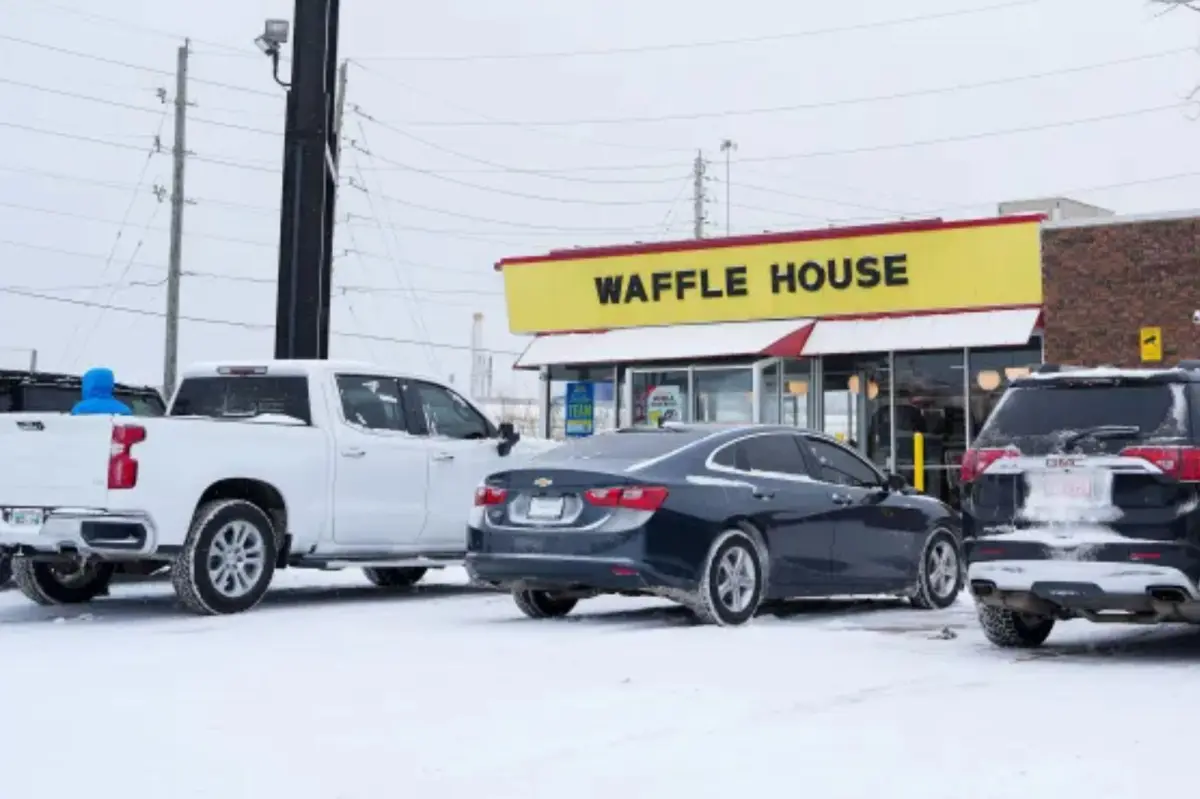
In an unprecedented move that speaks volumes about the severity of Winter Storm Fern, Waffle House locations across the American South have temporarily closed their doors—a rare occurrence that has shocked both customers and employees alike. Known for their unwavering commitment to remain open through hurricanes, floods, and other natural disasters, the iconic 24-hour breakfast chain’s decision to shutter multiple locations represents a powerful warning about the dangerous weather system currently sweeping across the country. From South Carolina to Mississippi, these closures have triggered what insiders call a “Code Red” on the famous “Waffle House Index,” an informal but respected measure used by emergency management officials to gauge a disaster’s severity. When Waffle House closes, experienced emergency responders know the situation is truly serious.
The significance of these closures cannot be overstated, particularly in South Carolina, where Winter Storm Fern has prompted the state’s first ice storm warning since 2005. Longtime employees expressed their astonishment at the preemptive shutdowns, with one Greenville waitress noting that in her nearly ten years of service, she had never witnessed the restaurant close ahead of weather events—not even during hurricane seasons that regularly batter the Palmetto State. Similarly, a Georgia employee described the early closure as “insane,” highlighting that in her five years with the company, this marked the first time she had seen the chain close early due to weather conditions. These reactions from veteran staff members underscore just how unusual and concerning these closures are for communities that have come to rely on Waffle House as a constant through difficult times.
The Waffle House Index has evolved from industry inside knowledge to become a legitimate tool used by the Federal Emergency Management Agency (FEMA) to evaluate disaster impacts. Former FEMA Administrator Craig Fugate developed this informal scale: “green” indicates a restaurant operating with a full menu (business as usual), “yellow” signals a limited menu (indicating some supply or power issues), and “red” means complete closure—the most alarming designation that suggests truly catastrophic conditions. The current widespread “red” status across multiple states serves as a sobering indication of Winter Storm Fern’s potential impact. In Mississippi, four Waffle House locations in Vicksburg closed Saturday after officials urged residents to remain indoors after 5 p.m., citing dangerous ice conditions and extremely low temperatures that threatened public safety. Tennessee saw similar closures, with at least one location in Murfreesboro posting a notice that it would remain closed until Sunday morning.
What makes these closures particularly noteworthy is Waffle House’s legendary reputation for operational resilience. The chain has built its brand partly on the promise of round-the-clock service, regardless of external circumstances. This commitment to remaining open during crises has made Waffle House something of a community landmark during difficult times—a place where people can find hot food, electricity, and a sense of normalcy when everything else seems uncertain. The company maintains specialized storm response teams and has established supply chains designed to function during emergencies. They typically deploy generators, bring in extra staff from unaffected regions, and operate with limited menus rather than closing entirely. For many Southern communities, seeing a Waffle House close is more alarming than official emergency declarations because it contradicts decades of operational precedent.
The current closures come as meteorologists describe Winter Storm Fern as a “widespread, potentially catastrophic event” threatening a vast swath of the country from Texas to the Carolinas. The storm system brings a dangerous combination of freezing rain, ice accumulation, snow, and historically low temperatures to regions typically unprepared for such severe winter weather. Infrastructure in many Southern states isn’t designed to withstand these conditions, making power outages, water system failures, and transportation disruptions highly likely. The decision by Waffle House management to close preemptively reflects their assessment that employee and customer safety concerns outweigh their traditional commitment to continuous operation—a calculation they rarely make and one that should serve as a clear warning to residents in affected areas.
As communities across the South brace for Winter Storm Fern’s full impact, the closed Waffle Houses stand as stark reminders of the storm’s severity. These shuttered diners—normally buzzing with activity at all hours—symbolize the exceptional nature of the current weather emergency. While some locations have indicated plans to reopen as soon as conditions permit, the very fact of their closure speaks volumes about what emergency management officials and meteorologists have been warning: this is not an ordinary winter storm, but rather a potentially historic weather event requiring extraordinary precautions. As one employee noted in a simple but poignant message to the public: “Stay safe everyone!” In the coming days, as the full extent of Winter Storm Fern’s impact becomes clear, the Waffle House Index will likely remain a surprisingly accurate barometer of just how severely communities across the South have been affected by this unusually powerful winter system.