




The Complexities of Luigi Mangione’s Arrest and Evidence Challenges
Recent hearings in New York have put a spotlight on Luigi Mangione’s arrest in Pennsylvania and the evidence collected during that process. His defense team is working diligently to have certain evidence excluded from his upcoming trial for the alleged murder of UnitedHealthcare CEO Brian Thompson. The hearings have specifically focused on the warrantless search of Mangione’s backpack and questions about when he was read his Miranda rights—both critical elements that could significantly impact the prosecution’s case.
Former federal prosecutor Neama Rahmani offered insights on the legal implications, suggesting that prosecutors have strong grounds to argue that both the backpack search and Miranda rights procedures were conducted lawfully. “I agree with prosecutors in this case that it was a legal search,” Rahmani explained, pointing to established exceptions to search warrant requirements. “As long as there was probable cause for an arrest, law enforcement can search anything within Mangione’s wingspan.” However, Rahmani cautioned that if Judge Gregory Carro rules against the prosecution and excludes the backpack evidence, it could be “very damaging” or even “potentially fatal” to their case, forcing them to rely solely on other evidence such as video footage, DNA, eyewitness accounts, and fingerprints.
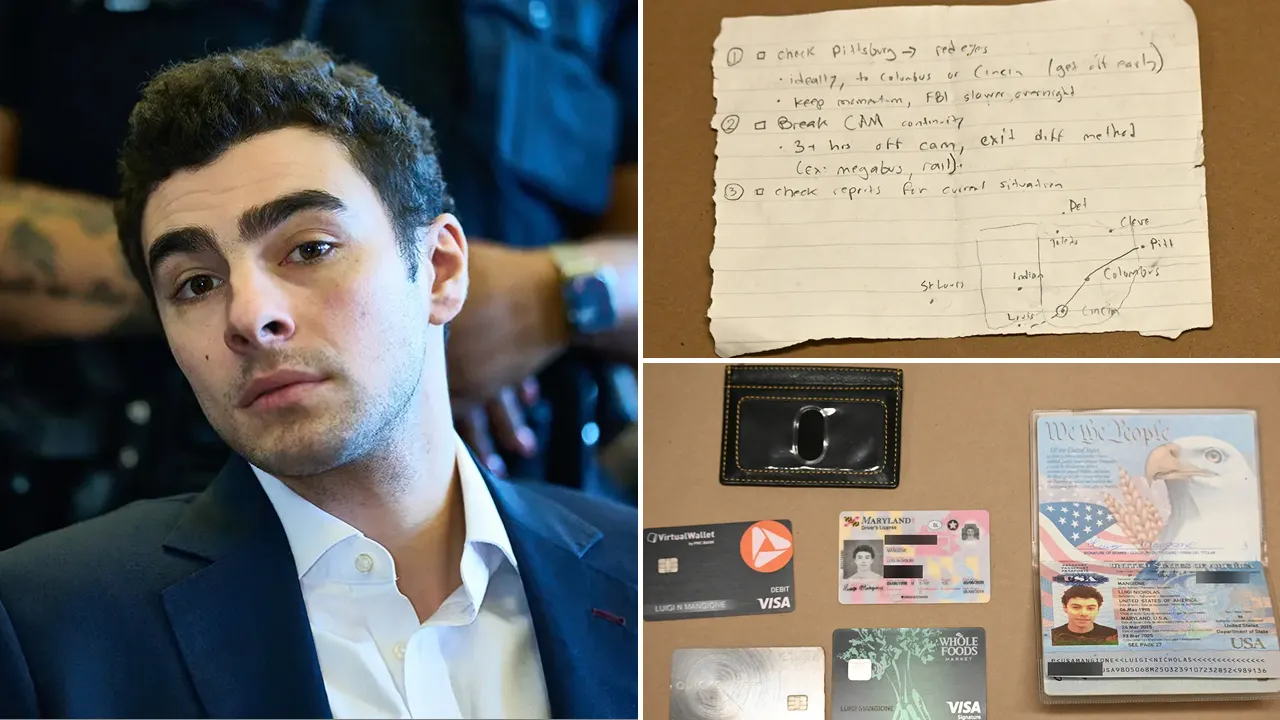
The contents of Mangione’s backpack and pockets have become central to the case. When police searched his belongings, they discovered several notable items: a map containing what appeared to be an escape plan detailing travel from Pittsburgh to Cincinnati, a handgun and multi-tool pocketknife, identification and banking cards, personal hygiene products, and a notebook with flash drives. These items could provide crucial context for the prosecution’s narrative about Mangione’s alleged intentions and actions surrounding the time of Brian Thompson’s murder. The defense’s challenge to the admissibility of these items underscores their potential significance to the case.
Body camera footage presented in court revealed the tense interaction between Mangione and police before his arrest at a McDonald’s in Altoona, Pennsylvania on December 9, 2024. The encounter began when a McDonald’s manager called 911, reporting a customer who resembled “the CEO shooter from New York.” When approached by officers, Mangione identified himself as “Mark Rosario” and presented false identification. The footage shows the moment when Officer Stephen Fox confronted him about the deception, asking, “Why are you lying about your name?” to which Mangione responded, “I clearly shouldn’t have.” Fox testified that during the interaction, he felt “uneasy” while patting Mangione down, noting the suspect’s unusual posture and lack of eye contact. These behavioral cues, combined with the false identification, led to Mangione’s arrest on charges related to using fake identification.
Police testimony regarding the search of Mangione’s backpack highlighted conflicting interpretations of search and seizure law. Altoona Police Lt. William Hanelly claimed that a warrant exception applied because Mangione was already under arrest for a crime. This perspective was captured in body camera footage when one officer suggested, “We probably need a search warrant at this point,” and another responded, “It doesn’t matter. He is under arrest for a crime here, so we can search.” During this search, Officer Christy Wasser discovered wet underwear in Mangione’s backpack with a magazine containing bullets hidden inside. Upon finding this evidence, someone can be heard on the recording saying, “It’s f—— him,” suggesting officers believed they had found incriminating evidence. This moment has become a key point of contention, with defense attorney Karen Friedman Agnifilo arguing that the backpack search was conducted illegally.
The timing of Miranda rights advisement has emerged as another significant challenge from the defense team. Officer Fox testified that he intentionally delayed telling Mangione he was in custody in order to encourage the suspect to continue talking—a strategy that raises important questions about police procedure and constitutional protections. The defense contends that this delay violated Mangione’s rights, potentially rendering subsequent statements inadmissible. As the hearings continue, Judge Carro’s rulings on these evidentiary matters will significantly shape the landscape of Mangione’s upcoming murder trial, determining which pieces of evidence jurors will be permitted to consider when evaluating the case against the accused killer of UnitedHealthcare CEO Brian Thompson.