







The Sudden Shock of a December Morning
It was a crisp December morning in New York City, where the hustle of Manhattan never truly pauses. Brian Thompson, the esteemed CEO of UnitedHealthCare, was fresh off a day filled with meetings and mergers, a man who had climbed the corporate ladder through sheer determination and sharp intellect. He had revolutionized healthcare in ways that touched millions of lives, offering insurance plans that provided hope to families in their darkest times. But on December 4, 2024, as Thompson stepped out onto the sidewalk outside a midtown hotel, his world—and the lives of those who knew him—shattered in an instant. Surveillance cameras captured the horrifying scene: a shadowed figure approached from behind, almost like a ghost in the urban chaos, and unleashed a barrage of gunfire. Thompson staggered, multiple bullets tearing through his body, and collapsed on the cold concrete. The attacker, later revealed as 27-year-old Luigi Mangione from Towson, Maryland, didn’t linger. He fled on a bicycle, pedaling furiously uptown, disappearing into the city’s veins like a rat in the sewer.
Eyewitnesses froze in shock, some screaming, others scrambling for cover. Ambulances blared sirens to the scene, medics fighting desperately to save Thompson, but the wounds were fatal. News outlets exploded with the story, painting a portrait of a man who was more than a CEO—he was a husband, a father to two young daughters, a philanthropist who donated millions to cancer research, honoring his own late sister who succumbed to the disease. His family, cocooned in grief, issued statements begging for justice, while the community grappled with the senseless violence that echoed the city’s underbelly of desperation and despair. Mangione, with no prior criminal record beyond some unresolved matters, was arrested days later, his face plastered across screens as the accused, a young man who had been battling mental health struggles and harboring grievances against corporate giants he blamed for societal ills. The shooting wasn’t random; it was calculated, a chilling crime that raised questions about stalking, obsession, and the thin line between anger and action.
A Narrow Escape from the Gallows
As the legal gears turned, the nation watched. Luigi Mangione faced the gravest of consequences: the death penalty under federal law, a specter that loomed large in high-profile killings. Prosecutors had charged him with murder using a firearm, a charge eligible for capital punishment if certain conditions were met. But in a surprising twist, U.S. District Judge Margaret Garnett ruled in late January that the federal murder charge would be dismissed, striking down the death penalty aspect. Federal prosecutors, honoring the precedent set by the Supreme Court, announced they wouldn’t appeal. This decision spared Mangione’s life, at least in the federal arena, and shifted the focus to remaining charges that still carried severe penalties. It was a legal victory for Mangione, his defense team arguing that the charge didn’t hold up under stringent evaluations, yet it left a bitter taste for Thompson’s family, who felt robbed of the ultimate retribution.
Delving deeper, Judge Garnett’s ruling was grounded in evolving interpretations of law. She explained that to label the act as murder involving a firearm, there needed to be an underlying crime of violence that matched the prosecution’s narrative. However, bound by Supreme Court rulings from the past two decades, courts must now hypothetically consider the “least serious” conduct the crime could entail, even if far removed from the actual events. In Mangione’s case, the judge found that stalking alone—absent the killing—could be seen in a less violent light, thus invalidating the death-eligible charge. This judicial journey, as Garnett called it, neutered the prosecutors’ hands, forcing them to retreat. For Mangione, it was a lifeline amidst the storm, but public opinion raged, with commentators decrying it as another example of how legal technicalities protect the guilty while victims’ loved ones endure endless heartache.
The Shadows of Stalking and a Mother’s Words
Still looming over Mangione were two federal stalking charges, specific to events surrounding Thompson’s shooting. Jury selection for this trial was set for September 8, with opening statements slated for October—a drawn-out process that would peel back layers of Mangione’s psyche. Prosecutors alleged that Mangione had obsessively tracked Thompson, perhaps fueled by conspiratorial views online where he ranted against healthcare giants accused of profiting from sickness. In a related and intriguing development, a police sergeant testified in court, denying claims that he overheard Mangione’s mother making a damning statement about the CEO’s killing—an allegation that, if true, could have painted a familial web of culpability. The mother’s denial, or the lack of corroboration, added a personal dimension, humanizing the cold facts: a family entangled in tragedy, where one son’s actions could tarnish a mother’s legacy.
This skirmish highlighted the emotional toll on all sides. Mangione’s parents, residents of a quiet Maryland suburb, appeared shattered in interviews, defending their son as troubled but not malicious, hinting at undiagnosed mental health issues exacerbated by isolation during the pandemic. They described a bright child who drifted into anger, perhaps radicalized by fringe forums promoting anti-establishment ideologies. Thompson’s widow, meanwhile, spoke poignantly about the loss of a partner who awoke at dawn to check on their sleeping girls, a man whose legacy now included random violence. The victim’s friends recounted stories of Thompson’s generosity—funding scholarships for underprivileged youth, organizing charity runs for medical causes. Amidst this, the stalking trial promised to delve into digital footprints: hacked emails, social media posts, and the eerie trail Mangione left behind, including manifestos that justified his actions as righteous, albeit delusional, rebellion against corporate America.
The Grainy Footage of Madness
The surveillance video, grainy yet undeniable, became the grim centerpiece of the investigation. It showed Thompson, bundled against the winter chill, engrossed in his phone near the hotel entrance. The gunman—Mangione, as confirmed later—approached stealthily, his bike leaned against a wall nearby. In those heart-stopping seconds, he drew the weapon, fired point-blank, and vanished into the pedestrian throng. Ironically, Mangione’s flight on bicycle was captured again, weaving through traffic as if part of an escape movie. This wasn’t a botched robbery; it was premeditated murder, investigators concluded, with the weapon traced to Mangione’s possession and residue matching the crime scene.
Yet, behind the pixels lay human stories of paranoia and planning. Mangione had reportedly traveled to New York days before, stalking Thompson at events and hotels, his movements tracked via credit cards and street cams. Police pieced together a timeline: online rants where Mangione accused UnitedHealthCare of denying treatments for profit, culminating in a manifesto posted anonymously that mirrored his worldview. For Thompson’s family, watching the video was torture, reliving the final moments through tears. Friends described Thompson as vigilant—carrying a panic button post-threat—but on that fateful day, complacency won. The footage sparked debates on gun control, mental health resources, and the erosion of privacy in an over-surveilled age, where every step is recorded but safety remains elusive.
Dual Trials and a Plea of Innocence
Mangione’s legal odyssey continued with a separate state murder trial slated for June, where he pleaded not guilty to Thompson’s killing. This proceeding, in stark contrast to the federal one, allowed prosecutors to push for life imprisonment without parole, unburdened by death penalty complications. His defense maintained innocence, painting Mangione as unstable but not murderous, perhaps framing the shooting as an impulsive act born from delusion rather than malice. Despite no prior felonies, experts testified to Mangione’s descent into conspiracy theories, exacerbated by loneliness and untreated disorders. The juxtaposition of trials—federal for stalking, state for murder—highlighted how one man’s choices splintered justice into multiple arenas.
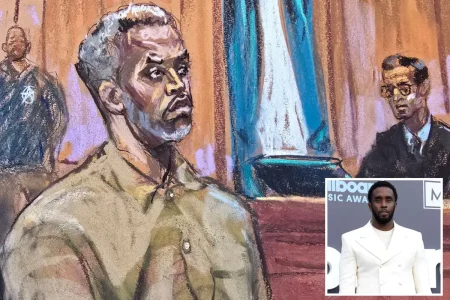
In court sketches, Mangione appeared gaunt, his youthful face etched with worry, as attorneys from both sides lobbed arguments. The prosecution portrayed him as a cunning predator, armed with knowledge of Thompson’s routines. The defense countered with mitigating factors: a troubled upbringing, isolation, and cries for help ignored by the system. Thompson’s relatives, seating themselves daily, sought closure, their statements weaving tales of lost potential—a man whose innovations saved lives, now a statistic. This dual path promised prolonged anguish, with media circuses amplifying every ruling, yet it also underscored the resilience of the judicial system in probing truth amid chaos.
Reflections on a Shattered Landscape
As the dust settles on the federal dismissal, broader implications ripple through society. Mangione’s case reignites discussions on capital punishment’s efficacy, with advocates arguing it’s a deterrent that failed here, while opponents highlight fiscal burdens and miscarriages of justice. For families like the Thompsons, healing feels distant; they channel grief into advocacy for gun reform and mental health funding. Mangione, awaiting trials, represents a generation grappling with economic disparity and online extremism, where grievances bubble into violence. His mother’s alleged words, or lack thereof, add layers—did familial whispers influence a son’s rage, or was it solitary descent?
Looking ahead, the trials will dissect motives, with expert witnesses speculating on provocation. Yet, human elements prevail: Mangione’s loneliness echoed in empty online histories, Thompson’s compassion in charitable deeds undone. In this digital era, justice unfolds publicly, from Fox News reporting to streaming deliberations. For real-time updates, you can now listen to Fox News articles, bringing these stories to life with immersive audio. As verdicts loom, one thing’s certain: lives irrevocably changed, society prompting reflection on prevention over punishment. Thompson’s legacy endures in policy reforms he championed, while Mangione’s fate hinges on courtrooms that humanize tragedy, striving for balance in an unbalanced world.