





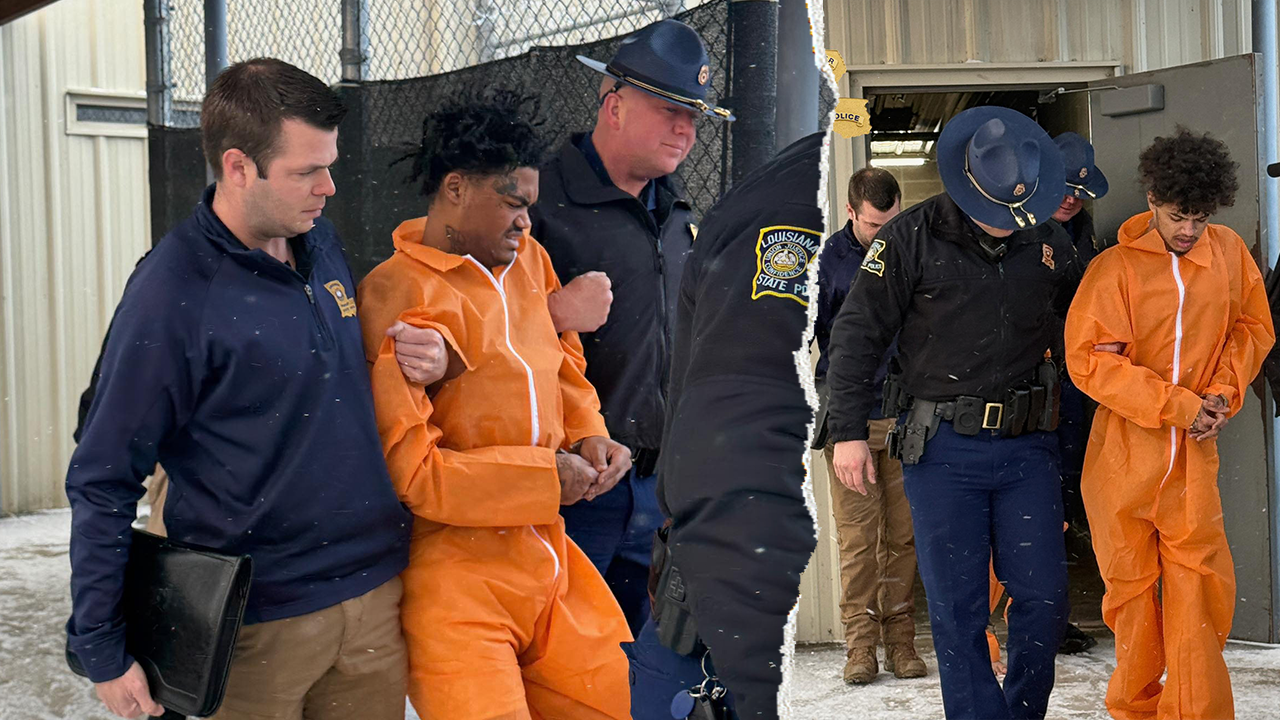
The Shocking Jailbreak in East Carroll Parish
In the quiet, predawn hours of a chilly Friday morning, the Riverbend Detention Center in northeast Louisiana became the scene of a daring and audacious escape that sent shockwaves through the community. At around 1:20 a.m., eight inmates—each labeled as “violent offenders”—sprang free from their confines, vanishing into the night like ghosts slipping through the cracks of an otherwise secure facility. It was a pivotal moment that not only disrupted the peace of rural East Carroll Parish but also tested the limits of law enforcement’s resolve. Picture the scene: a dimly lit correctional facility, perhaps understaffed in the dead of night, where these men—driven by desperation, cunning, or sheer opportunity—overcame whatever barriers held them in place. Authorities would later reveal that three of them faced murder charges, painting a picture of individuals who had already crossed severe lines in their criminal histories. Savion Wheeler, a 31-year-old whose past likely included acts of aggression; Hugo Molina, 27, perhaps haunted by his own demons; Trenton Taplin, 29, a figure shrouded in prior violent exploits. These weren’t mere petty thieves; they were the kind of hardened criminals that make communities lock their doors a little tighter. As word spread, local residents awoke to whispers of fear, wondering if their safe, sleepy town had been infiltrated by dangerous outsiders. The escape wasn’t just a breach; it was a reminder of the fragility of society’s safeguards, highlighting how even fortified institutions can falter against human ingenuity and recklessness. Lawmakers, media outlets, and ordinary folks buzzed with theories—how did they do it? With what tools? Was there inside help? These questions lingered, unresolved, as the chase began, turning what should have been a routine weekend into a statewide emergency. In many ways, this incident humanized the ongoing battle between justice and freedom, showing real people—guards, inmates, and everyday citizens—caught in the throes of a story that felt ripped from the pages of a thriller. It wasn’t just about cages and bars; it was about the human element, the thrill of evasion, the terror of pursuit, and the relentless drive to restore order.
The fugitives’ identities added layers of intrigue and somber reflection to the unfolding drama. Beyond the names already etched into public record were stories of lives derailed, choices made in heat of the moment, and paths that led inexorably to incarceration. Kolin Loney, just 21, represented the stark reality of youth squandered on crime; Kevin Slaughter Jr., at 25, might have been a product of environment, family struggles, or bad influences that steered him toward violence; Destin Brogan, 22, and Krisean Salinas, 21, adolescents thrust into manhood through hardened experiences. Then there was Kopelon Vicknair, the youngest at 19, whose brief life had already intersected with the law in ways that spoke to systemic issues plaguing communities like this—poverty, lack of opportunity, and perhaps a cycle of recidivism that traps generations. These weren’t faceless villains from news clips; they were sons, brothers, maybe fathers, whose actions now put innocent lives at risk. As they scattered into the wilds of northeast Louisiana and beyond—crossing parish lines into places like Ouachita and Madison—their movements became a canvas for fear. Early reports spoke of armed and dangerous individuals on the loose, prompting communities to hunker down, schools to tighten security, and businesses to monitor strangers with extra vigilance. For families in the area, it was a personal ordeal: grandparents recalling old sheriff tales, parents ensuring kids were accounted for, and law-abiding citizens volunteering tips based on vague sightings. One could imagine the adrenaline-fueled discussions around breakfast tables—coffee mugs in hand, locals piecing together rumors from social media. This humanized the event, transforming cold arrests records into narratives of complication and consequence, where each name carried the weight of untold stories, lost potentials, and the ripple effects on those left behind. It underscored a broader truth: behind every headline is a tapestry of human lives, woven with threads of regret, resilience, and the inexorable pull of redemption or ruin.
The manhunt that ensued painted a vivid portrait of collaboration amid chaos, as if the entire state had rallied like a family during crisis. By Friday afternoon, the net was tightening. Four of the escapees—Wheeler, Molina, Taplin, and Salinas—were swiftly apprehended, their brief stints of freedom cut short by sharp-eyed deputies and tireless patrols. For those captured early, the ordeal likely ended in tense standoffs: flashing lights illuminating their hiding spots, shouts of “down on the ground” echoing through deserted fields or abandoned structures. One could picture the scene—sweat-soaked convicts, hearts pounding, darting through underbrush only to be cornered by K-9 units or alerted via AMBER-like alerts. The remaining quartet—Loney, Slaughter, Brogan, and Vicknair—proved more elusive, their evasion a testament to the cunning attributed to such offenders. As Saturday dawned, the final arrests brought a crescendo of relief, with the young runaways hauled into custody and transported to the foreboding Louisiana State Penitentiary in Angola, reuniting with their compatriots in a place synonymous with maximum security. This multi-agency operation wasn’t just efficient; it was a ballet of coordination, involving state troopers under the CREST mission (an elite tactical unit), local sheriffs from East Carroll, Madison, and Troup parishes, police from cities like Alexandria and even Yazoo City in neighboring Mississippi, wildlife officers tracking rural hideouts, probation and parole agents, and federal heavyweights like the U.S. Marshals and FBI. It humanized the grit of law enforcement—imagining bleary-eyed officers working double shifts through harsh winter weather, sharing stories over thermos coffee, and relying on community tips from vigilant citizens. Each role mattered: a deputy’s keen eyesight spotting a suspect’s shoe print, a fisherman’s report of unfamiliar activity on the bayou, or an anonymous caller detailing suspicious behavior. This wasn’t impersonal bureaucracy; it was human ingenuity triumphing over adversity, a story of unity that echoed the state’s motto, revealing how, in the face of danger, neighbors become allies.
Deeper into the narrative, the escape’s mechanics remained shrouded in mystery, fueling speculation and underscoring the vulnerabilities in even modern correctional systems. Authorities didn’t specify the method—whether a tunnel dug painstakingly over weeks, a guard distracted by deception, or perhaps an insider trading favors for freedom—but the “how” became a symbol of systemic flaws. Inmates like these, already facing grave charges, were motivated by stakes higher than ever: the hope of vanishing permanently into anonymity, reuniting with loved ones, or even exacting revenge on perceived wrongs. This humanized their plight, inviting empathy amid outrage—were they products of neglect, undiagnosed mental health issues, or the raw survival instinct that prison’s dehumanizing environment can forge? Stories from similar breaks, like the Georgia jail escapes mentioned in related reports, drew parallels: fugitives forcing ride-shares to Florida, extending the chaos across state lines. Yet here, in Louisiana’s heartland, the breakouts sparked dialogues on rehabilitation versus punishment, funding for jails, and community programs to break the crime cycle. For guards at Riverbend, the incident was personal—perhaps haunted by “what if” scenarios, second-guessing protocols that might have prevented it. Families of the inmates, if contacted, might have shared heart-wrenching tales of wayward sons, missed opportunities, or pleas for reform that fell on deaf ears. On the flip side, the communities they terrorized—farmers wary of strangers in their fields, drivers checking rearviews—became heroes in their own right, embodying resilience. This blend of mystery and human drama transformed a straightforward event into a cautionary tale, reminding us that escapes aren’t just about clever cons but the profound human desire for freedom, regardless of cost.
As celebrations of the captures unfolded, officials took to social media and statements to praise the seamless symphony of effort that ensured public safety. Louisiana State Police, proud yet weary, posted on Facebook about the week’s trials—from a crippling winter storm to this fugitive chase—emphasizing the “law enforcement family” standing shoulder to shoulder. Their words rang with earnest gratitude: “We are proud of what was accomplished together and remain committed to standing united to protect the public—no matter the challenge. One Team. One Dream. One Louisiana.” This wasn’t just rhetoric; it humanized the officers as dedicated patriots enduring fatigue, frostbite, and the emotional toll of high-stakes chases, all while maintaining families and communities of their own. Collaborative agencies echoed this sentiment, turning the recapture into a story of triumph over adversity. Imagine the debriefings: a room full of heroes swapping war stories, laughter masking exhaustion, as they recounted dodging icy roads or coordinating with federal experts. Attorney General Liz Murrill added her voice on X (formerly Twitter), lauding the “outstanding work” of state police and partners in swiftly rounding up the menace from Riverbend. Her commendation highlighted a broader narrative of trust restored—the public’s faith in their protectors renewed through action, not empty promises. This chorus of appreciation wasn’t merely procedural; it painted the officers as relatable figures—parents missing bedtime stories, young recruits gaining confidence through mentorship, and veterans drawing on experience to guide the young. In doing so, it humanized the victory, making it feel like a community win, where every tip line call and every sleepless night contributed to a feel-good ending. Fox News, in promoting listening features for such stories, further bridged the gap, turning text into immersive experiences that let audiences “hear” the urgency in voices, the crunch of boots on gravel, or the sigh of relief at resolution.
Ultimately, the Riverbend jailbreak served as a poignant chapter in Louisiana’s ongoing saga of crime, community, and redemption, leaving lasting imprints on all involved. As the last fugitive was secured in Angola’s unforgiving walls, thoughts turned to prevention—better security protocols, mental health support for inmates, and outreach to at-risk youth like Vicknair and Salinas to prevent future repeats. Communities breathed easier, but the incident lingered as a human lesson: violence begets vigilance, yet compassion might forge lasting change. Victims of past crimes these men committed—families mourning loved ones, survivors rebuilding—found a semblance of justice, while the captors reflected on the thin line between villainy and humanity. Officials hinted at reforms, inspired by the unity that prevailed, promising stricter measures without sacrificing the rehabilitative spirit. For readers and listeners alike, the story became a mirror—reflecting societal fractures and the power of collective action to mend them. In the end, from the pre-dawn breach to the weekend’s heroics, it was a reminder that no challenge, be it storm or scoundrel, defines a place forever; unity does. As Fox News invites us to listen, this tale unfolds not just as news, but as a shared journey—a testament to human strength in the face of the unexpected.