





In the bustling world of collectibles, where passions ignite over rare treasures, Logan Paul made headlines with his jaw-dropping decision to part ways with something truly extraordinary: the iconic Pikachu Illustrator card, a piece of Pokémon history from the late 1990s. This wasn’t just any card; it was the epitome of rarity, one of the handful designed by artist Atsuko Nishida for a 1998 contest that swept Japan, capturing the hearts of kids and collectors alike. Logan, the energetic YouTuber turned professional wrestler—famous for his viral antics with brother Jake Paul, from WWE smackdowns to Netflix adventures—had owned this gem for five years. He bought it back in 2019 for around $5.275 million at a private sale, and now, after cherishing it like a prized possession, he was ready to let it go. But why sell something so dear? Logan had worn it at massive events like WrestleMania 38 in 2022, draped around his neck as a symbol of his ever-expanding empire, blending pop culture with flashy displays. It was more than a card; it was a mascot for his wild life, from Guinness records to national news spots. As he prepared for the auction, Logan reflected on the emotional attachment—it’s like saying goodbye to a childhood dream that’s morphed into adulthood fame. The card’s origins tie back to the boom of Pokémon mania in the ’90s, when Game Boy games sparked a global frenzy, children trading cards on playgrounds and adults snapping up packs hoping for that elusive shiny find. This particular Illustrator card had only a few dozen copies known to exist, and Logan’s was pristine, graded a perfect 10—meaning flawless condition, no creases, vibrant colors, as if it just stepped out of time. No other known example in circulation could boast that perfection. Logan wasn’t just selling a card; he was passing the torch in a community of enthusiasts who saw these items as nostalgic gateways to simpler times. Owning this card meant bragging rights in the collecting scene, where prices have skyrocketed alongside cryptocurrencies and NFTs. Logan himself became part of this narrative, proving how influencers could turn hobbies into fortunes. His original purchase set a record, and now, this sale promised to shatter it further. Imagine the anticipation: collectors worldwide watched, bidding furiously, knowing this was perhaps the only chance to own such purity. Logan’s emotional farewell on Instagram hinted at the depth beneath the hype. “This card and I have been on a generational run,” he posted to his millions of followers, mixing Pokémon lore with his life’s milestones. It reminded fans of the Elite Four battles in the games, triumphant yet resetting for new adventures. By selling, Logan was resetting his own game, ready for whatever came next. The process leading up to the auction was filled with drama—months of buildup, teasers, and speculation. Logan partnered with experts to authenticate and showcase it, drawing in a crowd that spanned generations. For many, this card represented innocence; for Logan, it was a bridge from his fun-loving videos to serious investments. As the auction loomed, emotions ran high, with collectors sharing stories online of their own rare finds. Logan added personalized touches, like a custom case and even a diamond necklace, elevating the sale from mere transaction to a cherished experience. This human element made it more than numbers—it celebrated connections in a digital age.
The auction itself unfolded as a high-stakes spectacle, stretched over a grueling 42 days, capturing the attention of millions through YouTube livestreams. It wasn’t your typical silent bid; Logan hosted it like one of his energetic podcasts, interacting with bidders, sharing laughs, and turning the event into a community gathering. Imagine the scene: cameras rolling, chats buzzing with excitement, as anonymous hopefuls locked in battles for the prize. The tension built week by week; bids climbed from the starting point, each new offer sending ripples through the Pokémon community. Logan, ever the showman, kept the energy alive, joking about rivalities and the thrill of the chase. This marathon format allowed global participation—from Japanese enthusiasts to American traders—all vying for a slice of history. The Pikachu Illustrator card symbolized more than aesthetics; its illustrator origins tied to that fateful 1998 contest where kids sketched concepts, unknowingly birthing a phenomenon. Logan’s copy, with its clean lines and unaltered brilliance, stood out as the crown jewel. By grading it a 10, experts from PSA or similar services confirmed its sanctity, untouched by time or use—a rarity in a world where even minor flaws devalue fortunes. During the auction, Logan regaled viewers with anecdotes, like how he showcased the card at WrestleMania, drawing cheers from crowds. He talked about the emotional weight, comparing it to releasing a pet or ending a favorite series. The live element humanized it, with bids coming from venture capitalists like the eventual winner, blending high finance with fandom. Sarah Casson from Guinness World Records watched intently, poised to certify the outcome. The audience learned about the card’s scarcity—estimated at fewer than 30 originals, with most tucked away in vaults. Logan emphasized its legacy: how Pokémon evolved from fringe fandom to mainstream hits, with movies, games, and now billion-dollar merchandise. The auction wasn’t just aboutrailroad wealth; it shone a light on shared passions, where a simple card could unite disparate lives. As days ticked by, bids escalated dramatically, each increment a testament to untamed enthusiasm. Logan threw in extras to sweeten the deal, making it feel like gifting a relic rather than auctioning an asset. Viewers shared their own stories in the chat—childhood memories of chasing rarities, adult joys of collecting. This extended timeline built anticipation, transforming a sale into a narrative arc, full of ups and downs, much like a gripping story. By the end, the card’s value transcended money; it represented dreams realized and passed on. Logan’s showmanship ensured it wasn’t clinical; instead, it pulsed with personality, echoing his viral style. The eventual winner emerged from this crucible, symbolizing the pinnacle of modern collecting.
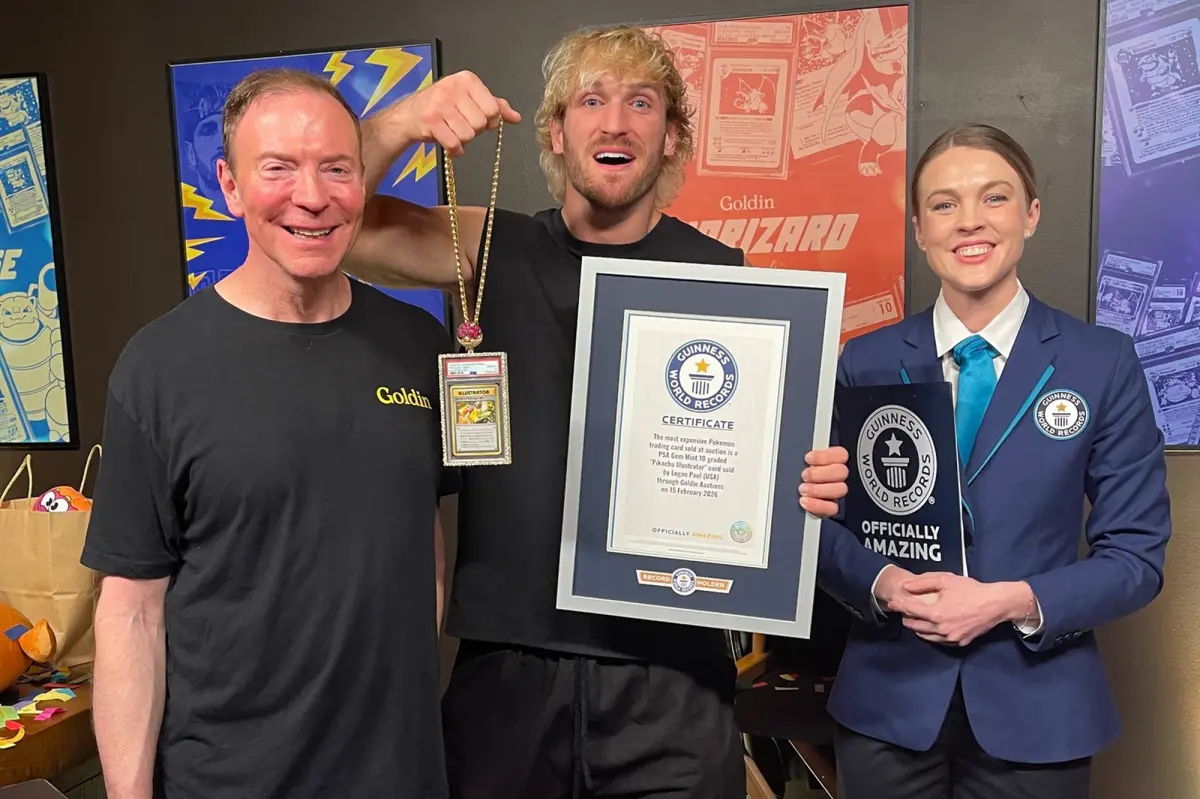
When Monday arrived—the culmination of 42 days of bidding frenzy—Logan Paul stepped up in his iconic persona, hosting the finale with infectious glee. “Oh my gosh, this is crazy,” he exclaimed as the hammer virtually fell, the winning bid reaching a staggering $16.49 million. The buyer? A.J. Scaramucci, a sharp venture capitalist and son of former White House insider Anthony Scaramucci, who had pursued the card with savvy determination. Logan’s face lit up as he draped the card—along with a dazzling diamond necklace and a bespoke custom case—around A.J.’s neck, turning the moment into a ceremonial handover. It was theatrical, heartfelt, evoking the spirit of passing relics in ancient traditions, but infused with contemporary flair. Logan, at 30, reflected on his journey: from YouTube stardom to wrestling ring glory, this card had been a constant companion. His profit? A cool $8 million on the nose, proof that investing in passions could pay off handsomely. But beyond the dollars, Logan spoke of emotional closure, bidding the card adieu like an old friend. A.J., poised and thrilled, seemed to grasp the significance, perhaps eyeing it as an investment or a family heirloom. The livestream captured Logan’s expressiveness—his signature enthusiasm shining through—as he joked and cheered, making viewers feel part of the celebration. Guinness adjudicator Sarah Casson was present, declaring it officially the most expensive trading card ever sold at auction, eclipsing previous records. The auction’s grandeur lay in its humanism: not just about cold bidding, but shared excitement. Logan’s pre-sale Instagram post amplified the drama, where he likened it to defeating the Elite Four in Pokémon, then restarting the game—poetic for fans who grew up battling trainers. The card’s design, wi