






U.S. Military Strikes Narco-Terrorist Vessel in Pacific Operation
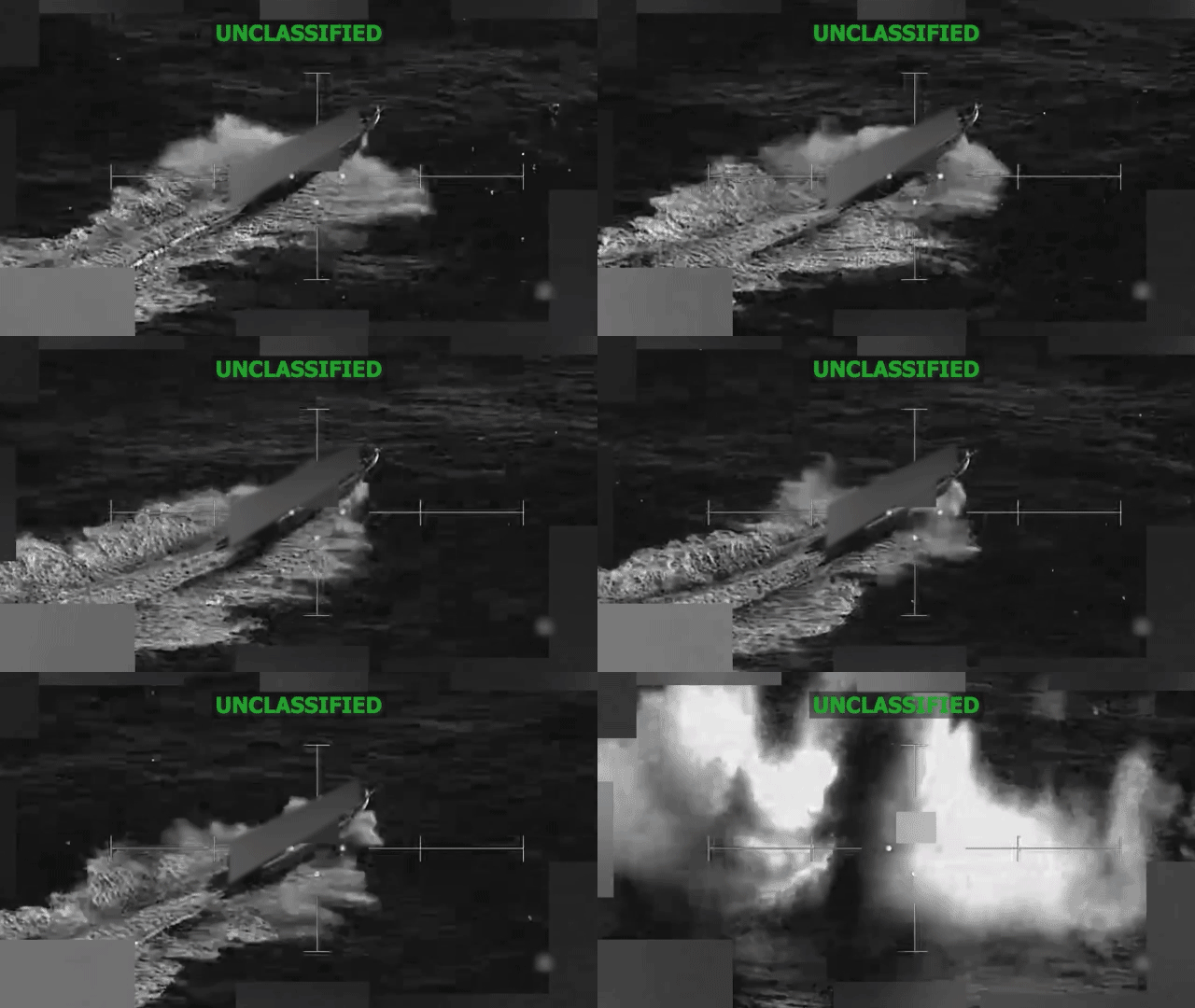
In a decisive counternarcotics operation, a team from Joint Task Force Southern Spear successfully conducted a strike against a vessel operated by a designated terrorist organization in international waters of the Eastern Pacific Ocean. According to a statement shared by U.S. Southern Command (SOUTHCOM) on Wednesday, the operation resulted in the deaths of four male narco-terrorists while no American personnel suffered injuries. This action represents the continuing efforts of U.S. forces to disrupt drug trafficking routes that fund terrorist organizations and threaten national security.
The operation was specifically authorized by Secretary of War Pete Hegseth following intelligence confirmation of the vessel’s involvement in narcotics trafficking. Joint Task Force Southern Spear, a relatively new military unit, was created to coordinate assets from the Navy, Coast Guard, intelligence agencies, and special operations forces to rapidly respond to time-sensitive maritime targets. This integrated approach allows for more efficient deployment of resources against threats that have traditionally been difficult to intercept due to the vast expanse of international waters and the sophisticated techniques employed by traffickers.
Since operations began on September 2, these targeted maritime interdictions have reportedly resulted in 98 casualties among suspected narco-terrorists, highlighting the intensity and scope of the ongoing campaign. The Pentagon has maintained operational security by not disclosing the specific terrorist organization involved in this incident or the identities of the four individuals killed during Wednesday’s operation. This approach is consistent with standard military protocol for sensitive counterterrorism operations, particularly those involving designated terrorist organizations with potential international connections.
The Eastern Pacific corridor referenced in the military’s statement has long been recognized by law enforcement and intelligence agencies as a primary route for drug smuggling into North America. Drug cartels and terrorist organizations often use these maritime pathways to transport narcotics, generating billions in illicit revenue that funds broader criminal and terrorist activities. The strategic importance of disrupting these routes extends beyond drug interdiction, as it also serves to undermine the financial infrastructure of organizations that pose significant security threats.
The creation of Joint Task Force Southern Spear reflects an evolution in the U.S. approach to combating narco-terrorism, emphasizing rapid response capabilities and the integration of multiple agencies’ resources. This unified strategy acknowledges the complex nature of modern security threats, where terrorism and drug trafficking have become increasingly intertwined. By striking at vessels in international waters, U.S. forces can intercept shipments before they reach territorial boundaries where jurisdictional issues might complicate enforcement actions.
While this operation represents a tactical success in the ongoing effort against narco-terrorism, it also raises questions about the broader strategy and metrics for success in what has been a decades-long struggle against drug trafficking. The Department of War, which did not immediately respond to media inquiries for additional details, faces the challenge of balancing operational transparency with security considerations. Meanwhile, as evidenced by President Trump’s recent attendance at a dignified transfer ceremony for servicemembers killed in Syria, the human cost of America’s global security operations remains a sobering reality that shapes both military operations and public perception of ongoing conflicts around the world.