




The Tense Deposition Drama
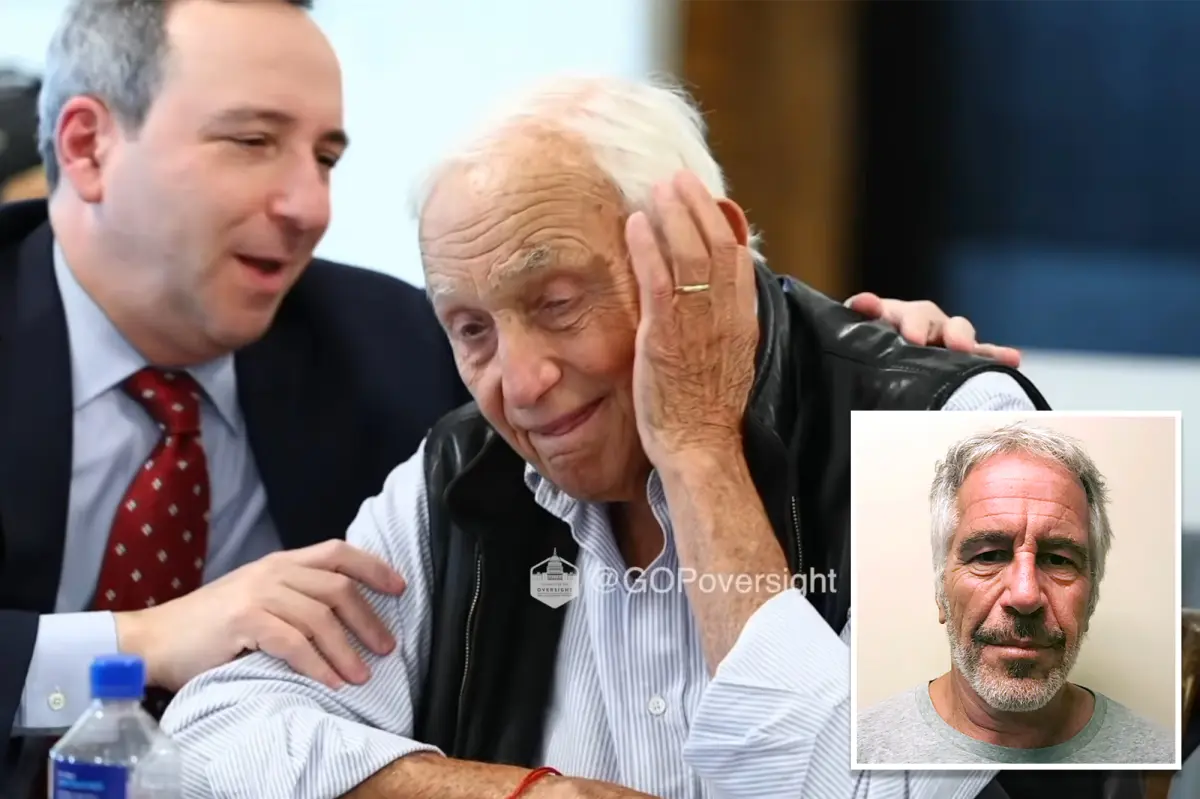
Picture this: in a stuffy room filled with congressional investigators drilling into the shadowy connections between billionaire Les Wexner and the notorious Jeffrey Epstein, Wexner’s lawyer, Michael Levy, loses his cool. It’s been nearly four-and-a-half hours of Wexner, the 88-year-old former head of Victoria’s Secret, rambling on like a man who’s spent too many years building empires and now has trouble sticking to the script. The hot mic captures it all—a raw, profanity-laced whisper that cuts through the tension like a knife. “I will f—king kill you if you answer another question with more than five words, OK?” Levy hisses, his voice low but deadly serious, as Wexner nods in acknowledgment. It’s a moment that feels both hilarious and deeply uncomfortable, a stark reminder of how high-stakes depositions can turn friends into foes. Imagine being Wexner in that chair, an octogenarian who’s navigated boardrooms and billion-dollar deals, suddenly reduced to a grade-schooler being scolded for talking too much. The video footage, released by the House Oversight Committee, shows Wexner chuckling nervously afterward, perhaps out of embarrassment or disbelief. No one likes being micromanaged, but in the cutthroat world of legal skirmishes, especially when the allegations involve sex trafficking and financial fraud, every word counts. Levy’s outburst humanizes the absurdity of it all—here’s a lawyer, presumably hired to protect his client, resorting to threats that sound more like a mob movie than a committee hearing. It begs the question: was this frustration building for hours, or was it a calculated move to keep Wexner from incriminating himself further? The public got a peek into the sausage-making of justice, and it wasn’t pretty. Wexner’s deposition was part of a broader congressional probe into Epstein’s web of influence, where everyday millionaires and royals alike got entangled. For Wexner, who’d built LBrands into a lingerie giant, this wasn’t just business—it was personal survival. Epstein had managed his wealth for decades, a relationship that once seemed golden but now taints his legacy. Levy’s intervention highlights the unequal power dynamics in these settings: the lawyer as the gatekeeper, desperately steering the ship away from rocky shores. As the footage leaked, viewers couldn’t help but empathize with Wexner, whose long answers stemmed from a genuine attempt to clarify his estate’s complexities—possessions that needed inventorying, a detail Epstein supposedly emphasized. It paints a picture of vulnerability for a man used to command, now reduced to monosyllabic responses under his counsel’s glare. This incident underscores the human side of high-profile scandals: the frayed nerves, the whispered warnings, the laughter that masks deeper fears. It’s a reminder that even billionaires aren’t immune to feeling cornered, and lawyers aren’t always the composed professionals they pretend to be.
Wexner’s Rambling Defense and Epstein’s Alleged Deceit
Delving deeper into Wexner’s testimony, it’s clear his tendency to elaborate wasn’t just tedious—it was a window into a rattled mindset. When asked how often Epstein performed work for him, Wexner didn’t give a straight answer. Instead, he launched into a monologue about his sprawling possessions demanding thorough inventorying, a realization that hit him only after hiring Epstein as his financial advisor. It sounds almost endearing, like an elderly man reflecting on life lessons, but in the deposition room, it triggered Levy’s explosive response. Wexner, laughing off the attorney’s threat, embodies that blend of defiance and defensiveness that characterizes the wealthy under scrutiny. Here was a man adamant that he never “witnessed, condoned, or enabled” any of Epstein’s horrific sex crimes—a stance he repeats like a mantra. Epstein, whom Wexner described as holding vast sums of his fortune in trust, emerged in his testimony as a “world Olympic con artist,” a crook who “stolen vast sums” before his 2008 guilty plea for soliciting a minor for prostitution. Wexner’s words carry a weight of betrayal; their decades-long partnership, forged in the heady days of retail dominance, unraveled spectacularly. “I completely and irrevocably cut ties with Epstein nearly 20 years ago when I learned that he was an abuser, a crook and a liar,” Wexner stated in prepared remarks. The sheer emotion in that declaration—rebroken ties, lost trust—humanizes a narrative often reduced to cold facts. Wexner wasn’t just distancing himself; he was reclaiming his identity as a victim of manipulation. Epstein’s death by suicide in his Manhattan jail cell in 2019, while awaiting trial on child sex trafficking charges, looms large, yet Wexner insists he was never a “participant nor co-conspirator.” This isn’t just legal posturing; it’s a personal reckoning. Think of the toll on Wexner—the loneliness of severing such a long bond, the public shame of association. His rambling might stem from a need to prove innocence by recounting every detail, every oversight that let Epstein in. Levy’s threat, in retrospect, was a desperate bid to shield that vulnerability. The deposition footage reveals a man wrestling with regret, his laughter perhaps a coping mechanism amid the storm. It challenges us to consider: when does a financial advisor become a predator, and how does one forgive oneself for not seeing the red flags earlier? Wexner’s testimony flips the script, portraying himself not as a complicit elite but as a duped innovator, his Victoria’s Secret success built on business acumen, now tainted.
A “Crummy” Island Escape and a Salacious Letter
Wexner’s account of his tie-in with Epstein’s infamous Caribbean island—dubbed “Little St. James”—adds a layer of mundane absurdity to the lurid tales. He admitted visiting the spot once with his wife, describing it as “crummy” and “a pile of rocks.” In the grand pantheon of Epstein’s depravity, Wexner’s take strips away some of the allure, painting the billionaire’s playground as disappointingly ordinary, like a budget vacation gone wrong. This humanizes Wexner’s perspective; he’s not glamorizing the scene but dismissing it as overrated, perhaps a way to downplay its significance. Equally telling is his explanation of a provocative letter he wrote for a book celebrating Epstein’s 50th birthday. Wexner confessed he was “trying to be funny,” with a lingerie king joking about drawing “a pair of boobs” for a bachelor friend. It’s a cringe-worthy anecdote that reveals Wexner’s attempt to inject levity into serious matters, but it also underscores the casual familiarity that allowed Epstein’s world to intersect with Wexner’s. Imagine the context: a glamorous soiree, friends celebrating, and Wexner, ever the creative mogul, crafting something risqué. But hindsight turns this into a regretful slip. The island visit and the letter aren’t bombshells of guilt; they’re snapshots of normalcy within abnormality, where million-dollar treats mingle with undercurrents of scandal. Wexner’s deposition turns these into defenses, proving he was there but not involved in the darkness. It’s relatable—haven’t we all made questionable jokes or visited places that seemed fine at the time? This narrative thread evokes empathy for Wexner, a widower revisiting a past that now feels cursed. The “crummy” island narrative subtly critiques Epstein’s empire, suggesting even the luxurious aren’t immune to underwhelm, much like Wexner’s own professional reversals post-Epstein. By sharing these details, Wexner invites us to see him as worldly yet naive, a man of means who mingled with multiply currents without fully grasping their depths. Levy’s stern whisper echoes here, urging brevity to avoid needless elaboration that could be twisted into something sinister.
Dodging Connections to Trump and the Brit Royalty
Shifting gears to Wexner’s denials of proximity to other Epstein-associated figures, his testimony paints a picture of deliberate distance. Asked about sharing space with Epstein and President Donald Trump, Wexner couldn’t recall ever being with both at the same time. He speculated they might have “coincidentally” crossed paths at a Victoria’s Secret fashion show, but he downplayed it: “Jeffrey Epstein held [Trump] out as a friend,” Wexner noted, implying he never knew the depth of any bond. This cautious phrasing humanizes Wexner’s wariness; in the world of magnates, friendships are often optics rather than realities. Wexner, whose shows epitomized glamour and excess, isn’t claiming ignorance outright but suggesting the connections were superficial, not conspiratorial. It’s easy to imagine him in those dazzling events—models strutting, celebrities mingling—where paths cross without intention. Regarding Prince Andrew, the fallen British royal arrested just days before over sharing state secrets with Epstein, Wexner was even more categorical. They had only “one brief, like, two-sentence phone conversation” about buying and selling aircraft, he claimed. “I never met Prince Andrew… So I wasn’t aware of anything,” Wexner stated, distancing himself from the allegations swirling around the prince. This admission carries a undertone of relief mixed with pragmatism; Wexner, having faced his own Drexel scrutiny, knows how quickly rumors spiral. The contrast is stark: while Epstein courted the powerful, Wexner portrays his interactions as business-like and fleeting.graphs. Each denial is layered with context, making Wexner seem like a cautious observer in a web of high-society entanglements. Levy’s threat in the deposition seems aimed at preventing Wexner from over-explaining these nebulous ties, which could fuel speculation. Here, we see technological the human cost of fame: the prince’s downfall mirrors the potential for Wexner’s, yet he insists on minimal involvement. It’s a story of boundaries—drawn early, maintained firmly—amid a sea of impropriety.
Refuting Accusations and the FBI’s Stance
Wexner’s testimony directly contradicts claims by Congressmen Rep. Ro Khanna (D-Calif.) and Rep. Thomas Massie (R-Ky.), who labeled him one of six men “likely incriminated” by his Epstein ties, citing his prevalence in Justice Department investigative materials released in late January. Wexner pushes back fiercely, emphasizing his clean break from Epstein and lack of participation in crimes. This refutation isn’t just legal—it’s personal, a plea for fairness from an elder statesman who’s seen his life’s work overshadowed. The materials, voluminous with millions of pages, painted Wexner as central, but he rejects that narrative, insisting on his innocence. It’s a David-and-Goliath tale, the billionaire facing off against powerful legislators armed with data. Humanizing this, Wexner’s defense evokes the frustration of anyone wrongly judged; imagine defending your reputation in a deposition where every word is dissected. Furthermore, federal prosecutors had initially eyed Wexner as a potential co-conspirator post-Epstein’s 2019 arrest, yet an FBI email revealed “limited evidence regarding his involvement.” This vindication, buried in bureaucracy, becomes Wexner’s vindication—a bureaucratic acknowledgment that saves his name. The death by suicide of Epstein in his jail cell, awaiting trial, adds a tragic close, leaving Wexner to grapple with unanswerable what-ifs. Levy’s outburst, in this light, was perhaps protective fury, curbing Wexner’s tendency to elaborate into vulnerability. Overall, the episode underscores the messy humanity of wealth and power: accusations sting, distances are enforced, but legacies are rebuilt. Wexner emerges as resilient, a man wronged by association, navigating shadows cast by the departed Epstein.
Reflecting on a Legacy Tarnished and Reclaimed
In the end, Les Wexner’s deposition offers a poignant glimpse into the toll of scandal on one man’s life. From the viral hot-mic moment with Levy’s profanity to Wexner’s own admissions, the narrative unfolds as a cautionary tale of trust betrayed. Epstein’s “Olympic con artist” label hangs heavy, reminding us of how charisma can mask greed and cruelty. Wexner’s laughter, his descriptions of “crummy” islands and flippant letters, humanize a figure often villainized—showing eccentricity, not malice. As he refutes ties to Trump, Andrew, and congressional skeptics, supported by FBI findings, Wexner redeems his story somewhat. Yet, the Epstein saga’s reach—touching princes, presidents, and capitalists alike— highlights the fragility of elite circles. For Wexner, cutting ties two decades ago was a survival move, but the stain lingers. We empathize with his vulnerability, the old man’s ramblings born of a desire to explain away pain. Levy’s threat, though shocking, underscores lawyers’ roles in shielding clients from self-implosions. This isn’t just a celebrity exposé; it’s a meditation on deception, regret, and the human capacity for second chances. Epstein’s suicide in jail leaves questions unanswered, but Wexner’s testimony asserts his separation from the horror. As public footage circulates, viewers connect with Wexner’s humanity—his age, his wealth, his defenses. In a world of Epstein-like predators, stories like Wexner’s urge vigilance and compassion for those ensnared innocently. Ultimately, his legacy, marred yet resilient, reminds us that even titans have limits, and words can wound or heal. The deposition, a showdown of wills, ends with Wexner standing firm, a man who’ve learned the hard lesson that not all friends are what they seem. In humanizing Wexner’s ordeal, we see not just a billionaire’s reckoning, but a universal theme: the price of blind faith in flawed humanity. His concise replies, enforced by Levy’s ire, become symbols of guarded truth. The congressional probe, vast and unrelenting, collides with personal dignity, yielding a narrative that’s equal parts drama and redemption. Wexner’s journey—from lingerie mogul to Epstein associate—culminates in this testimony, a chapter of reclamation amidst chaos. As debates rage on Epstein’s empire, Wexner’s voice adds nuance, transforming cold allegations into lived experience. The “pile of rocks” island visit, the boob doodle, the crossed paths—all refract the absurdity of his situation. Empathy grows for Wexner, a grandfatherly figure navigating legal gauntlets. Levy’s whisper echoes as a moment of candid humanity in an otherwise sterile proceeding. Thus, the story transcends headlines, inviting us to ponder how one man’s tenacity weathers storms of scandal. Ethics, loyalty, trust—these pillars sway for all involved. Wexner’s resolute stance affirms innocence regained, a beacon in Epstein’s shadow. Readers, viewing this tale, share in the unease and the resolve, learning that brevity in defense can speak volumes of character. The full deposition release enables such reflection, bridging elite intrigue with everyday relatability. Epstein’s web ensnared many, but Wexner emerges frayed yet unbroken, a testament to enduring grace under fire. In chronicling his side, we honor the human struggle for truth.