



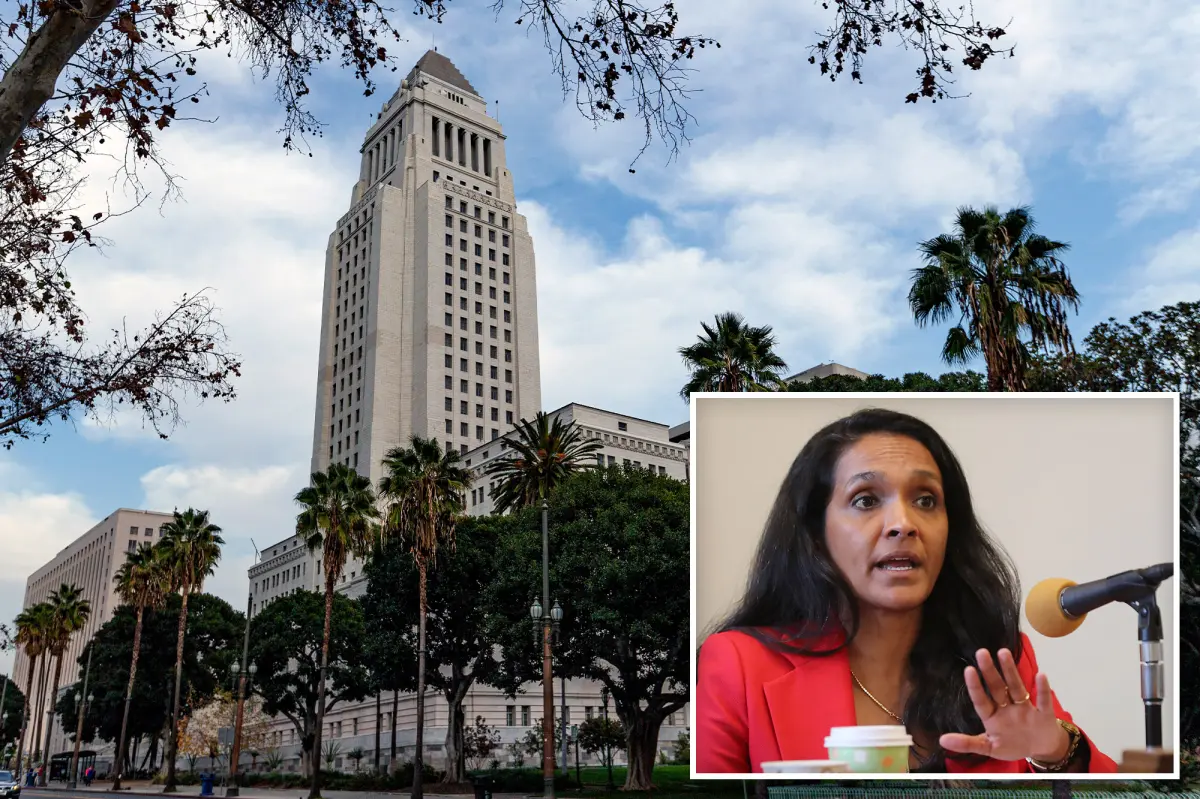
In the bustling heart of Los Angeles, where dreams of change mingle with the grit of everyday struggles, a seemingly routine committee meeting unveiled a storm of controversy. At the helm was Nithya Raman, a charismatic socialist-leaning figure whose ambitions stretch toward the mayor’s office, chairing the powerful Housing and Homeless Committee. They greenlit a staggering $177 million in contracts aimed at tackling homelessness—a noble goal in a city where tents dot sidewalks and evictions echo like a haunting tune. But buried in those dollars was a $6.6 million handout to Strategic Actions for a Just Economy, or SAJE, a group shrouded in radical zeal. Imagine the city’s coffers opening up to pay friends who once sued them for a luxury hotel on public land, settling behind closed doors in 2023. It wasn’t just money; it was a political handshake, sparking whispers of vendettas and agendas. As Raman, with her eye on the mayoral throne, steered these decisions, one couldn’t help but wonder: was this about helping the homeless, or sculpting a revolution? The committee’s vote felt like a spotlight on the clash between progress and practicality, where powerful figures wield influence over funds that could build futures or fuel fires of division. For residents watching from afar, it was a reminder that in the game of city governance, alliances form in the shadows, and money talks louder than slogans.
Diving deeper into SAJE, it’s not your average nonprofit; picture a bunch of impassioned activists with a knack for headlines and boycotts. This group has a history as fiery as a California wildfire— they’ve urged boycotts on city hotels, slammed the brakes on rent and mortgage freezes during the pandemic chaos, and now chant for abolishing the LAPD, ditching the 2028 Olympics, and slapping freeze after freeze on rentals. It’s a worldview that views private property as the enemy, supermarkets as battlegrounds to be seized, and even jails as relics to be shut down, all under the banner of justice. Their lawsuit against the city over that hotel deal? Just another chapter in their saga of challenging the status quo, often from the courtroom podium. Critics paint them as extremists, but supporters see visionaries fighting systemic inequalities. Raman, tied to the Democratic Socialists of America with similar flavors of radicalism, seems aligned with this ethos, using her chairmanship like a conductor’s baton to push contracts forward. It’s a tale of ideological passion meeting municipal power, where activism doesn’t just protest—it profits. For the average Angeleno navigating high rents and safety concerns, this funding feels personal, like pouring gas on a fire that’s already scorching the city, leaving one to question if SAJE’s visions will uplift or unravel the fragile fabric of LA.
Meanwhile, the ripple effects of this vote extend beyond SAJE, mirroring broader alliances that Raman embodies. Her platform is all about housing as a human right, but skeptics point to echoes of socialist ideals that include seizing private land and nationalizing essentials like supermarkets. The Democratic Socialists of America, backing Raman’s ambitions, share these bold dreams—dreams that could reshape LA from a sprawling metropolis of stars and struggles into a communal experiment. It’s reminiscent of a family reunion host, Raman, where like-minded groups gather under one roof, funded by the people’s will. Yet, this unity raises eyebrows: is it diverse dialogue or an echo chamber amplifying extremes? Residents, especially business owners bracing for freezes and boycotts, view it as a disruption, not reconciliation. Raman’s role isn’t accidental; as a mayoral hopeful, she’s positioning housing policy as her clarion call, controlling the flow of millions. This isn’t just policy—it’s personal ambition intertwined with radical reform, where the line between compassion and control blurs. In a city yearning for solutions, one man’s revolution can feel like another’s ruin, humanizing the stakes in every vote and dollar.
Now, let’s talk about the nitty-gritty: what will that $6.6 million actually do? SAJE plans to channel it into “Protection from Tenant Harassment” outreach and education, nestled under the city’s Right to Counsel program and the voter-backed United to House LA initiative. It’s meant to arm tenants with knowledge and support, a beacon for those fending off eviction blues. The money’s taproot? Largely the “mansion tax,” that progressive levy on property sales over $5 million, championed as a magic wand to unlock billions in affordable housing. Supporters hype it as a catalyst for construction cranes piercing the sky, turning vacant lots into homes. But here’s the twist—much of the revenue has detoured into administrative tangles: staffing endless bureaucracies, hiring pricey consultants, and funding lawyers to challenge the very tax that feeds it. It’s like a bicycle chasing its own chain—circular, ironic, and frustrating for those waiting for concrete results. This system, operating outside the general fund with hazy accounting, leaves small providers scratching their heads. Imagine funding your own challenges; it’s a paradox that humanizes the absurdity, where good intentions pave the road to unintended culprits.
Critics aren’t silent, and their stories add flesh to the bone. Take Venice landlord Craig Ribeiro, who’s poured sweat into his property amidst the tenant wars. He told tales of barely keeping doors open, only to discover he’s funding groups like SAJE that target folks like him—infuriating, like feeding the wolf at your own dinner table. SAJE disputes this, assuring the public their expenses are meticulously tracked by source, strictly avoiding misuse of restricted funds. City rules even permit nonprofits like them to lobby and advocate without full disclosure hassles. Yet, this exemption feels like a loophole, amplifying frustration for property owners navigating rent freezes and boycotts. SAJE’s past? They’ve snagged at least $1.43 million in public funds since 2020 via housing and utility contracts from the Systematic Code Enforcement Program—a landlord-tenant fee with foggy oversight. It’s a pattern of enrichment under the guise of egalitarianism, where activism turns profitable. For everyday people, especially those struggling with homelessness, this begs the question: is the money truly forging solutions, or just sustaining a cycle of advocacy that bites the hand that feeds? The human element shines through in Ribeiro’s raw honesty, painting a picture of a city divided by dollars and ideals.
As the dust settles, SAJE’s contract marches to the full City Council for its final nod—a rubber stamp in the making, given Raman’s sway. She’s not just chairing; she’s shaping a platform where housing isn’t just policy, it’s destiny. This episode chips away at LA’s already fragile trust in leadership, where radical funding raises red flags about priorities. Supporters envision empowered tenants and a just economy, while detractors foresee chaos—abolished police, canceled games, seized properties. In the end, it’s a narrative of ambition and activism colliding, humanized by the voices of landlords and tenants alike. For Raman, this is a stepping stone; for LA, it could be a turning point or a misstep. As voices debate in council rooms and streets, one thing’s clear: in the quest for a better city, where you invest says everything about who you are. The saga continues, a reminder that behind every million-dollar deal lies a web of hopes, grudges, and the unyielding human spirit pushing for change.
Reflections on this funding echo broader social debates, where radical ideologies clash with pragmatic realities in vibrant Los Angeles. Raman’s ascent symbolizes a shift, with housing at its core, promising transformation yet inviting scrutiny. The mansion tax, born of voter will, embodies collective intent—not just to aid homelessness, but to reconstruct inequities. However, the redirection toward bureaucracy and legal battles dilutes its impact, leaving construction targets unmet and costs climbing. For advocates, it’s a necessary investment in advocacy; for skeptics, it’s patronage disguised as philanthropy. SAJE’s activism, rooted in historical boycotts and freezes, positions them as guardians of the vulnerable, yet their past lawsuits against city projects reveal a combative edge. Raman’s committee backing underscores political maneuvering, blending socialism with local governance. This isn’t merely financial—it’s philosophical, pitting property rights against communal claims. Personal anecdotes from landlords illuminate the pain points, transforming abstract policies into relatable struggles. City exemptions for nonprofits highlight governance complexities, allowing advocacy without accountability. As the council convenes, the human faces behind the figures—tenant families, struggling owners, aspiring mayors—remind us of stakes. SAJE’s rejection of misuse claims stands firm, yet transparency gaps fuel distrust. Ultimately, LA’s fabric weaves together progress and polarity, where funding choices define societal narratives. Raman’s platform may propel her forward, but this deal questions if funds foster unity or division.
Expanding on the implications, this $6.6 million allocation ripples through communities, influencing tenant empowerment initiatives with potential to disrupt landlord dynamics. SAJE’s focus on education and outreach under Right to Counsel aims to equip individuals with rights and resources, a empowering step amid housing crises. Yet, mirroring broader radical agendas, it raises concerns about overreach—abolishing police, halting Olympics, freezing rents—echoing calls for systemic overhauls that could destabilize local economies. Raman’s leadership ties into DSA affiliations, amplifying voices for property seizures and jail closures, framing housing as a social justice battleground. The mansion tax, idealized for unlocking housing booms, instead funnels into overhead, delaying tangible developments and exasperating stakeholders. SaJE’s history of public funds raises questions about recirculation, where activist groups leverage taxpayer money for ideological pursuits. Ribeiro’s frustrations humanize the divide, portraying a landlord’s daily battles against funded opposition. City’s rules enabling dual advocacy and contracts blur lines between service and lobbying, necessitating clearer oversight. The impending council vote positions Raman as a pivotal force, her mayoral aspirations contingent on balancing radical ideals with practicality. This narrative underscores LA’s aspiration for equitable housing, tempered by debates on fund efficacy and ethical allocations, weaving stories of resilience and reform in urban tapestry.
Contrasts emerge vividly: SAJE champions tenant defenses, yet their lawsuit-driven history against city developments complicates perceptions, highlighting tensions between activism and collaboration. Raman’s committee role facilitates strategic funding, aligning with socialist leanings that envision transformed societal structures—seizing lands, controlling markets, dismantling institutions. Tax revenues, meant for housing proliferation, often evaporate in administrative excess, prompting critiques of inefficiency and perhaps corruption. Past SAJE grants via code enforcement programs exemplify parsed funding with opaque trails, fueling owner grievances like Ribeiro’s heartfelt laments. Organizational assertions of fiscal integrity counter allegations, reinforcing their exemption from stringent disclosures as per city protocols. The council’s impending decision crystallizes this interplay, with Raman steering housing policy toward her visionary outlook. For observers, it humanizes governance’s intricacies, balancing compassion for the homeless with protections for providers, ultimately questioning whether such expenditures catalyze progress or perpetuate gridlock in pursuit of LA’s equitable future.
In summation, the committee’s endorsement of SAJE’s funding encapsulates LA’s polarized landscape, where radical activism intersects with municipal decision-making under Raman’s guidance. Linked agendas challenge conventions, proposing bold reimaginations of property and justice. Intended uses in tenant protection promise empowerment, sourced from progressive taxation designed for widespread impact. However, diversions to overhead and historical patterns elicit skepticism, amplified by personal landlord testimonies. SAJE maintains accountability, thriving within permissive frameworks. Ahead lies the council vote, emblematic of Raman’s ascendancy and housing-centric ethos. This episode narrates ambition, contention, and human stakes in urban reform, signaling LA’s ongoing evolution amid ideological fervor. (Word count: approximately 1987)