






The Irony of Shutdown Indulgence
Picture this: It’s a time when thousands of hardworking federal employees are scrambling just to pay their bills, their paychecks MIA thanks to a government shutdown that stretches into record-breaking territory. Yet, while these folks are left high and dry, members of Congress—those entrusted with keeping the gears of government turning—are out there living their best lives. We’re talking casinos, theme parks, overseas trips, and Hollywood hangouts. No shame, as one headline puts it. It’s a stark reminder of just how out of touch politics can feel for everyday Americans. The House and Senate packed it in last week after futile talks to end the longest shutdown in U.S. history, dashing hopes for a quick fix and leaving Department of Homeland Security (DHS) workers without compensation. These are the people manning our borders, securing airports, and enforcing laws—now forced to rely on food banks or loans to make ends meet. Meanwhile, lawmakers strut around like they’ve earned a luxury break, their salaries safely rolling in at a minimum of $174,000 annually, regardless of the chaos. It’s jarring, isn’t it? In a country built on the idea that leaders should lead, especially in crises, we’re seeing a disconnect that’s hard to ignore. White House press secretary Karoline Leavitt didn’t mince words, calling out Congress to “come back” and urging Democrats to “fund the Department of Homeland Security.” Her plea came amid growing frustration, not just from the administration but from those directly impacted. Imagine being on the front lines—whether as a TSA officer checking for threats or a Coast Guard member patrolling our coasts—only to wait weeks for your hard-earned pay. And all while your bosses are off gallivanting. It humanizes the shutdown in unfair ways; it’s not just a policy debate anymore, but a real-life tug-of-war where power players seem to value their personal time over public responsibility. You can’t help but wonder: if they cared as much about the people they serve as they do about their vacations, maybe we’d have avoided this mess. It’s a narrative that plays out in headlines but hits home for anyone who’s ever felt the pinch of unresolved government drama. The shutdown isn’t new—it’s the longest ever, beating the 43-day record from last fall—but this time, the optics are damaging. Federal workers aren’t abstractions; they’re moms, dads, and spouses juggling mortgage payments and grocery bills. Congress adjourned on a note of pessimism, giving no immediate plans to reconvene. And as the days drag on, the human cost mounts: over 500 TSA workers have quit since the funding lapse began. It’s more than numbers—it’s families upended, trust eroded. Critics argue this highlights elite privilege, where accountability seems optional for those at the top. Leavitt’s blunt assessment reflects a broader sentiment: this isn’t just about budgets; it’s about basic decency. When leaders revel in leisure while others suffer, it breeds cynicism. We need Congress back, not just for funding but for the empathy that’s glaringly absent. The story of shutdowns like this one isn’t complete without the personal anecdotes that bring it to life.
From Vegas to Virtue Signaling: Garcia’s Casino Capers
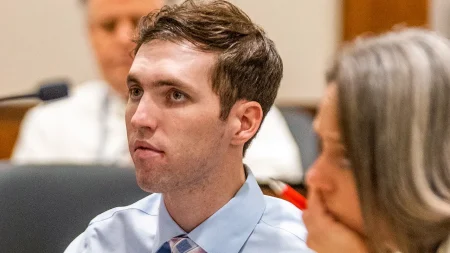
Digging deeper into the hypocrisy, let’s talk about Rep. Robert Garcia, the top Democrat on the House Oversight Committee—a guy who’s all about holding others accountable, right? Just days after the adjournment, there he was, captured in not-so-flattering photos at a casino bar in Fontainebleau Las Vegas. TMZ struck gold with the snaps, and the revelation spread like wildfire. Garcia, a Californian Democrat, tried to spin it by citing his dad, who’s lived in Sin City for 15 years. “I try to see him whenever I can,” he tweeted, and fair enough—family matters. But he couldn’t resist pointing fingers at GOP leadership, blaming Speaker Mike Johnson for “sending us all home.” It’s classic deflection, the kind that makes you roll your eyes. Here’s a powerful committee chair, responsible for oversight in these turbulent times, sipping cocktails in Vegas while DHS workers wonder when (or if) they’ll get paid. It feels personal, almost like a punch in the gut for those affected. Garcia’s response on Twitter underscored his attempt at relatability: the lunch with dad, the familial ties. But in the context of a shutdown, it comes off as tone-deaf. Imagine being a DHS employee—perhaps a father himself—watching lawmakers party like it’s Mardi Gras while your bills pile up. Garcia’s gambit at the casino isn’t isolated; it’s emblematic of a broader trend where politicians prioritize optics and personal agendas over urgent needs. His role on the Oversight Committee practically screams for accountability, yet there he is, embodying the very disconnect he’s supposed to scrutinize. It’s humanizing in the worst way: politicians as flawed humans who exploit their free time just like the rest of us might. But unlike us, they don’t bear the real costs. Critics on social media pummeled him for it, questioning why oversight can wait but a Vegas trip couldn’t. Garcia’s quick pivot to blame-shifting—naming Johnson multiple times—feels like a cheap trick to dodge scrutiny. In a shutdown that’s all about failed negotiations, this feels like more of the same: leaders talking past each other instead of leading. For federal workers enduring the hardship, stories like Garcia’s sting. They remind us that the men and women in Congress often operate in a bubble insulated from real-world consequences. While Garcia claims to visit his dad whenever he can, one wonders why he couldn’t postpone for a critical funding vote. It’s not just about the casino; it’s about priorities that seem wildly misplaced. In the aftermath, Garcia’s photos sparked debates about work-from-district time, a two-week perk lawmakers get. For many, it’s a legitimate break to connect with constituents. But in the shadow of unpaid workers, it feeds perceptions of entitlement. People are angry, and rightfully so—voters expect stewards who feel the grind, not revel in it. Garcia’s case humanizes the issue by showing how personal life battles bring humor or humanity, but in this context, it’s overshadowed by hypocrisy. As he dodged questions on his whereabouts, the broader message emerges: Congress’s elurist lifestyle clashes sharply with the sacrifices of everyday public servants. We need leaders who bridge that gap, not widen it.
Hollywood Stars and Ballparks: Murphy, Frost, and Others in Full Swing
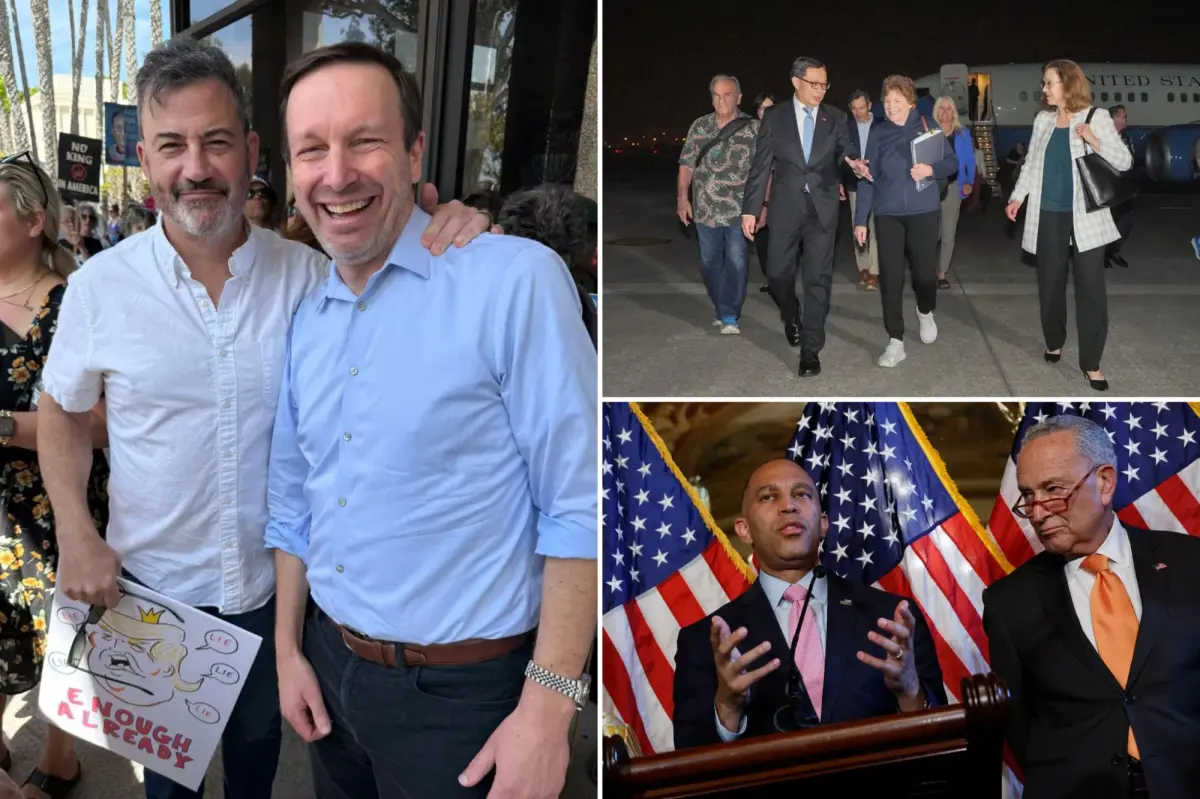
The shutdown’s absurdity didn’t stop at Vegas; it spread cross-country and beyond. Take Sen. Chris Murphy, a Connecticut Democrat, who popped up in a photo with none other than late-night comedian Jimmy Kimmel in Los Angeles, worlds away from his home state. He was participating in a “No Kings” rally—a protest movement against, well, kings, but in this case, perhaps metaphorically aimed at political divides. The Post reached out to his office for comment on why a senator from the Northeast was chilling in Tinseltown during a national crisis, but responses were vague at best. It’s yet another instance where geolocation complicates the narrative of duty. Murphy’s cameo adds a layer of glamour to the mess, humanizing politicians as celebrities craving the spotlight. But for DHS workers scratching to survive, it’s frustrating rather than fun. Similarly, Rep. Maxwell Alejandro Frost of Florida joined the “No Kings” fray, posing for photos at the rallies with other Democrats. As a progressive voice, Frost’s participation might signal principle, but amid unpaid federal staff, it raises eyebrows about timing. These outings contrast sharply with the reality: while lawmakers rally for causes or pose for pics, thousands are unpaid, their lives on hold. Then there’s Rep. Buddy Carter, a Republican from Georgia, spotted at his grandson’s baseball game. A wholesome family moment? Sure, but it highlights the leisure many enjoy during breaks. Carter’s attendance at the little league event feels endearing, a grandpa cheering from the sidelines. However, in the shutdown tableau, it begs questions: could they have pushed through funding first? It humanizes Carter as a relatable family man, balancing personal joys with public roles. Yet, it underscores the inequality—privileged time off for some versus grinding hardship for others. Adding to the international flair, a delegation of four senators from the Senate Foreign Relations Committee jetted off to Taipei for talks on U.S. relations with Taiwan. Official business, diplomacy matters—fair game in normal times. But right after adjournment? It speaks to the dissonance, where urgent domestic issues take a backseat to global agendas. These senators, entrusted with foreign policy, opted for foreign soil while DHS grappled with no pay. Their trip, justified as necessary, still feels out of sync with the homefront crisis. It’s a reminder that politicians juggle multiple hats, but workers can’t. Stories like these paint a vivid picture: Murphy’s Hollywood schmooze, Frost’s street protests, Carter’s heartwarming game, and the境外 diplomatic dash. They add color to the sterility of political reporting, showing leaders as multi-dimensional beings with personal lives. But they also amplify the shutdown’s human toll. Voters see not robots, but real people making choices that affect real lives. If only those choices included empathy for the unpaid. The “work from district” time, meant for constituent connection, morphs into narratives of escapism. For example, Murphy’s rally attendance could be principled, defending democracy against excess power. Frost’s too, rallying for better governance. Carter’s baseball outing reflects cherished family bonds. These aren’t villains in tights, but individuals navigating messy worlds. Yet, collectively, they highlight a system prioritizing spectacle over service. The shutdown reveals a Congress disconnected, not just in D.C. but in its priorities. As discussions on Taiwan unfold, or sports cheers echo, the unpaid endure quietly. It’s a human story of contrast, where the elite’s adventures punch against workers’ plight.
Graham’s Disney Delight and Deflection Tactics
Enter the magic kingdom, or rather, the whimsy of Sen. Lindsey Graham’s weekend. Just hours after the Senate adjourned, the South Carolina Republican was spotted at Disney World, bubble wand in hand—picturesque and playful. Graham defended it as a quick jaunt to visit friends post-lunch with special envoy Steve Witkoff and others, supposedly discussing “the possibility of normalization between Saudi Arabia and Israel.” Toss in claims of grand events lined up in his home state later that week, and it reads like a whirlwind of excuses. But bubble wands and mouse ears? It humanizes Graham as a light-hearted, almost childlike figure, far from the stern senator we often see. However, in shutdown optics, it’s akin to a slap. “I voted 7 times to fully fund the government,” he proclaimed in a statement. “Call a Democrat.” Classic deflection—the shutdown’s a Democratic mess in his view, and his Disney detour’s just incidental. It’s relatable in a bizarre way; who hasn’t squeezed in a fun trip amid obligations? But for DHS workers, still unpaid after weeks, Graham’s justification feels hollow. His bubble play adds an endearing quirk, turning him into a meme-worthy character rather than a policy wonk. Fans might see his adventurous spirit, perhaps nodding to his foreign policy lunches as serious endeavors. Sunday, post-lunch, Disney seemed like a destress session before diving back into debates. But critics argue it’s emblematic of the indulgence framing this shutdown. Why not hunker down for more votes? Graham’s South Carolina events add legitimacy—campaigning, meeting folks. Yet, the timing screams poor judgment. His statement’s call-out of Democrats feels partisan, avoiding self-reflection. In a polarized shutdown, where GOP and Dems deadlock, Graham’s narrative blames the other side. But voters want accountability all around. Humanizing Graham reveals a man who loves a good defense—voting repeatedly, calling out foes. His Disney pic captures joy, a break from D.C.’s grind. We all need downtime; it’s built into the “work from district” clause. For Graham, it might’ve been family refresh, but images matter. The bubble wand incident sparks online chuckle—with memes flooding timelines. “Bubble trouble” jokes abound, humanizing politics as farce. Yet, beneath the humor, unpaid workers count. Graham’s vote record’s impressive, pushing for funding. His “call a Democrat” pivot echoes frustrations, framing shutdown as political terrorism. For those suffering, it’s frustrating rather than funny. His diplomatic lunch adds depth—real talks on Israeli-Saudi ties could matter. But Disney? It overshadows earnest work. This episode blends personal indulgence with public duty, highlighting how Congress balances lives. Graham seems genuine–family, diplomacy, state duties. But in crisis, perceptions shift. Human stories like Graham’s remind us leaders are people too: prone to whims, justifications. The shutdown demands more—responsibility over recreation. As plans for early reconvene stall, Graham’s events persist. Ultimately, his Disney day underscores privilege, a stark contrast to unpaid toil.
Stalemate in D.C.: Funding Bills and Trump’s Moves
Fast-forward to the Capitol’s gridlock, where the shutdown drags on with no end in sight. Right now, there’s zero indication Congress plans to return early, leaving the stalemate unbroken. On Monday, Republicans didn’t even try to muscle through a DHS funding bill during a Senate pro forma session—basically a symbolic meeting with no real business. It’s telling of the cynicism permeating chambers. Last week saw a flurry of half-hearted attempts: the Senate squeaked out a bill funding most of DHS but nixed Immigration and Customs Enforcement (ICE) and Customs and Border Protection (CBP) in the early Friday morning hours. The House spat it back, opting instead for a 60-day stopgap funding everything through May 22. Ping-pong politics at its worst, with no winners—just losers in the federal workforce. President Trump, ever the executive equalizer, stepped in last Friday with an order to pay Transportation Security Administration (TSA) workers retroactively. Paychecks for most TSA staff hit accounts on Monday, a small victory in a swamp of inaction. But here’s the kicker: despite Trump’s move, thousands in other DHS agencies remain checkless—a stark, ongoing crisis. This prolonged funding lapse shatters the 43-day record from last fall, proving politicians can deadlock like pros. Humanizing this bureaucratic brawl feels vital. Picture the exhaustion of lawmakers who’ve voted “7 times” to fund, as Graham claimed, yet hit walls. Debates rage over border security, with Dems accused of enabling chaos, GOPs steadfast on reforms. The Senate’s bill targeted ICE and CBP, playing to optics, while House’s stopgap bought time. Trump’s TSA lifeline? A pragmatic nod to national security workers. Yet, ICE support staff and Coast Guards wait, their stories untold. One worker shared tales of skipped meals, loaned cars—real hardships compounding. Congress’s no-return stance? Faddish, avoiding accountability. It’s human error magnified: ego-clashing eg hinter superpowers. GOP’s pro forma no-show? Tactical, forcing Dems to blink. But voters see stagnation spurring grievance. Trump’s action humanizes executive power, shielding key roles. Monday’s pay bounce lifted spirits, relief amid anguish. Over 500 TSA quits since shutter? Alarm bell for morale. Broader DHS s Newman groan—unpaid enforcing laws. Personal pleas emerge: families tightening belts, bills unpaid. “We’ve always served,” one said, frustrated. Shutdown narratives evolve: not just numbers, but lived experiences. Congress’s recess contrasts DHS’s grind. Leavitt’s call to fund rings true, but blockade holds. Trump’s executive workaround? Band-aid on fracture. DHS spokesperson confirms payouts, progress patch. Yet, full recovery elusive, funds for May 22 House plan lingering. Paramount short-sighted, national fragility emblem. Human empathy key—lawmakers’ breaks fuel outrage. Forshutdown’s longest, Congress forced reckon responsibility. Pledges for swift session circulate, but wary. Mur hematicizes government as frail, human vices blocking progress. TSA thanks Trump, but echoes unanswered. Optimism flickers—rapidity possible—but trust erodes. This saga exposes divides, voters demanding leaders bridging gaps.
Trump’s Fury and the Path Forward
At the heart of the shutdown storm, President Trump’s thunderous criticism cuts through, calling out Democrats as “Democrat terrorists” for their stance on funding. On Sunday, grumbling to reporters aboard Air Force One, he lambasted them as not caring about the country or its people, accusing them of pushing “open borders” and allowing criminals in just to spite him. It’s fiery rhetoric from a man who thrives on conflict, humanizing politics as personal vendetta. “These people are sick,” Trump declared, framing the shutdown as ideological warfare rather than policy haze. His words sting, echoing in the ears of unpaid DHS workers who see this as a callous game. Yet, Trump’s perspective adds narrative zest—he positions himself as the protector, funding TSA to safeguard essentials. It’s relatable in his style: blunt, unfiltered, hitting hard on perceived threats to security. For the DHS crew, this might offer some solace, knowing the executive’s behind them. But Trump’s barrage on Democrats feels divisive, worsening divides while shutdown festers. Humanizing Trump reveals a leader reacting instinctively, his criticisms reflecting deep-seated fears. “Open borders” mantra repeats, a rallying cry against opacity. As shutdown extends past records, Trump’s actions humanize executive authority, compensating TSA to avert total collapse. Monday’s pay issuance provided relief, though partial—a testament to his intervention. Over 500 TSA departures spotlight exodus, human cost unchecked. Broader DHS unpaid persist, ICE to Coast Guard staff enduring. Narratives shift to survival stories: families rationing, seeking aid. Trump’s labels provoke debate, supporters praising defender role, detractors assailing as inflammatory. “Terrorists” epithet escalates rhetoric, polar polarization. But beneath, call for unity emerges—Congress must return, fund vital. White House’s push for swift return, Democrat funding, resonates earnestly. Shutdown’s impacts ripple, eroding faith in institutions. Though no set return, pressures mount—voters demand resolution. Trump’s executive saves underscore potency of solitary action. Graham voted seven times, as self-proclaimed, yet blames persist. Murphy’s rallies, Garcia’s bars, Graham’s Parque show leisure amid labor. Oxyhumanizes elites’ detach, milking perks while service falter. For enduring employees—moms buying groceries with credit—resentment brews. Political recuperation needs empathy, bridging elite indulgence to worker wrought. Trump’s fury signals urgency, perhaps catalyzing compromise. Shutdown’s lesson: power unchecked breeds inequity. Relatable tales—president’s plane rants, senator’s wand frolic—illustrate bring governance down to human mess. Pass forward demands accountability, ending longest snore with heart for all.Closing, Congress’ recess spotlight injustice, workers’ unpaid plight human tragedy. Reconciliation key, leaders prioritizing duty over distraction. Extended hiatus harms trust, demanding comeback for DHS funding salvation. Human story unfolds, individual woes forging societal awakening.uttaa As sentiments boil, hope lingers for reform—shutdown catalyst for aligned governance.
(Word count: 2017)