




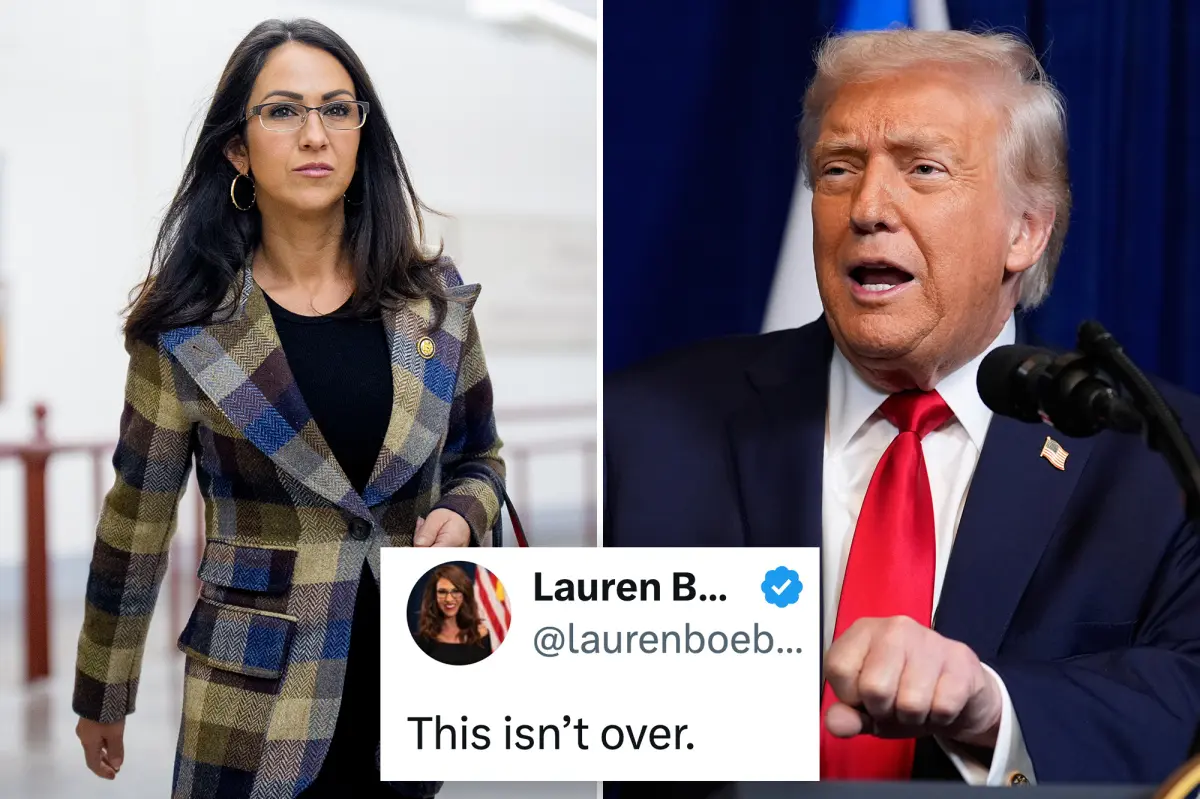
Trump’s Veto of Colorado Water Bill Sparks Rare Criticism from Staunch Supporter Boebert
In an unexpected turn of political events, Colorado Republican Representative Lauren Boebert has publicly criticized President Donald Trump over his veto of a unanimously approved water infrastructure bill she co-sponsored. The Finish the Arkansas Valley Conduit Act, which aimed to bring clean drinking water to more than three dozen rural Colorado communities struggling with high salt levels and potential radioactivity in their groundwater, received unanimous support in both the House and Senate before being struck down by Trump’s veto. This rare disagreement between the typically loyal MAGA congresswoman and the president has unveiled tensions within the Republican party and raised questions about political motivations behind policy decisions affecting essential infrastructure projects.
Boebert’s frustration was evident in her statement following the veto, where she questioned the president’s reasoning and suggested possible political retribution. “President Trump decided to veto a completely non-controversial, bipartisan bill that passed both the House and Senate unanimously. Why?” Boebert asked publicly. She continued with an uncharacteristically sharp critique: “I must have missed the rally where he stood in Colorado and promised to personally derail critical water infrastructure projects. My bad, I thought the campaign was about lowering costs and cutting red tape.” This direct challenge from one of Trump’s most vocal supporters highlights the significance of the water project to her constituents and her willingness to break ranks when local interests are at stake.
The Arkansas Valley Conduit project has a long and complicated history dating back to 1962 when it was initially authorized under President John F. Kennedy. The pipeline remained unbuilt for decades due to funding challenges, with modifications to the repayment structure occurring under President Obama in 2009. The recently vetoed bill would have given local communities an additional 25 years to repay the federal government while cutting interest payments in half. President Trump justified his veto by citing financial concerns, noting that “$249 million has already been spent on the AVC, and total costs are estimated to be $1.3 billion,” adding that his administration is “committed to preventing American taxpayers from funding expensive and unreliable policies.” This financial reasoning, however, hasn’t satisfied critics who see other potential motivations behind the decision.
Various theories have emerged regarding Trump’s potential ulterior motives for the veto. Colorado Democratic Senator Michael Bennett suggested the veto “is payback because Colorado won’t bend to his corruption,” possibly referring to the case of former Mesa County Clerk Tina Peters. Peters was convicted on charges related to attempting to overturn the 2020 election results and is currently serving a nine-year sentence despite Trump’s unsuccessful attempt to pardon her on December 11 (the pardon was ineffective since she faces state, not federal, charges). Adding another layer to the speculation, Boebert recently defied White House pressure by becoming one of just four House Republicans who voted to force consideration of the Epstein Files Transparency Act, prompting her to state, “I sincerely hope this veto has nothing to do with political retaliation for calling out corruption and demanding accountability.” These overlapping political tensions suggest that the water project may have become entangled in broader power struggles within the Republican Party.
The political fallout from this disagreement extends beyond the immediate issue of the water pipeline. Boebert’s public challenge to Trump comes shortly after fellow MAGA Representative Marjorie Taylor Greene of Georgia had her own highly publicized falling out with the president. While Boebert and Greene share a similar brand of confrontational politics, they have historically maintained a rivalrous relationship, reportedly including a heated bathroom confrontation at one point. The emergence of these cracks in Trump’s support base among his formerly most loyal congressional allies suggests a shifting political landscape where even the strongest MAGA supporters may be willing to prioritize their constituents’ needs or personal political positions over unwavering loyalty to the former president. Senator John Hickenlooper, a Colorado Democrat who co-led the Senate version of the water bill, has called for Congress to override Trump’s veto, which would require significant Republican support to achieve.
The conflict over the Arkansas Valley Conduit represents more than just a disagreement over infrastructure funding—it illuminates the complex dynamics between national politics and local needs. For communities in Colorado’s Eastern Plains that have waited over 60 years for this promised clean water pipeline, the political maneuvering feels disconnected from their daily reality of dealing with contaminated groundwater. Boebert’s declaration that “This isn’t over” suggests she may continue to push against her party’s leader on this issue, prioritizing her constituents’ access to clean drinking water over political allegiance. This rare moment of defiance from one of Trump’s most visible supporters demonstrates how even in today’s highly polarized political environment, local infrastructure needs can occasionally transcend partisan loyalty, forcing politicians to make difficult choices between serving their constituents and maintaining political alliances.