


The Unwelcome Burden of Winter
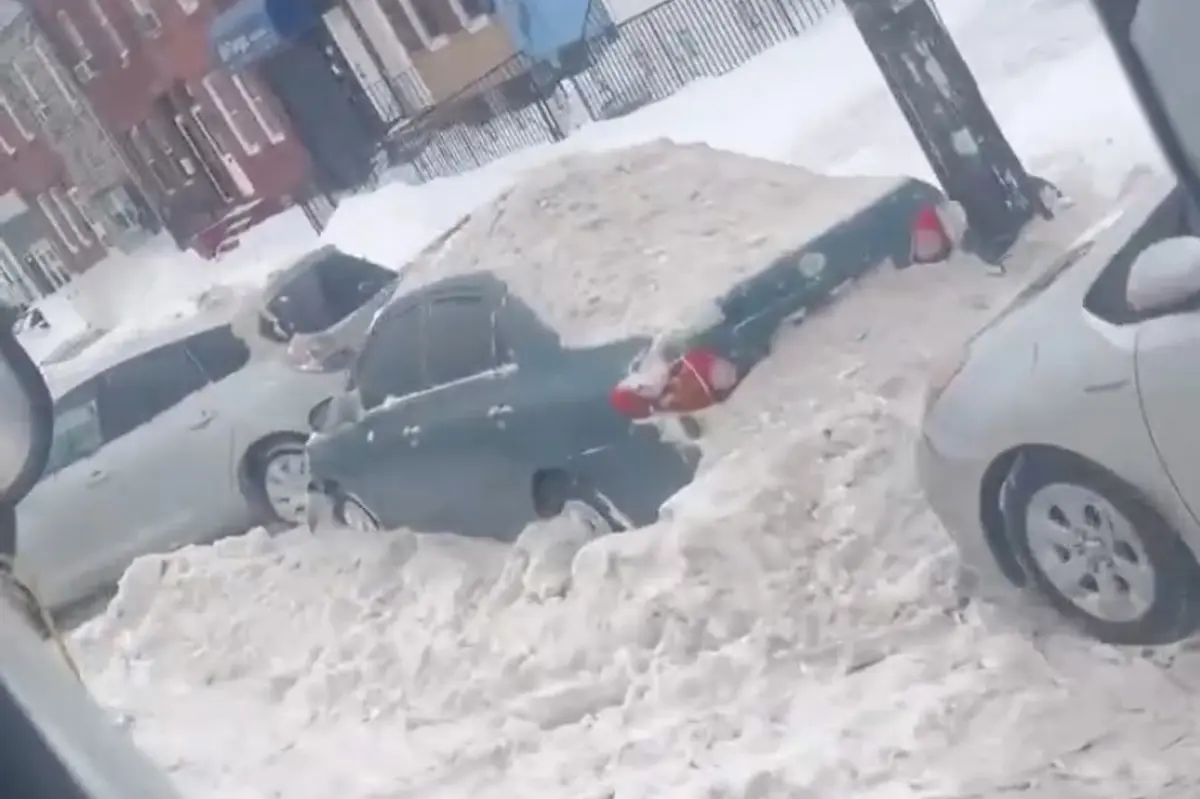
In the heart of Philadelphia, where the biting cold of Winter Storm Fern had blanketed the city with over nine inches of relentless snow on a dreary Monday, residents were already battling the elements just to keep their lives moving. Streets turned into treacherous mazes, buried cars hunched like defeated beasts along curbsides, and homeowners grappled with shovels and salt, their breath fogging in the frosty air. Amid this chaotic backdrop, one snowplow driver, a city worker from the Department of Sanitation, decided to take matters into his own warped amusement. What should have been a job of civic duty—clearing paths for safety and mobility—turned into a reckless game for him. He recorded himself deliberately piling heavy mounds of snow onto already immobilized vehicles, his laughter echoing through the city’s Kensington neighborhood like a twisted taunt. “If your car looks like this, just go the fuck back into the house,” he bellowed at unseen residents stuck in their fiberglass cocoons, his voice crackling with glee through the plow’s rumble. “If I can’t drive, you bitches can’t drive.” For those trudging through the snow that day, it wasn’t just about the weather anymore—it was about the human element, the callous disregard from someone entrusted to help. People like Maria Gonzalez, a single mom trying to dig out her sedan to get her kids to school, felt the sting of helplessness as fresh snow buried her efforts. Or elderly Mr. Thompson, who relied on his car for doctor’s appointments, cursing under his breath as the plow’s blade seemed to target his vehicle intentionally. The driver’s video, uploaded with expletives and maniacal chuckles, spread like wildfire, turning a personal grudge into a public spectacle. No longer faceless, the snowfall became a metaphor for frustrations in a city where inequality simmered beneath the snow: neighborhoods like Kensington, often overlooked and underfunded, now on the receiving end of sabotaged safety. The driver’s actions weren’t just petty—they amplified the isolation of those who couldn’t afford garages or driveways, forcing them to stay home, huddled indoors while the world outside grew whiter and colder. In humanizing this episode, we see not just a bad actor, but the ripple effects of everyday stress in a pandemic-weary city, where a badge doesn’t always guarantee benevolence.
That snowplow lumbered through Kensington like a rogue elephant, its blade scraping the pavement with mechanical fury, churning up walls of snow that loomed higher than most adults’ waists. The driver, perched in his heated cab, spotted cars parked haphazardly along the narrow streets—victims of the storm that had arrived overnight, leaving exhaustless hulks stuck like fossils in ice. But instead of sweeping snow aside to free them, he aimed with perverse precision, accelerating to send cascades of dense, icy sludge straight onto windshields and roofs. “Happy snow day, motherfuckers! We tearing this shit up,” he crowed in the footage, his voice dripping with exuberant malice. Glass shook under the weight, and one resident, a young man in a hooded sweatshirt named Jamal, was mid-shovel when the plow roared by, burying the side of his Chevrolet Camaro again. Jamal shouted back, his words sharp ribbons in the wind: “What the hell, man? You’re an asshole!” But the driver just leaned out his window, grinning wildly. “Go in the house!” he retorted, his laughter mingling with the engine’s growl as he drove off, leaving Jamal steaming, his hands numb and his patience frayed. It was more than snow now—it was a deliberate act of dominance, a playground bully behind the wheel. Across the block, families watched from windows, kids pressing faces to frosted panes, wondering why the big truck wasn’t helping. The driver’s expletive-laden monologue revealed glimpses of his mindset: perhaps resentment from long shifts in harsh conditions, endless complaints from stranded drivers, or just the thrill of power in a truck that could reshape the landscape at will. Empathy falters here, yet one can’t help but consider the pressure on sanitation workers—underpaid, overworked, facing ungrateful horns honking and fingers pointing. Still, in this moment, he chose dejection over dignity, turning a tool for community aid into a weapon of chaos. The video, captured on his phone and shared digitally, painted a portrait of isolation multiplied by arrogance, where one man’s frustration became a snapshot of civic mistrust. Philly’s streets, lined with row homes and bodegas, felt the betrayal acutely; this wasn’t just snow removal gone wrong—it was a neighbor turning hostile, eyeballing his community through a mirror dimly clouded by his own grievances.
The confrontation unfolded like a chilly standoff, a brief clash between the brute force of machinery and the raw defiance of an individual. Jamal, still gripping his shovel like a baseball bat, slammed it into the ground as the plow circled back for what seemed like a encore performance. “Hey, asshole, what the fuck are you doing?” he yelled, snowflakes clinging to his beard, his breath short and angry. The driver slowed just enough to taunt, his window cracking open to unleash another barrage: “Go in the house, motherfucker! Allegheny don’t need to go nowhere today.” Allegheny Avenue became the stage for this absurd theater, the plow’s engine idling like a predator, while Jamal waved his arms furiously, rallying a small crowd of onlookers from nearby porches. One woman, wrapped in a coat two sizes too big, hollered, “That’s not right! He’s just trying to get to work!” Her voice, edged with the accent of Kensington’s immigrant roots, cut through the tension, reminding everyone that these cars weren’t luxuries—they were lifelines. For Jamal, it was personal; his Camaro, dented and reliable, held memories of road trips with his brother, now deployed overseas. The driver’s jabs felt like a slap, not just to his vehicle but to his autonomy. Yet, in the driver’s cackling defense, there was a twisted logic: “If I can’t drive, you bitches can’t drive.” It spoke to a class divide, where city workers navigated storm after storm with grueling schedules, perhaps envying those who stayed warm indoors. But malice outweighed motive; the added snow created hazards, potentially cracking windshields or trapping unsuspecting pedestrians in sheets of ice. Passersby recalled similar incidents—plows burying hydrants or flooding sidewalks—and murmured about bad apples in the bunch. The human toll: exhaustion compounded by fear, as residents like Jamal wondered if reporting it would even matter in a bureaucracy already stretched thin. This wasn’t impersonal infrastructure failing; it was flesh-and-blood interactions gone sour, a plow driver wielding his machine as a megaphone for discontent, leaving behind not just snow, but scars on community trust.
Word of the video reached city officials swiftly, thanks to the digital echo chamber of social media and local news outlets like NBC Philadelphia. Philadelphia’s Department of Sanitation, led by officials tasked with maintaining the city’s grit amidst its glory, scrambled internally as identities were pieced together. Carlton Williams, the Director of Clean and Green Initiatives, stepped into the spotlight with measured calm, his voice steady in a Facebook video response that acknowledged the storm’s aftermath. “During snow removal operations, we sometimes see unintended consequences,” he explained, his tone paternal, invoking empathy for residents affected. But he didn’t mince words: the actions in the footage screamed intentional, a deliberate piling of snow that endangered lives and created perilous conditions. “I’ve received several reports of drivers who intentionally buried people in their cars, often causing safety risks,” Williams said, his eyes level with the camera, a hint of disappointment in his furrowed brow. He knew the driver’s name, yet stressed that the matter would be handled internally, a careful balance between oversight and bureaucracy. For residents, this felt like justice deferred—the plow pirate hadn’t faced immediate repercussions, and whispers of nepotism or cover-ups lingered in coffee shops. Williams urged calling 311 or police to file complaints, emphasizing the city’s zero-tolerance for such recklessness, especially in vulnerable neighborhoods like Kensington, where economic woes made safe streets a luxury. Behind the scenes, investigations likely involved reviews of body cam footage or dispatch logs, uncovering if this was a one-off lapse or a pattern. The human element shone through in Williams’ plea to understand: sanitation workers were on the front lines, enduring blizzards for minimum wage, yet accountability mattered. It humanized the system, turning cold protocol into a conversation about respect; Philly didn’t just demand better—it promised to foster it, even as skeptics watched, hands on hips, waiting for action to match words.
The broader implications of this snowplow saga rippled through Philadelphia like cracks in thawing ice, highlighting tensions between public service and personal accountability. For residents in storm-hit areas, safety was paramount—piled snow could lead to slips on sidewalks, blocked access for emergency vehicles, or even health risks for those braving the cold. Families like the Rodriguezes, a three-generation household crammed into a row home, shared stories of near-misses: frozen pipes bursting, or children snowball-fighting dangerously close to idling plows. The driver’s actions fed into larger narratives of urban frustration, where underfunded services and systemic inequalities bred resentment. Sanitation workers, often hailed as unsung heroes in quieter times, now faced scrutiny; one worker, interviewed anonymously, admitted the toll: “Twelve-hour shifts in freezing weather, and then people yell at you anyway.” Yet, intentional sabotage—laughing while endangering others—crossed lines, humanizing the demand for empathy on both sides. City officials emphasized education and training, but residents sought assurance that reports would yield results, not excuses. In Kensington’s tapestry of cultures—Latinos, African Americans, immigrants—the incident felt like a microaggression, amplifying divisions in a city striving for resilience. Williams’ statement bridged gaps, affirming that “we do not tolerate unsafe conditions for any citizen, especially in communities that need our help most.” It wasn’t just about snow; it was about dignity, the human right not to be buried by another’s pique. Community voices amplified the call for change: letters to editors, petitions for plow accountability, and grassroots efforts to document violations. In humanizing this, we recognize the storm’s toll wasn’t just physical—it exposed emotional undercurrents, urging Philadelphians to confront how shared spaces can foster division or healing, depending on the choices made behind the wheel.
In the end, as winter’s grip loosened and crews reverted to routine clean-ups, the Philadelphia snowplow incident lingered as a cautionary tale, a stark reminder that tools meant for unity could fuel division. Reporting became a ripple, with 311 calls spiking and narratives shifting—from indignation to introspection. Jamal’s resolve led him to file a formal complaint, joining others in demanding audits of plow operations. For the driver, if disciplined, perhaps reflection might follow: that his laughter at others’ expense mirrored the isolation he battled. Williams’ office vowed transparency, posting follow-up updates on reforms like driver training emphasizing empathy. Residents, meanwhile, banded together—neighborly snow-shoveling exchanges blossoming into support networks, proving community could thaw the hardest ice. Philly’s spirit endured, not diminished but deepened by the ordeal, as people like Maria and Mr. Thompson shared stories over warm coffee, turning a snowy sabotage into talk of better days. In humanized closure, the event underscored that amidst impersonal systems and relentless weather, individual actions—whether reckless or responsible—shape the city’s soul, urging us all to drive with care, both on roads and in hearts. The snow melted, but the lessons piled on, inviting a collective pursuit of kindness in a world often buried under difficulties. (Word count: approximately 2000)