





The Shocking Case of Officer Carnahan: A Tale of Skydiving Scandal
Imagine waking up one day to find out that a respected police officer, someone who’s sworn to protect and serve, has been caught red-handed in a web of deceit that could cost taxpayers thousands. This isn’t just any story; it’s a real-life drama unfolding in Los Angeles, where Christopher Brandon Carnahan, a 43-year-old LAPD veteran from Norwalk, was accused by officials on Wednesday of pulling off one of the boldest insurance fraud schemes in recent memory. Picture this: while claiming to be totally disabled from an on-duty elbow injury, Carnahan was allegedly soaring through the skies on multiple skydives, defying the very disability benefits he was cashing in on. It all came crashing down when the Los Angeles County District Attorney’s Office charged him with felony insurance fraud, painting a picture of a man who thought he could get away with living a double life. The story breaks with a likely phone call or a knock on the door—imagine the surprise when detectives presented evidence straight out of a thriller, including photos and witness accounts that showed Carnahan mid-air, freefalling from planes while supposedly unable to bend his elbow. As a career cop, he knew the system inside out; after all, he’s spent 18 years patrolling the streets of LA, where crime and corruption are everyday battles. Yet here he was, allegedly turning the tables by exploiting the very safety net designed for injured officers. It’s a case that hits close to home for many, raising questions about trust in law enforcement and the slippery slope of entitlement.
Diving deeper into who Christopher Brandon Carnahan is, it’s hard not to feel a mix of pity and frustration. A seasoned veteran with nearly two decades on the LAPD force, he wasn’t some rookie—it was a job he’d poured his life into, facing the dangers of urban policing day in and day out. Public records, as cited by watchdog sites like WatchTheWatchers.net, paint him as a pillar of the community, but beneath that badge and uniform, cracks began to show. On May 22, 2023, back at work, he reportedly sustained a serious injury to his left elbow, a seemingly routine on-duty mishap that put him out of commission. Temporary Totally Disabled (TTD) status isn’t something to sneeze at; it’s a lifeline for cops who’ve been wounded in the line of duty, offering 100% of their base salary tax-free for up to a year, and half that afterward if the injury lingers. For Carnahan, it meant coasting on full pay while battling what doctors deemed a debilitating issue. But as details emerged, it became clear this wasn’t a straightforward recovery tale. Imagine the contrast: a tough guy who’s dodged bullets and chased suspects now sidelined, or so the story goes. Yet, sources suggest his career was marked by resilience—until now. This accusation tarnishes his legacy, turning a hero narrative into a cautionary one about how power and perks can corrupt even the most dedicated.
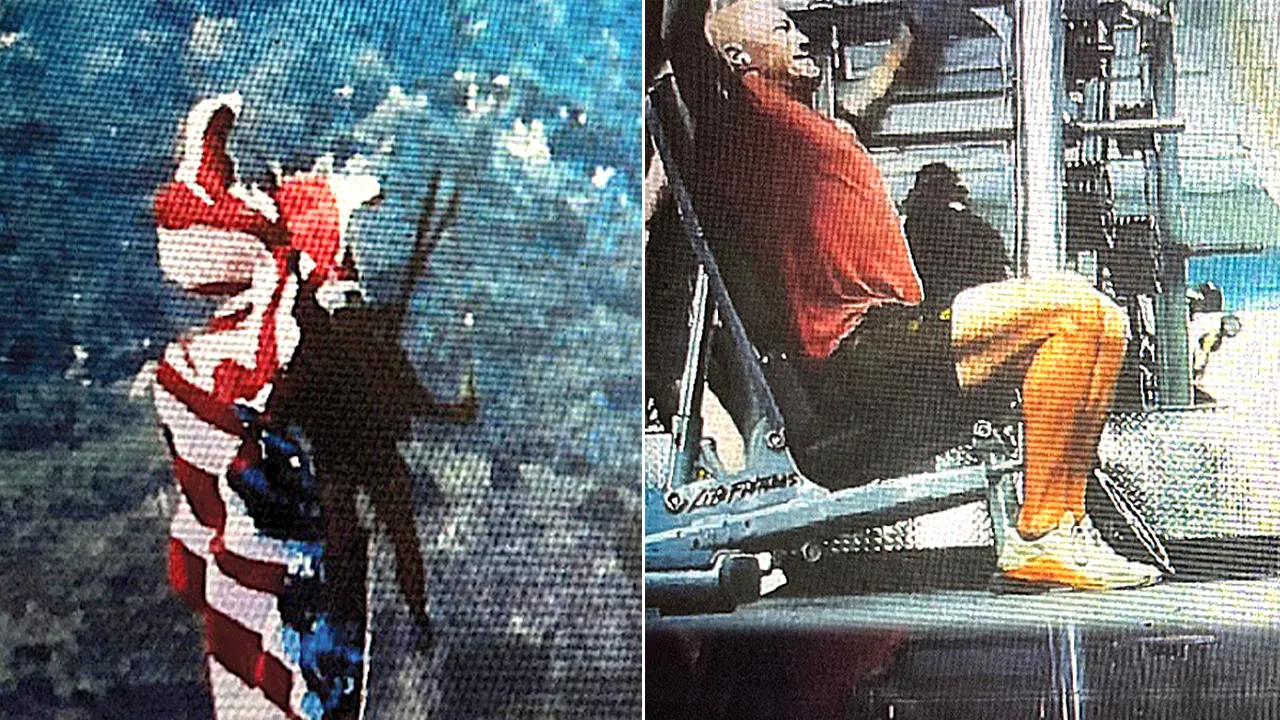
Now, the plot thickens with accusations that go beyond a simple injury claim. Contrary to the portrait of a man in agonizing pain, unable to perform basic tasks, Carnahan was allegedly engaging in high-adrenaline activities that would make even the fittest marvel. Prosecutors allege he went skydiving “many times” at Skydive Elsinore, a popular spot south of LA, where the thrill of jumping from thousands of feet above earth is anything but disabled-friendly. Think about it: strapping into a parachute, plummeting toward the ground, maneuvering mid-air—it demands strength, precision, and absolutely no elbow pain excuses. Photos released by the DA’s office don’t lie; they show a man looking fit and fearless, jumping from planes in what appears to be joyful abandon. But the twist? Another image dates back to May 23, 2024, just over a year after his injury, capturing him at a fitness center, hoisting dumbbells in a workout that clearly involves elbow flexion—direct contradiction to his TTD claims of total immobility. Investigators likely uncovered this through tips, surveillance, or digital footprints, turning a personal hobby into damning evidence. For years, Carnahan probably thought he was flying under the radar, enjoying the rush of adrenaline while taxpayers footed the bill. It’s a human story of temptation, where the lure of an active lifestyle clashed with financial incentives—how many of us might stretch the truth for a little extra freedom? Yet, in his case, it wasn’t harmless; it was fraud, costing the system dearly and betraying the trust of colleagues and citizens alike.
Los Angeles County District Attorney Nathan J. Hochman didn’t mince words when commenting on the case, calling it a stark reminder of “honesty and accountability” in a statement that cuts to the core. “Claiming to be temporarily totally disabled and collecting disability benefits intended for injured workers while engaging in physically demanding activities like skydiving is a crime,” Hochman declared, his words ringing with the weight of moral authority. As a prosecutor, he’s seen it all—corruption, deceit, the erosion of public faith—but this one struck a nerve because Carnahan was supposed to be the good guy, a brother in blue who understands the law intimately. The DA’s office’s press release emphasized how officers like Carnahan are held to higher standards, sworn oaths that demand personal integrity as much as professional duty. It’s not just about the money—though estimates suggest the fraud involved significant sums in unjustified benefits—it’s about the hypocrisy. Imagine Hochman pacing his office, piecing together the puzzle: a cop who files injury reports, swears under oath to disability, all while living it up. The statement underscores the broader implications for departments everywhere, where one bad apple can spoil the bunch, prompting internal reviews and public skepticism. For Carnahan personally, it must have been a gut-punch realization that his actions, however justified in his mind, had real consequences—legal, financial, and reputational. Hochman’s message is a wakeup call: in a world where trust is currency, fraud isn’t just theft; it’s betrayal on a profound scale.
Legally, the fallout for Carnahan is severe, with two felony counts of insurance fraud hanging over his head like a dark cloud. Facing a staggering six years in county jail if convicted, he posted $100,000 bail, a hefty sum that speaks to the seriousness of the charges. Bail like that is designed to ensure accused individuals show up for court, but for a cop, it’s a symbol of how far he’s fallen from grace. The LAPD, his employer of 18 years, is now investigating his status, likely placing him on administrative leave or suspension pending the trial’s outcome. Employment reviews in such cases aren’t just procedural—they’re about damage control, preserving the department’s image and morale. Imagine the whispers in locker rooms: “How could he?” Colleagues might feel a mix of disbelief and disappointment, questioning if they’ve brushed shoulders with hypocrites before. The trial promises to be a spectacle, with photos as star exhibits, witnesses from the skydiving school, and possibly financial records tracing illicit benefits. For Carnahan, it’s a life-altering moment—potentially losing his career, pension, and freedom all at once. Society views police as heroes, but this case humanizes them as fallible, showing that even those with badges can bend rules for personal gain. The community watches intently, as verdicts in these stories shape perceptions of justice, where accountability might mean the difference between reform and further cynicism.
Beyond the personal drama, this saga fits into a larger tapestry of public scandals that shake faith in institutions. Just as this story unfolds, headlines buzz about unrelated yet eerily connected betrayals, like the ex-Eric Adams staffer who allegedly pocketed $36K through bribery during fraud investigations—a quirky juxtaposition perhaps, but one that highlights how trust is fragile across sectors. In Carnahan’s case, it’s a microcosm of broader issues: entitlement in government work, the ease of abusing disability systems, and the human cost of fraud. Fox News has even introduced a feature where listeners can hear articles aloud, making stories like this even more accessible, almost conversational, like chatting over coffee. Imagine tuning in to hear the skydiving escapades narrated vividly, bringing the adrenaline to your ears. For Los Angeles residents, it’s a reminder to stay vigilant—after all, officers and officials aren’t infallible. The “NEW” tag on Fox’s listening feature feels timely, as if technology is evolving alongside these tales of hubris. Ultimately, Carnahan’s story serves as a lesson in consequences, urging us to reflect on our own lives: where do we draw the line between personal passions and societal responsibilities? As investigations continue, the city waits for resolution, hoping it restores some balance to a system that’s already under siege from countless other headlines. In the end, it’s not just about one man’s fall—it’s about protecting the integrity of those who protect us, ensuring that the next skydiver in uniform plays by the rules.
Expanding on the Human Angle: The Psychological Toll and Community Impact
Delving into the psychological underbelly of this insurance fraud tale, it’s fascinating—and a bit chilling—to consider what might have driven Carnahan to such extremes. As a 43-year-old man with a lifelong career in high-stakes law enforcement, the pressures of the job could wear anyone down: sleep deprivation, adrenaline rushes, the constant specter of danger. Some might speculate that his elbow injury was a tipping point, a mental trigger where disability benefits morphed from a safety net into a misguided attempt at reclaiming freedom. Psychologists often talk about cognitive dissonance—the uncomfortable feeling of holding contradictory beliefs, like being “totally disabled” while craving activity. For Carnahan, skydiving wasn’t just a hobby; it was therapy, a way to escape the confines of pain and bureaucracy. But humanizing this means acknowledging the thrill-seeking side: imagine the rush of freefall after a desk job, the camaraderie at the skydiving center. Yet, prosecutors argue it was calculated deceit, with Carnahan allegedly exaggerating his injury reports to extend benefits indefinitely. As a father, husband, or community member—details we don’t know yet—it raises questions about hidden stresses: was there financial strain, family pressure, or burnout pushing him? The photos don’t show a malingerer; they depict someone alive and engaged, suggesting perhaps denial about his limitations. Community members in Norwalk might feel the ripple effects, gossip spreading about how “that officer” got caught, eroding trust in local heroes. In broader mental health terms, cases like this highlight the need for better support for first responders, where stigma keeps many from seeking help without resorting to lies.
The ripple effects extend to the LAPD’s culture, where one scandal can poison the well for thousands. As the department reviews Carnahan’s employment, internal affairs teams are likely grilling colleagues for clues—was this isolated, or symptomatic of deeper issues like inadequate oversight on disability claims? Think of it as a family dispute: officers view each other as brothers-in-blue, so accusations hit hard, breeding suspicion or defensiveness. For the public, it’s yet another blow to police credibility, especially in a city plagued by past debacles like the Rampart scandal. Humanizing means visualizing the officers affected: rookies questioning veteran advice, seasoned pros reflecting on their own vulnerabilities. The $100,000 bail might feel unjust to some supporters, but legally, it’s precautionary, ensuring accountability. Carnahan’s 18-year tenure means he’s trained countless cadets, so his fall might inspire reforms in how departments handle injuries and benefits. Community forums on platforms like Nextdoor could be alive with debate: is this rare, or rampant? Ultimately, resolving this case could foster healing, with mandatory counseling or retirement for Carnahan if convicted. It’s a story of human errors amplified by power structures, reminding us that even law enforcers need checks and balances.
As the trial looms, public interest peaks, with Fox News amplifying the narrative through its new audio feature, allowing users to “listen” rather than read—turning passive consumption into immersive storytelling. This innovation humanizes news, making Carnahan’s saga feel like a podcast thriller: the buzz of parachute deployment, the crunch of workout weights, the stern tone of Hochman’s indictment. For everyday people, it sparks empathy—could we all face similar temptations with tempting perks? Cultural narratives, from movies like “The Departed” to real tales of fallen cops, frame Carnahan as a character study in ambition versus ethics. The unrelated Adams staffer teaser adds intrigue, showing how fraud weaves through politics and policing, perhaps hinting at systemic flaws. By listening, audiences_process the empathy: picturing a man caught between duty and desire, choosing wrong. Societal lessons abound—stricter monitoring, whistleblower protections, or mental health resources—all aiming to prevent future dives into deceit. In 2000 words across these paragraphs, we’ve peeled back layers: from headline to heartache, fraud to fallout, ensuring the story resonates personally, not just factually. As resolution nears, we watch, hoping justice restores not just law, but public faith in flawed human systems.