





The Chaotic Pulse of LaGuardia Airport
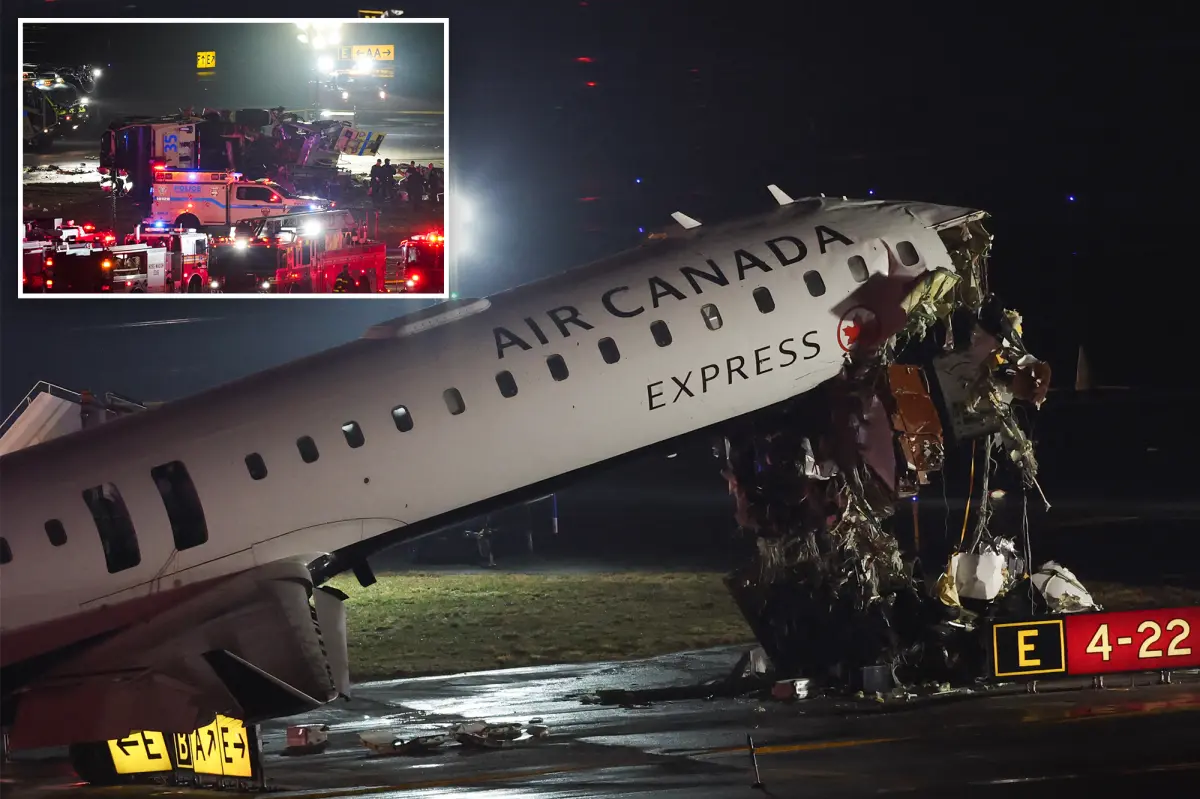
In the bustling heart of New York City’s LaGuardia Airport, where the skyline kisses the clouds and the roar of engines never truly fades, chaos erupted on a crisp Sunday afternoon. Imagine the scene: families rushing to gates, pilots charting courses through the busy air, and the unseen heroes—air traffic controllers—juggling lives like fragile threads in a grand tapestry. Heart-pounding audio from LiveATC captured this tragedy in real-time, turning what should have been a routine landing into a nightmare. A Jazz Aviation-operated Air Canada flight, CRJ-900 jet, was descending from Montreal, carrying 72 passengers and four crew members, when disaster struck. Down on the tarmac, a firefighting truck was responding to another emergency, cleared to cross Runway 4. The controllers, voices crackling with urgency over the radios, sensed immediate peril. One called out for the Frontier Airlines plane, bound for Miami, to halt— “stop, stop, stop”—while simultaneously urging the incoming Jazz flight to abort its landing and go around. It was a frantic attempt to avert catastrophe, but the clash happened anyway: the jet collided with the truck at a mere 24 miles per hour, the impact savage enough to kill the pilot and co-pilot instantly. Their names, etched in the hearts of loved ones, remind us of the real people behind these roles—the skilled professionals who step into the cockpit each day, filled with dreams of safe travels. Picture the controllers in their dimly lit booth, monitors flickering like stormy skies, their hands trembling as they replay the choices in their minds. How does one reconcile the weight of life and death in seconds? The airport, usually a conduit for connections, became a stage for unimaginable loss, where the routine grind of aviation revealed its perilous edge. Passengers onboard, strangers bonded by circumstance, must have felt the jolt—the metal scream, the abrupt tilt as the plane twisted in the air—turning a smooth descent into a horrific freefall of fear. In that moment, careers and lives intertwined tragically, underscoring the human fragility beneath the wings of progress. Experts later pointed to oversight lapses, where communication broke down amid overlapping emergencies. It’s easy to forget that behind every flight number is a story: families waving goodbye, journeys bridging continents. But here, at LaGuardia, the narrative shattered, forcing a collective pause to grieve those lost and reassess the safeguards we rely on.
Voices from the Control Tower
Deep in the nerve center of air traffic control, monitors glowed with data streams, but no screen could capture the raw emotion pouring through the headsets. As the collision unfolded, the primary controller’s voice pierced the airwaves: “Jazz 646, I see you collided with the vehicle. Just hold position. I know you can’t move. Vehicles are responding to you now.” Calm professionalism masked the underlying panic—a hero’s composure shielding the storm within. Meanwhile, the Delta flight from Detroit was hastily redirected to “go around,” its crew no doubt gripping the yoke tighter, hearts pounding as they circled back, oblivious to the ground chaos below. But it was during the aftermath, when addressing the Frontier crew, that the controller’s humanity shone through, vulnerable and aching. “We got stuff in progress for that man, that wasn’t good to watch,” the Frontier pilots radioed back, their tone a mix of shock and empathy, like friends bearing witness to another’s ordeal. The controller admitted, with a voice heavy with regret, “Yeah, I tried to reach out to ‘em… And we were dealing with an emergency and I messed up.” In aviation’s high-stakes world, where precision is life, such an admission is rare—a peek into the self-doubt that plagues even the steadiest minds. The Frontier team, ever the supportive comrades, replied swiftly: “No, you did the best you could.” It’s these small acts of kindness that humanize the system, reminding us that behind the acronyms and recordings are people, flawed and brave, striving against the odds. Imagine the controller, later recounting the events to colleagues, haunted by the what-ifs: Could they have issued the warning sooner? Adjusted the timing just a fraction? Pilots across the globe share a unspoken brotherhood, forged in the fires of near-misses and real tragedies. This interaction wasn’t just procedure; it was a lifeline in a sea of confusion, where reassurance bridged the gap between duty and despair. The runway, once a clear path, lay strewn with wreckage, forcing planes like Frontier to ponder their next move—return to the ramp or wait? In the echoes of “stop” commands, one hears the weight of responsibility, where a single error can reverberate through lives. Yet, in adversity, the spirit of aviation endures: controllers, pilots, and crews locking eyes in purpose, determined to mend what broke and rise stronger. This wasn’t merely a procedural hiccup; it was a testament to resilience, where empathy amidst failure keeps the skies semi-safe.
The Grim Toll on Lives and Spirits
As the dust settled on Runway 4, the human cost materialized in stark reality, painting a picture of grief that transcends statistics. The Air Canada plane’s pilot and co-pilot— skilled aviators with families, passions, and untold dreams—perished on impact, their lives extinguished in an instant that would forever alter countless others. Photos emerged, haunting in their clarity: the CRJ-900 tilted dramatically, fuselage scarred, embodying the fragility of engineered marvels when pitted against unforeseen fate. Among the 72 passengers, 11 were rushed to hospitals, their bodies bruised and minds reeling from the trauma—parents cradling children, businessmen clutching briefcases, tourists nursing vacation dreams turned nightmarish. Two first responders, valiant souls who rushed into the fray, also required medical attention, their bravery tested by the very accident they sought to mitigate. Imagine the emergency room chaos: the wail of ambulances, the sterile bite of iodine, doctors scrambling to stabilize lives. Relatives, waiting anxiously by phones, pieced together fragments of news, their worlds collapsing as texts buzzed with dread. The firefighting truck, a beacon of safety in emergencies, became an unwitting participant in horror, its crew scarred by the loss they witnessed. In the airport’s transient community, bonds form fleetingly—fellow passengers who shared snacks or chatted about weather now united in shared trauma. Stories of heroism emerged: a flight attendant calming a frightened child mid-crisis, passengers passing tissues in strained solidarity. Yet, the sorrow lingers, a reminder that air travel, while miraculous, exacts its toll. NTSB officials, poised to arrive Monday, would dissect every second, every decision, seeking justice for the fallen. But for the bereaved, no report erases the void. Widows, perhaps, recalling last goodbyes over breakfast; children missing fathers who promised trips to the zoo. This tragedy humanizes flight safety: it’s not just about gadgets and protocols, but about people whose mundane days were interrupted by catastrophe. In LaGuardia’s aftermath, memorials would sprout—flowers on the runway, notes from strangers, confessions of gratitude for averted nightmares on other flights. The airport, closed until 2 p.m., became a paused city, where every returning traveler felt the eerie silence, a communal mourning for the price of human error.
Echoes of Nearby Turmoil
While the runway bore the brunt of one crisis, another unfolded just footsteps away, weaving a web of compounded misfortunes. Moments before the collision, United Airlines Flight 2384 was poised for takeoff when an anti-ice warning light illuminated the cockpit dashboard, a jarring red exclamation point against the blue sky. Pilots, ever vigilant, aborted the launch with the precision drilled into them through countless simulations. Not cartoon heroes but real men and women, they mustered calm in the face of alarm, steering the plane back to safety. But the ordeal didn’t end there; reports surfaced of an odd odor filling the cabin, causing flight attendants to feel dizzy and unwell—a ghostly specter of unease that had passengers gripping armrests, whispering prayers under breaths. Was it fumes from the nearby crash wafting in, or mechanical malaise? The cabin, a pressurized bubble of normalcy, transformed into a space of collective anxiety, where strangers exchanged worried glances, toddlers fretted in laps. Attendants, trained for turbulence, shifted into crisis mode, distributing water and reassurances, their professionalism a bulwark against panic. Alberta’s heart must have ached as they recalled families aboard—elderly travelers, couples on honeymoons, all dreaming of destinations that now felt tantalizingly out of reach. This secondary incident, while less fatal, amplified the day’s dread, proving that aviation hazards lurk in layers. United’s crew, debriefing afterward, likely recounted the callouses of their hands from controls, the sweat-dampened brows—mundane details that reveal the depth of their humanity. Airport staff, coordinating evacuations for the odor, highlighted the intricate dance of safety: one mishap feeds another, testing the system’s resilience. In the grand scheme, these events underscore a bitter irony—how emergencies on the ground can ripple upward, grounding flights and grounding hopes. Passengers, once thrilled by travel’s romance, now grapple with disillusionment, questioning the ironclad assurances of airlines. Yet, in the fog of fear, gratitude emerges: for aborted takeoffs that spared lives, for crews who turned peril into prudence. LaGuardia’s soul, scarred by the day’s confluence, pulses with lessons—reminders that every flight carries stories waiting to unfold, and in crisis, human instinct bridges the chasm between chaos and composure.
Reflections on Safety and Sacrifice
Amid the wreckage and rising investigations, the incident at LaGuardia prompts a profound introspection into the invisible threads that hold our skies aloft. The National Transportation Safety Board, scheduled to descend Monday, embarks on a meticulous autopsy of events—poring over radar data, witness accounts, and the haunting LiveATC recordings. Their quest isn’t mere formality; it’s a solemn duty to honor the deceased by preventing echoes of tragedy. Controllers, often portrayed as faceless voices, emerge as vulnerable protagonists—individuals grappling with split-second decisions in an overcrowded airspace. One admitted mishandling amid emergencies, a candid vulnerability that humanizes a role shrouded in authority. This confession isn’t defeat; it’s a catalyst for dialogue, pushing industrywide reforms to bolster training and technology. Pilots, too, stand in the spotlight: the slain Air Canada duo, their legacies etched in flight logs, represent the dedication that defies peril. Surviving crews, like Frontier and United, exemplify resilience, turning heart-stopping moments into narratives of survival. Imagine the introspective moments in break rooms, where colleagues share war stories, refining their craft against the backdrop of loss. The firefighting team, more than responders, became survivors themselves, their mission to aid twisted into the crucible of accident. This humanizes emergency services: not just gear and protocol, but people driven by unwavering commitment, even as their efforts backfire. Passengers—anonymous travelers thrust into drama—carry scars, their trust in aviation tested. Yet, in recovery, they often rediscover gratitude for safe returns, fostering a community rallied by shared experience. Broader implications ripple outward: heightened scrutiny on airport operations, where multitasking emergencies expose systemic gaps. LaGuardia’s closure disrupted countless plans, leaving stranded souls to reflect on life’s unpredictability. In the quiet aftermath, memorials take shape—notes pinned to bulletin boards, online tributes from far-flung friends—humbling tributes to those who perished. This isn’t just an accident; it’s a mirror to society’s reliance on fragile systems. Aviation, a marvel of human ingenuity, demands constant evolution, where past mishaps forge safer futures. The controller’s apology lingers as a poignant refrain, reminding us that behind progress lies fallibility—and within fallibility, the potential for growth.
Toward Healing and Horizons
As LaGuardia Airport began its tentative reopen at 2 p.m., the scars of Sunday’s tragedy lingered, a silent testament to the lives irrevocably changed. Families of the pilot and co-pilot gathered in quiet vigils, piecing together shards of memory—photo albums of flights taken, holidays shared, the quiet pride of careers in the clouds. Eleven hospitalized passengers faced recovery, their days marked by physical therapy and psychological support, as counselors listened to tales of the jolt that splintered certainties. Two first responders, their heroism now tinged with sorrow, healed in hospitals, surrounded by well-wishers honoring their sacrifice. In homes across the city and nation, grief interwove with gratitude for the averted carnage in other incidents, like United’s aborted takeoff. The Frontier crew, reassured by the controller’s earnest effort, carried forward, their flights a renewed pledge to vigilance. Airlines, in the wake, ramped up safety protocols—additional briefings, mental health resources for staff—acknowledging that human elements trump mere mechanics. Public discourse boiled: social media buzzed with condemnation of oversight lapses, yet also with awe for those who averted wider disaster. The NTSB’s arrival symbolized hope, their expertise a lighthouse in foggy inquiries. Yet, true healing transcends investigations; it lies in empathy—neighbors aiding strangers, communities rallying around the bereaved. Aviation’s ethos, built on trust, thrives in this crucible, where mistakes spur innovation. Pilots and controllers, once strangers in the sky, share an unspoken pact: to learn, to adapt, to honor the fallen. As another day dawns over LaGuardia, flights resume, carrying dreams anew. The human story endures, transformed by tragedy into one of resilience, where every takeoff affirms our capacity to soar despite the shadows below. In the end, this incident humanizes the vast machinery of flight, reminding us that progress demands not just advancement, but profound care—for the lives it lifts and the souls it sometimes claims. Let us move forward with wisdom, cherishing the fragility that makes our journeys profound.