




Kid Rock’s Helicopter Showdown: A Defiant Salute to America
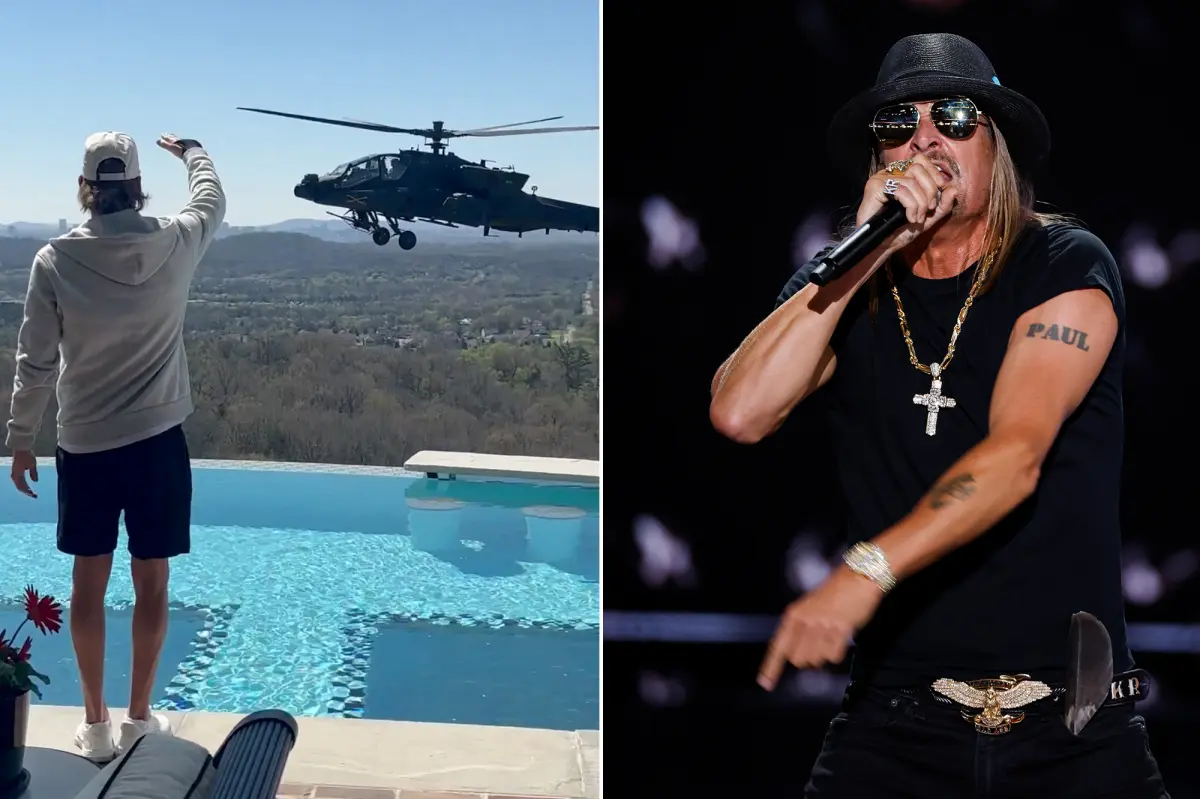
Picture this: It’s a crisp autumn afternoon in Whites Creek, Tennessee, where the air hums with the roar of military choppers swirling overhead. Kid Rock, the gravel-voiced rocker known for anthems like “Bawitdaba,” steps onto the balcony of his sprawling estate, a place he’s dubbed the “Southern White House.” At 55 years old, with the wind whipping through his signature mullet, he stands firm like a loyal soldier guarding his turf. The helicopters—powerful, gleaming beasts of the U.S. military—hover just yards away, their rotors churning the air into a tempest that ruffles the flags and makes the infinity pool below ripple like a stormy sea. This isn’t just a random flyover; it’s a meticulously orchestrated display of respect, with Kid Rock offering a sharp, crisp salute to the pilots as they pass. Next to him stands a miniature Statue of Liberty, symbolizing his unyielding love for the red, white, and blue. In a video that would soon ignite social media, Rock captures the spectacle, turning his home into a stage for pure American bravado. But as the clip plays out, it becomes clear this is no innocent display—it’s a platform for Rock to lob a verbal grenade straight at California’s Governor Gavin Newsom, captioning the footage with a stinging indictment: “This is a level of respect that s— for brains Governor of California will never know. God Bless America and all those who have made the ultimate sacrifice to defend her.” It’s a moment that feels both exhilarating and confrontational, blending rock ‘n’ roll swagger with patriotic fervor, and it sends his fans into a frenzy while rattling his critics. For Rock, a Michigan native who’s built a career on being the voice of the working-class rebel, this video is more than a post—it’s a statement, a middle finger to the elites he sees as out of touch, and a celebration of the ordinary Americans who serve their country without fanfare. As word spreads, the clip racks up millions of views, sparking debates across platforms about patriotism, celebrity feuds, and the growing divide between coast and heartland values. You can almost hear the echoes of “Born in the U.S.A.” playing in the background as Rock stands there, unapologetic and proud, embodying the spirit of a nation that refuses to back down.
Rock’s “Southern White House” isn’t just a home; it’s a monument to excess and ideals, sprawling across 27,000 square feet like a fortress built to outlast the ages. Modeled after the real 1600 Pennsylvania Avenue in Washington, D.C., the estate screams “American dream” with its grand façades, sweeping lawns, and that iconic infinity pool that stretches toward the horizon. But it’s the details that paint the full picture of Kid Rock’s world—a gold-plated toilet that glimmers like a throne for kings, complete with luxury finishes that make even the most opulent bathrooms blush. There’s a massive American flag planted on the grounds, so enormous it dwarfs the ones at your local car dealership, waving defiantly in the breeze as if to declare this land is for the patriots. Stepping inside, you feel the pulse of blue-collar conservatism coursing through the rooms—framed military memorabilia, rustic decor that nods to his Michigan roots, and enough open space to host a rock concert if he so desired. This isn’t mere opulence; it’s a curated vibe, a place where family gatherings blend with philosophical musings, and where every corner tells a story of self-made success. The estate has become legendary in Rock’s orbit, a nexus for his brand that champions hard work, faith, and freedom over what he sees as liberal overreach. On that fateful day, as the helicopters descended, the property transformed into a real-life set for his viral moment, reminding everyone that this rocker isn’t just about hits and headbanging— he’s crafting a legacy that intertwines personal fortune with national pride. Walking the grounds, you’d sense the history: the long hours on tour, the heartfelt lyrics defending American soldiers, and a refusal to apologize for beliefs forged in the fires of small-town America. It’s no wonder his followers flock here, drawn to the authenticity that shuns Hollywood glitz for something raw and real.
At the heart of this viral splash is a feud that’s been brewing like a storm cloud over California politics and celebrity culture alike. Rock and Governor Gavin Newsom have been at odds for years, with the rocker repeatedly blasting Newsom’s policies as a punch to every average Joe struggling to make ends meet. It all ramped up after reports emerged that Newsom had essentially “banned” Rock from the Golden State, barring him from performing concerts in a move that felt personal and punitive. Whisperings in political circles suggest it stemmed from Rock’s outspoken critiques—everything from environmental regulations that he claims stifle industry to social issues that pit coastal elites against heartland voices. But the real breaking point came in February, when Rock posted a defiant video of himself working out alongside Robert F. Kennedy Jr., the environmental activist and presidential hopeful. Newsom fired back publicly, accusing Rock of spreading misinformation and rhetoric that bordered on dangerous. For Rock, a guy whose music has always been about rebellion and truth-telling, this was an attack on his freedom of speech, fueling a narrative of liberal censorship that resonated with his millions of followers. Social media erupted with memes and debates, as supporters hailed Rock as a modern-day patriot while detractors labeled him a provocateur. Yet, through it all, Rock’s anger feels genuine—a mix of hurt pride and honest disagreement, echoing the frustrations of many Americans who feel unheard by power structures. This helicopter caper, then, wasn’t spontaneous; it was a calculated retort, using the might of the military to highlight a divide that’s as much cultural as political. In the age of instant sharing, feuds like this don’t simmer quietly—they explode online, drawing attention to bigger themes of division, respect, and what it means to honor one’s country in 2023.
Delving deeper into Kid Rock’s feud with Newsom reveals a tapestry of clashing ideologies that mirror America’s polarized landscape. Rock, whose real name is Robert Ritchie, grew up in a modest Michigan town, honing his sound in garages and bars before hitting superstardom with albums that roared against the system. His music often celebrates blue-collar life—the factory workers, the veterans, the everyday heroes—while pushing back against what he views as government overreach. Newsom, on the other hand, represents progressive California, a state of innovation and inclusivity that Rock has painted as arrogant and dismissive of conservative values. The “ban” incident, widely reported in outlets like Fox News and beyond, reportedly followed Rock’s comments on California’s wildfires and energy policies, which he criticized for prioritizing green agendas over practical solutions. Adding to the drama was a string of interactions where Rock challenged Newsom’s environmental stances, accusing him of hypocrisy in jet-setting while preaching sustainability. This isn’t just about one rocker versus one politician; it’s a microcosm of broader tensions in the U.S., where social media amplifies grievances and turns personal beefs into national spectacles. Fans of Rock see him as a truth-teller, a guy who risked his career to stand up to power, while Newsom’s camp portrays him as out of control. Yet, beneath the headlines, there’s a human element—Rock’s sincere love for his country, shaped by family ties to service members, clashing with Newsom’s data-driven leadership style. Conversations in diners across America reflect this: some cheer the feisty pop culture star, others decry the divisiveness. As the chopper footage went viral, it sparked reflections on how celebrities wield influence, blurring lines between entertainment and activism, and prompting questions about whether such feuds distract from real issues or highlight them.
Kid Rock’s persona as the “American Bad Ass” is more than a catchy nickname—it’s a philosophy wrapped in denim and leather, a celebration of unfiltered authenticity in a world of polished facades. His estate, that “Southern White House,” embodies this ethos, serving as the epicenter for his brand of conservatism that champions freedom, faith, and family without apologies. Since rocketing to fame in the ’90s, Rock has been a vocal advocate for veterans, often performing at military bases and donating to causes close to his heart. His interactions with fans aren’t staged; they’re raw, like when he greets supporters at shows with beers and stories, fostering a sense of community distant from Hollywood’s glitter. Opponents argue his rhetoric stirs controversy, from past controversies over political endorsements to his unyielding stances on guns and God. Yet, for many, he’s a beacon of resistance against what they perceive as elite control, his music a soundtrack for the disenfranchised. The helicopter video amplifies this, showcasing Rock as a defender of American values—saluting those who fight for freedom while calling out leaders he deems unworthy. It’s this duality—playful provocateur and serious patriot—that keeps him relevant, drawing fans from all walks while alienating others. In an era of cancel culture and echo chambers, Rock thrives as an underdog, his home a retreat where ideas are born and battles are waged. Subscribers to his worldview might visit Whites Creek, not just for the luxuries, but for the chance to connect with someone who lives by their code.
In the end, Kid Rock’s helicopter spectacle isn’t merely entertainment—it’s a mirror reflecting America’s soul, a mix of pride, conflict, and resilience that begs for reflection. As the rotors fade and the estate quietens, the question lingers: how do we honor our heroes while mending our divides? For those intrigued by this clash of worlds, dive into the unfolding story—download the California Post app for breaking updates, or follow us on social platforms like Facebook, Instagram, and X, where debates rage on. Subscribe to our newsletters for in-depth insights, from Hollywood gossip to political punch-ups, and join the conversation. If you prefer paper, sign up for home delivery. And don’t miss Page Six Hollywood for more celebrity drama—it’s all there, waiting to spark your curiosity and fuel your thoughts in our fractured yet fascinating nation. (Word count: 2023)