


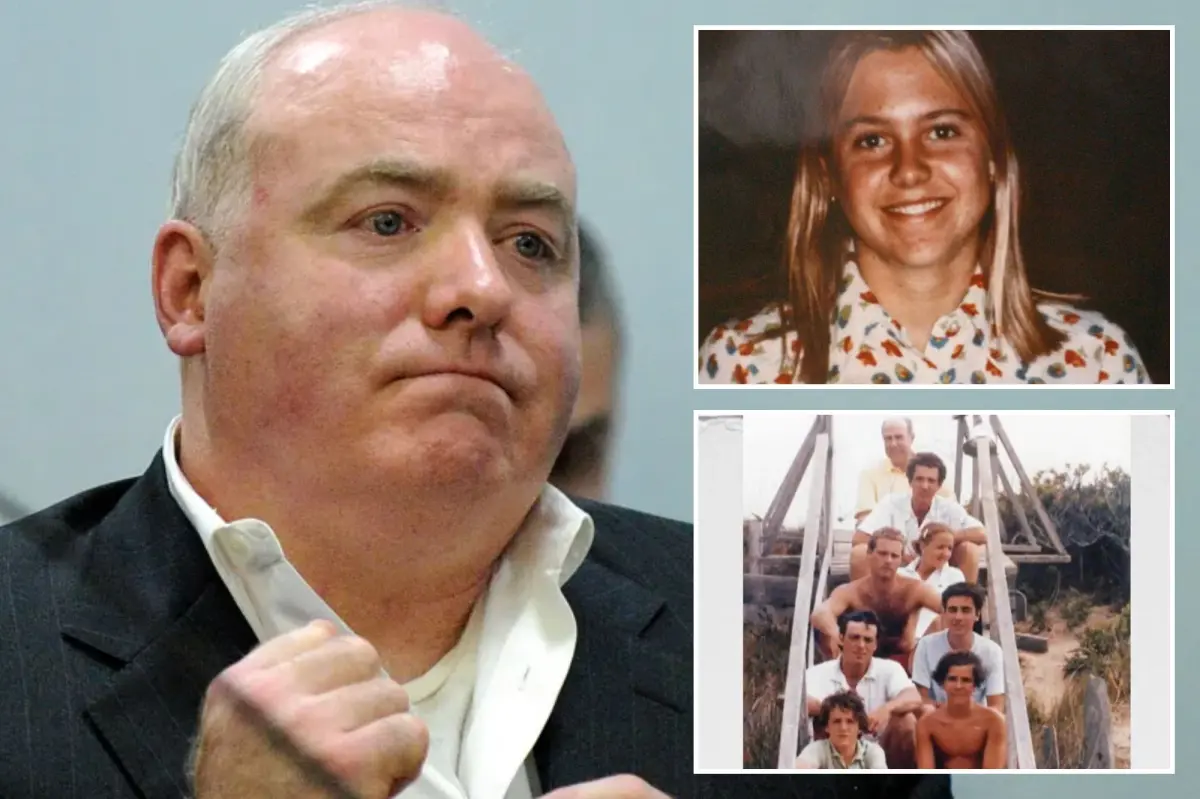
Breaking the Silence: Michael Skakel Speaks Out on the Martha Moxley Murder Case
Five decades after the shocking murder of 15-year-old Martha Moxley in affluent Greenwich, Connecticut, Michael Skakel—cousin of Robert F. Kennedy Jr.—has finally broken his silence about the case that has haunted him for most of his life. After spending 11 years in prison, having his conviction overturned, and enduring decades of public scrutiny, Skakel has chosen to share his story in NBC News’ podcast “Dead Certain: The Martha Moxley Murder.” On October 30, 1975, Martha Moxley was found beaten and stabbed to death with a golf club in her family’s yard after a night of teenage pranks on “Mischief Night.” The murder weapon was traced back to the Skakel family home, setting in motion a complex investigation that would eventually focus on Michael, who was also 15 at the time. Though initially investigators considered his older brother Thomas and the family’s live-in tutor as suspects, it was Michael who would ultimately face conviction in 2002, nearly three decades after the crime.
In his first extensive public comments since his conviction was overturned, Skakel reveals the painful details of his traumatic childhood, painting a picture of dysfunction and emotional neglect. Raised in a strict Catholic household, Skakel describes a childhood marked by physical punishment and emotional abandonment. He recounts how his parents showed clear favoritism toward his brother Tommy, and how they barely visited him during a hospitalization for a broken neck. Perhaps most devastating was his mother’s battle with cancer—a truth hidden from young Michael, who was told her hair loss was from shampoo, not treatment. In one particularly cruel moment, Skakel’s father blamed him for his mother’s illness, telling his son, “You make me sick. If you only did better in school, your mother wouldn’t have to be in the hospital.” This emotional abuse continued even after his mother’s death, which his father barely acknowledged, leaving Michael to cope with his grief alone. By his own admission, Skakel turned to alcohol as a teenager, drinking an entire bottle of vodka on the family lawn the day his mother died.
As Skakel entered his teen years, his drinking escalated to dangerous levels. In 1978, after crashing his brother’s car, Skakel faced a potential DUI charge. Instead of legal consequences, however, the family lawyer arranged for him to be sent to the Élan School in Maine—a decision that would prove devastating to his psychological well-being. Skakel describes being “dragged out like an animal” and thrown into “a world of utter insanity.” The school housed approximately 300 troubled teens and operated under notoriously harsh conditions, including physical punishments, prolonged screaming sessions, and public humiliation. Students were subjected to headcounts every 15 minutes to prevent escapes, which Skakel attempted multiple times. After one failed attempt, Skakel recalls being carried upstairs by about ten staff members who “picked me up over their heads and carried me down the stairs like I was a crash test dummy,” before throwing him onto a stage with such force he thought he had broken his back. The trauma from his time at Élan would later result in a PTSD diagnosis and require additional treatment at a residential care facility in California.
Following his troubled youth, Skakel seemed to find stability in adulthood. He got married in 1991, established a career in skiing, and built a life in Hobe Sound, Florida. This period of relative calm came crashing down in 2000 when authorities issued a warrant for his arrest in connection with Martha Moxley’s murder—a shocking development that came 25 years after her death. “My Uncle Tommy rented me a private jet the next morning,” Skakel recalls, “And I flew from Jupiter jet port, the private jet port, to Teterboro, and I’m looking on the news the next morning and it’s all over every station.” On January 19, 2000, the then 39-year-old Skakel turned himself in to authorities. Though initially arraigned as a juvenile, his case was transferred to regular court. On June 7, 2002, after a trial in Norwalk Superior Court, a jury of twelve found Skakel guilty of murder. He was subsequently sentenced to 20 years in prison, beginning a long legal battle that would consume the next decade and a half of his life.
After multiple failed appeals, Skakel’s fortunes changed in 2013 when a judge ruled that his attorney, Michael Sherman, had not adequately defended him during his original trial. This decision granted Skakel a new trial and led to his release from prison. Five years later, on May 4, 2018, the Connecticut Supreme Court vacated his conviction entirely, and prosecutors ultimately decided not to pursue a second trial. Dr. Carole Lieberman, a forensic psychiatrist who commented on the case, believes that “Michael Skakel should never have spent one day in prison because there was no way to determine that he was guilty beyond reasonable doubt.” She points to numerous procedural issues, including “a questionable police investigation,” ineffective legal counsel who failed to call an alibi witness, media sensationalism, and a complete lack of forensic evidence. Lieberman characterizes Skakel as “a victim of torture throughout his life, from his childhood to the court system,” suggesting he “has continued to unconsciously play out this victim role until today.” While the true identity of Martha Moxley’s killer remains unknown, Skakel’s decision to break decades of silence adds a powerful new dimension to a case that has captivated the American public for nearly half a century.