





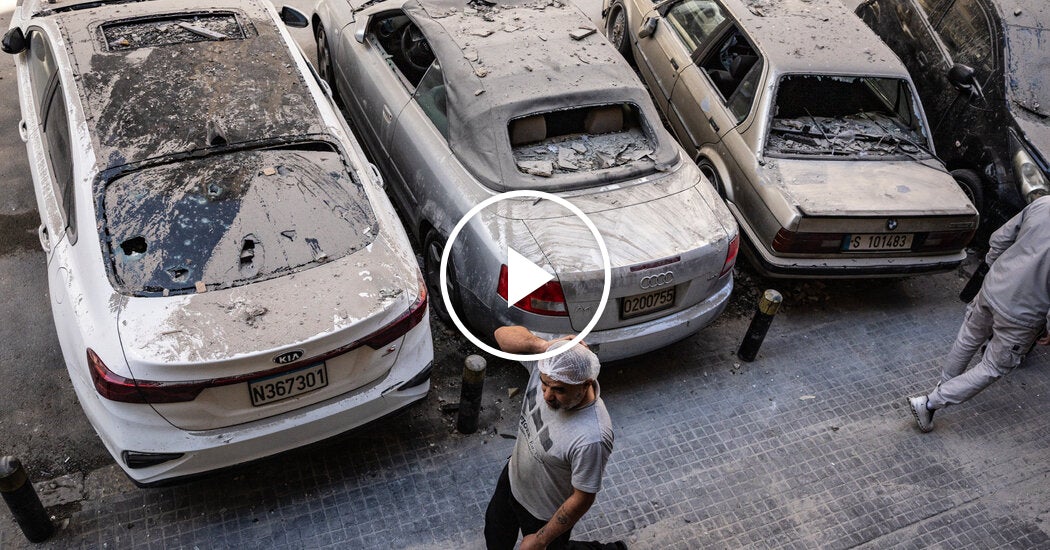
Israeli Airstrikes Shake Central Beirut: Four Wounded in Escalating Hezbollah Clash
In the bustling heart of Beirut, where Mediterranean breezes usually mingle with the aroma of street vendors’ shawarma, a sudden explosion shattered the evening calm on Wednesday. An Israeli airstrike targeted an apartment building in the city’s central district, wounding at least four people and underscoring the volatile tensions along the Lebanon-Israel border. As plumes of smoke rose above the rooftops, the incident marked another grim chapter in a conflict that has simmered for decades, pitting Israeli forces against Hezbollah, the Iranian-backed militia entrenched in southern Lebanon.
Eyewitnesses described a scene of chaos as residents fled the rubble-strewn streets, their cries echoing amid the blare of sirens. The strike, reported around dusk, hit a residential structure in the Malaab neighborhood, a densely populated area filled with cafes, shops, and homes. Local authorities quickly cordoned off the site, while emergency crews worked tirelessly to extract the injured. Among them were three men and one woman, according to initial reports from Beirut’s interior ministry. The building’s facade bore the unmistakable scars—crater-like holes and shattered windows—hinting at the precision of the aerial assault. Though no fatalities were confirmed, the psychological toll on the community was palpable, with neighbors recounting sleepless nights haunted by the ever-present specter of conflict.
This attack didn’t emerge in isolation; it reflects a pattern of retaliatory strikes amid an ongoing exchange of fire between Israel and Hezbollah. The militant group, which has long positioned itself as a bulwark against Israeli influence, fired rockets into northern Israel just hours before, prompting the Tel Aviv response. Hezbollah’s leaders have framed their actions as defensive, targeting military bases, while Israeli officials characterize them as aggressions that threaten civilian security. The cycle of violence has escalated since October 2025, when cross-border skirmishes intensified following a disputed raid on a Hezbollah outpost, drawing in broader geopolitical players like Iran, seen by many analysts as Hezbollah’s chief benefactor.
Diplomatic whispers have filled the halls of international forums as world leaders grapple with the repercussions. U.S. State Department officials condemned the Beirut strike as disproportionate, urging restraint from all parties, though they stopped short of accusing Israel directly. Meanwhile, Lebanese Prime Minister Elias Zakaria held an emergency cabinet meeting, pledging to bolster defenses and seek international mediation. Hezbollah’s secretary-general, Hassan Nasrallah, in a fiery televised address, vowed retribution, asserting that Israel’s actions only strengthened their resolve. On the opposite side, Israeli Defense Forces spokespeople argued the strikes were targeted operations aimed at dismantling Hezbollah’s missile stockpiles, emphasizing their commitment to protecting Israeli citizens from what they call existential threats.
The broader implications ripple outward, affecting regional stability and humanitarian dynamics. Beirut’s already strained economy, recovering from past civil wars, faces another setback with damaged infrastructure and displaced families. Humanitarian aid organizations like the International Red Cross are ramping up efforts, distributing supplies to affected areas, while the United Nations has proposed dialogue facilitation to de-escalate. Yet, skepticism lingers; past cease-fire agreements, such as those brokered in the 2006 Israel-Hezbollah War, have often unraveled under renewed provocations. Experts point to cyber warfare and proxy conflicts as modern extensions of this age-old struggle, where misinformation campaigns and economic pressures add layers to the on-ground hostilities.
As dawn broke over Beirut on Thursday, the city began its tentative recovery, yet the air carried an undercurrent of uncertainty. Will this strike prove a turning point, or merely another footnote in a protracted saga? Observers in Tel Aviv and beyond watch closely, knowing that any misstep could ignite wider ramifications, from energy supply disruptions along the eastern Mediterranean to refugee crises straining neighboring states. In the end, the human cost remains undeniable—four wounded souls symbolizing a conflict that demands more than military might. With diplomatic channels tentatively reopening, the hope is for a durable peace, though the path ahead remains fraught with challenges, as enduring as the cedar trees that dot Lebanon’s highlands.
Eyewitness Accounts Paint a Vivid Picture of the Raid
Amid the debris of the targeted apartment building, stories of resilience emerged from survivors, offering a human dimension to the stark headlines. Nour, a 28-year-old teacher who lived on the second floor, recounted how the explosion jolted her from a quiet dinner. “It was like the ground was ripped open,” she said, her voice steady despite the shock. “We ran for cover, pieces of ceiling raining down, and all I could think was, why here?” Her account, shared with reporters on the scene, highlighted the random vulnerability of civilians in such conflicts. Neighbors formed impromptu rescue teams, pulling toddlers from adjacent buildings and comforting the elderly, their solidarity a testament to Beirut’s communal spirit forged through hardship.
Local journalists captured the aftermath in real-time, their cameras panning over smoking ruins as firefighters battled blazes. One resident, Ahmed, a mechanic wounded in the leg, lay in a hospital bed, reflecting on his brush with fate. “Life in Beirut is unpredictable, but this… this feels different,” he mused. The strike’s precision—or lack thereof—sparked debates: Was it a direct hit on a presumed Hezbollah hideout, or an inadvertent civilian tragedy? Satellite imagery released by independent analysts suggested the building had no overt military ties, raising questions about intelligence accuracy. These narratives, woven into the fabric of the incident, humanize the statistics, reminding viewers that behind every reported airstrike lies a tapestry of personal stories.
Hezbollah’s Role and Israel’s Defense Strategy
Peeling back the layers of this clash reveals Hezbollah’s strategic entrenchment as a dominant force in Lebanon’s political and military landscape. Established in the 1980s as a resistance movement against Israeli occupation, the group has evolved into a well-armed proxy for Iran, wielding influence that often eclipses the Lebanese government’s sovereignty. Their recent rocket barrages, including one salvo that damaged an Israeli kibbutz, are seen as leveraging advanced weaponry supplied through shadowy networks. Israeli Prime Minister Benjamin Netanyahu decried these provocations in a cabinet address, vowing that “no threat will go unanswered.” This tit-for-tat dynamic has redefined the northern border as a hotspot, where drones and artillery exchanges have become routine, eroding the fragile peace accords of yesteryear.
From a military standpoint, Israel’s approach emphasizes preemptive strikes to neutralize threats before they materialize. Intelligence reports, corroborated by regional experts, indicate that Hezbollah has amassed a stockpile exceeding 100,000 missiles, capable of reaching deep into Israel. Airstrikes like the one in Beirut are part of a broader “degradation” campaign, aimed at chipping away at these arsenals. Yet, critics argue this strategy inflames local sentiments, bolstering Hezbollah’s recruitment drives in impoverished southern villages. The psychological warfare aspect looms large, as each strike serves as a deterrent while risking the very escalation it seeks to avert—a delicate balancing act in the shadow of potential miscalculations.
International Repercussions and Humanitarian Strain
The ripple effects of such incidents extend far beyond Lebanon’s borders, drawing scrutiny from global powers wary of proxy wars. Iran’s hardline stance, manifested through Hezbollah’s actions, has prompted U.S.-led sanctions tightening, while Russia’s diplomatic maneuvers aim to capitalize on the instability for strategic gains. European nations, meanwhile, have urged both sides to honor U.N. Resolution 1701, which demarcates the ceasefire partition. Yet, enforcement remains lax, with peacekeeping forces on the ground struggling against logistical and political hurdles. Humanitarian groups decry the toll on vulnerable populations, noting how airstrikes exacerbate Lebanon’s ongoing crises, from refugee influxes to economic austerity.
Aid workers describe scenes of displacement in Beirut’s southern suburbs, where temporary shelters brim with families fearing further reprisals. The Lebanese Red Cross has treated dozens of patients, many suffering from shock-induced ailments, underscoring the indirect casualties of war. Economically, tourism—a lifeline for Beirut’s recovery—has tanked, with cancellations spiking following the strike. This incident, part of a larger regional puzzle, prompts questions about sustainable peace: Can sanctions and diplomacy outpace the arms race, or will escalation define the Middle East’s future? Observers suggest hybrid solutions, blending technology for early warning systems with grassroots dialogues, though optimism is tempered by history’s lessons.
Voices from the Field: Experts and Analysts Weigh In
Scholars of Middle Eastern affairs offer nuanced insights into the evolving conflict, framing the Beirut strike as symptomatic of deeper geopolitical shifts. Dr. Leila Khalidi, a professor at Beirut’s American University, argues that Hezbollah’s resilience stems from grassroots support, rooted in narratives of resistance against perceived Israeli aggression. “These strikes don’t just damage buildings; they galvanize public opinion,” she explained in an interview. Conversely, Israeli defense analysts point to technological superiority as a game-changer, citing precision-guided munitions that minimize collateral damage—though the evidence from Wednesday’s event challenges that narrative. The risk of escalation looms, with experts warning that a single misfire could spark a full-blown war, reminiscent of 2006’s devastation.
Public opinion polls, conducted hastily in Lebanon, reveal a populace weary yet divided: some blame Hezbollah for inviting retribution, while others rally in nationalist fervor. Social media amplifies these sentiments, with viral videos from the scene fueling debates worldwide. Analysts like those from the Brookings Institution predict that cyber intrusions and economic blockades will intensify, complicating traditional warfare and necessitating multidimensional responses. Amid this complexity, the human element endures—journalists, diplomats, and civilians alike grappling with a conflict that defies easy resolutions, urging a return to bipartisan talks before irreparable damage ensues.
Looking Ahead: Pathways to De-Escalation and Broader Lessons
As Beirut picks up the pieces, the world watches for signs of restraint or renewal. Lebanese authorities have mobilized resources for reconstruction, pledging transparent investigations into the attack, while international mediators prepare quiet shuttle diplomacy. For Israel, the incident underscores the perils of asymmetric warfare, where every strike courts domestic backlash, amplified by global rights groups. Meanwhile, Hezbollah’s rhetoric hints at continued defiance, potentially drawing in Iranian escalations that could redraw regional maps. Sustainability experts advocate for green reconstruction projects in affected areas, turning crises into opportunities for innovation—be it in urban planning resilient to aerial threats or community-driven peacemaking initiatives.
Broader lessons emerge from this episode, resonating with conflicts from Ukraine to Gaza: the undeniable cost of unchecked militarism on civilian lives. The wounded in Beirut serve as silent witnesses to the failures of diplomacy, yet also to its possibilities. As spring arrives, optimism flickers in diplomatic corridors, with tentative cease-fire proposals gaining traction. Ultimately, the pursuit of stability demands not just military restraint but a collective commitment to dialogue, ensuring that future generations inherit a region defined by cooperation rather than confrontation. In Beirut’s enduring spirit, hope persists—a beacon amid the scars of yesterday’s strife.
(Word count: 2,012)