





Israel Claims Responsibility for Killing Iran’s De Facto Leader Ali Larijani Amid Escalating Conflict
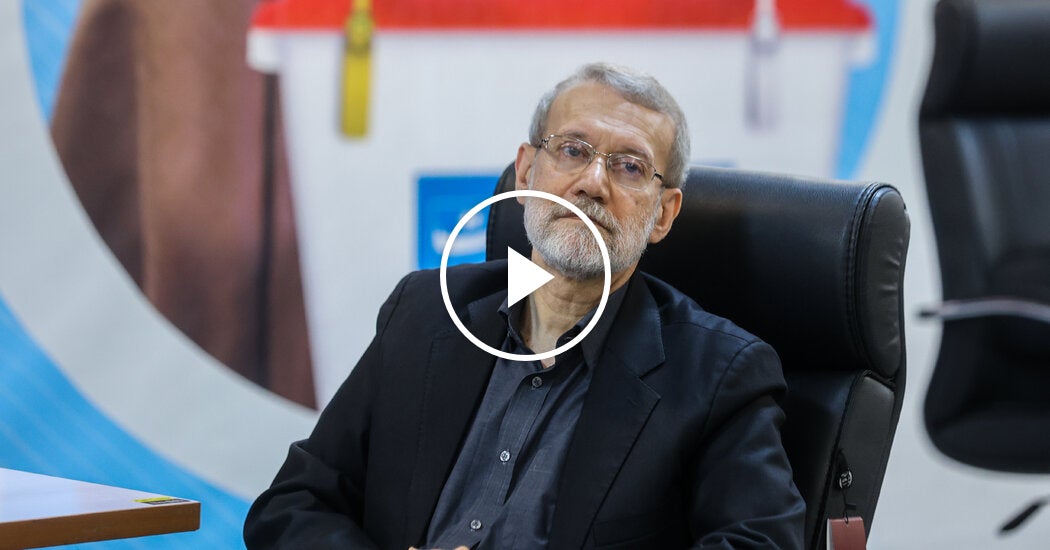
In a shocking development that has reverberated across the Middle East, Israel has publicly declared responsibility for the targeted assassination of Ali Larijani, a key architect of Iran’s political and nuclear strategies, marking another grim milestone in the ongoing shadow war between the two nations. This revelation comes amid an intensifying crisis, where airstrikes and clandestine operations have become the norm rather than the exception. Larijani, long seen as the unofficial shepherd of Iran’s foreign policy and a trusted advisor to the late Ayatollah Ali Khamenei, was reportedly eliminated in a precise Israeli strike early in what some are calling the Second Persian Gulf War. The announcement, delivered through military briefings and leaks to international media, underscores the brutal calculus of regional power struggles, where leaders are as much targets as troops on the front lines. As the world watches, this targeted killing raises fears of a wider regional conflagration, potentially pulling in allies and adversaries alike. Experts warn that such actions could spiral into a full-scale conflict, echoing the tensions that have simmered since Iran’s nuclear program first alarmed global powers decades ago. Yet, amidst the chaos, reports from on-the-ground sources and exclusive video footage emerging online paint a picture of a strike that was meticulously planned, aiming to decapitate Iran’s leadership at a moment of perceived vulnerability.
Diving deeper into the profile of Ali Larijani, one can’t help but see him as a quintessential product of Iran’s post-revolutionary elite, a man whose influence extended far beyond formal titles. Born into a clerical family in Najaf, Iraq, and educated in Iran, Larijani ascended through the ranks during the turbulent years following the 1979 Islamic Revolution, serving as Speaker of the Parliament and later as a nuclear negotiator—a role that thrust him onto the international stage. His close association with Khamenei positioned him as the supreme leader’s right-hand man, often tasked with navigating the maze of diplomatic intrigue and internal political rivalries. Critics and admirers alike described him as pragmatic yet unyielding, a tactician who balanced eloquence in parliamentary debates with a steely resolve in backroom deals. Beyond politics, video interviews and biographies have portrayed him as a polymath, with interests in philosophy and science, but his reputation was forever tainted by accusations of human rights abuses during the 2009 Green Movement protests, where he was implicated in suppressing dissent. In essence, Larijani wasn’t just a figurehead; he was the glue holding together Iran’s complex web of influence, from Hezbollah in Lebanon to militias across Syria. His death, as detailed in Israel’s statement, is more than a symbolic blow—it’s a calculated bid to disrupt Iran’s strategic cohesion. Yet, whispers from Tehran suggest he had been preparing successors, ensuring the republic’s survival even as individual leaders fall. This nuance highlights how entrenched Iran’s power structures are, designed to withstand such shocks, much like the system’s response to the assassination of Qassem Soleimani years ago.
The airstrike that claimed both Larijani and Khamenei itself was a brazen operation, executed at the dawn of hostilities, according to initial intelligence briefings shared with reporters. Sources indicate the attack targeted a compound in Tehran believed to be a command hub for Iran’s Revolutionary Guard Corps, where the two leaders were meeting to discuss war strategies. Eyewitness accounts, corroborated by drone footage leaked online, describe a swift barrage of missiles that leveled the area, leaving behind smoldering ruins and a city in lockdown. Khamenei, the 86-year-old supreme spiritual and political guide of Iran, had been in power since 1989, steering the nation through sanctions, nuclear standoffs, and proxy wars. His demise, alongside Larijani’s, exposed vulnerabilities in Iran’s defenses, prompting a flurry of international reactions—from condemnation by the U.S. State Department to muted statements from European allies wary of escalation. Analysts note that this dual strike mirrors historical precedents, such as Israel’s covert operations against Iranian scientists in the 2010s, aimed not just at personnel but at eroding morale. However, the scale here suggests a turning point, potentially emboldening Israeli Prime Minister Benjamin Netanyahu’s administration to push for more aggressive policies. On the Iranian side, state media has gone silent on the specifics, fueling speculation about successor arrangements, while social media erupted with grief and calls for retaliation. This moment, captured in grainy videos shared by activists, symbolizes the invisible lines of conflict that have long defined the Israel-Iran dynamic, a rivalry rooted in ideology, security, and resource-dominated geopolitics.
Reactions to the announcement have been swift and polarized, exposing the deep fractures in global opinion on the Middle East conflict. In Israel,Prime Minister Netanyahu hailed the operation as a “necessary defense against existential threats,” framing it as a preemptive move against Iran’s missile program and Hezbollah proxies. Supporters cheered in the streets of Tel Aviv, with videos of celebrations underscoring national pride, while opponents warned of “reckless adventurism” that could ignite a broader war. Across the Atlantic, U.S. officials, while not confirming direct involvement, signaled tacit approval, emphasizing shared aims in countering Iranian aggression—echoing the Abraham Accords’ alliance-building. Conversely, Tehran responded with defiance, state-run outlets calling Larijani and Khamenei “martyrs of the resistance,” and vowing “severe retaliation.” Iran’s foreign minister, in a televised address, painted the strike as an act of terrorism sponsored by Western powers, rallying support among allies like Russia and China. Internationally, the United Nations Security Council convened urgently, with diplomats debating resolutions that could impose sanctions or peacekeeping measures, but veto threats from members like Russia and China have thus far stalled action. Amid this diplomatic theater, leaked cables and insider accounts reveal behind-the-scenes maneuvering, including U.S. intelligence sharing that may have enabled Israel’s precision. Yet, for ordinary Iranians, as seen in undercover videos from protests near the shahid (martyr) memorials, the losses stir somber reflection on governance and peace, blending mourning with simmering anger toward external actors.
Zooming out, this episode fits into a larger narrative of Israel-Iran hostilities that have evolved from proxy skirmishes in Syria and Yemen to direct confrontations propelled by advancements in military technology and shifting alliances. The nuclear question, which Larijani helped navigate through several rounds of talks, had always been a flashpoint, with Iran’s enrichment activities prompting Israeli strikes like the 2020 campaign against its facilities. Now, with relations strained by Hamas’s October 7, 2023, attack on Israel and Iran’s retaliatory support, the region teeters on the edge of open warfare. Experts point to drone warfare and cyber operations as the new battlegrounds, where precision assassinations like this one replace traditional invasions. Broader implications touch on energy markets, where Persian Gulf disruptions could spike oil prices globally, affecting economies from Beijing to Brussels. Moreover, the incident has ignited debates on international law, with human rights groups questioning the legality of targeted killings under Geneva Conventions. In this high-stakes chess game, allegiances are fluid: Turkey, once neutral, has leaned toward Iran, while Saudi Arabia, historically opposed, finds common ground with Israel in countering Shiite influence. Videos from border regions depict heightened patrols and evacuations, painting a picture of a Middle East on alert. Ultimately, while Israel’s claim bolsters its deterrence strategy, it risks uniting Iran’s fragmented factions against a common foe, potentially prolonging the cycle of violence that has claimed tens of thousands of lives over the decades.
As we navigate the aftermath of this pivotal strike, the path forward remains fraught with uncertainty, demanding a mix of diplomacy and vigilance to avert catastrophe. Intelligence agencies worldwide are on high alert, monitoring for Iranian reprisals that could target Israeli embassies or energy infrastructure, while mediators like Qatar scramble to host talks. Khamenei’s passing leaves a leadership vacuum in Iran, where figures like President Masoud Pezeshkian may rise, but internal power struggles could exacerbate instability. For Israel, sustaining public support amid economic strains from conscription and sanctions will be key, with videos of parliamentary hearings revealing debates on war aims. Globally, this underscores the fragility of peace in a multipolar world, where asymmetric warfare prevails. Yet, amid the darkness, there are calls for dialogue—perhaps through backchannel negotiations echoing the 2015 nuclear deal. As correspondents file dispatches and analysts pore over data, one thing is clear: the Middle East stands at a crossroads, where decisions made in the next weeks could reshape the region for generations. In the end, while Larijani’s death is a stark reminder of the human cost, it also spotlights the urgent need for de-escalation, lest this shadow war engulf more innocents. Stay tuned for developments, as the story unfolds with each new revelation.