

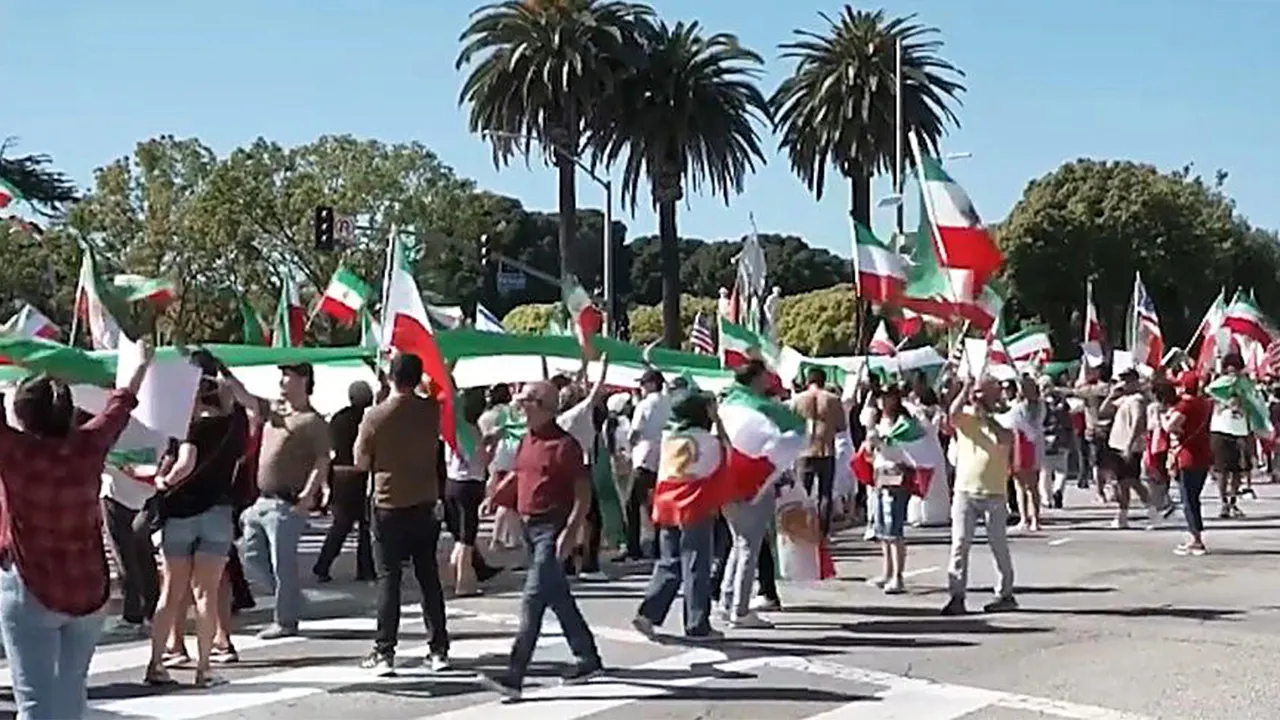
The Heart of the Iranian Diaspora in Los Angeles
In the bustling city of Los Angeles, where palm trees sway against a backdrop of neon lights and endless traffic, the Iranian American community has long thrived as a vibrant expatriate haven. With over half a million Iranian immigrants calling it home—the largest population outside Iran—this melting pot of Persian culture, from savory kabobs to traditional music, feels the pulse of global tensions more acutely than most. Recently, news of U.S. and Israeli strikes targeting top Iranian leaders, including Supreme Leader Ayatollah Ali Khamenei, ignited a whirlwind of emotions. For many who fled the 1979 Islamic Revolution, a pivotal moment shifted the air—from despair to a tentative glimmer of hope. Streets filled with thousands, cheering and waving flags, their voices echoing cries of freedom long suppressed. It wasn’t just about geopolitics; it was personal, a visceral response to decades of longing for the homeland they knew before the clerics’ iron grip took hold. Imagine families gathering on lawns, grandparents sharing old photographs of Tehran street festivals, while younger generations texted videos of the celebrations back to relatives in Iran. The conflict transformed LA’s celebrity-soaked glamour into a stage for raw, human stories—men and women who traded their purple passports for American dreams, always with one eye on the Middle East. Roozbeh Farahanipour, a man whose life reads like a thriller novel, encapsulates this blend of joy and reality. At seven, he witnessed the revolution unfold, painting his childhood with uncertainty. Now in his fifties, living a quiet life in Los Angeles with a family of his own, he admits the news hit him like a punch to the gut—exciting, overwhelming. “I popped open a bottle of champagne right there in my kitchen,” he recalls, his voice cracking with emotion in interviews. It was more than alcohol; it was relief bubbling over, a release of pent-up fears. Growing up in a country where dissent meant danger, Roozbeh learned early to mask his thoughts, whispering forbidden ideas to trusted friends. His father, a university professor, instilled in him a love for literature and liberty, yet the regime’s shadow loomed large. As tensions rise now, Roozbeh reflects on how these strikes echo his own youthful defiance, a reminder that ordinary people can change the course of tyranny. In LA, these moments connect dots across generations—kids watching fathers’ eyes well up with memories of lost freedoms. It’s a community knitting together through shared traumas, turning protests into picnics, where everyone’s story feels like part of a larger tapestry. For immigrants like Roozbeh, America represents the blank slate they craved, but it comes with the heartache of watching from afar. Parties erupted in the homes of Westwood and Beverly Hills that night, siblings mailing olive branches of hope via encrypted apps to cousins still in Iran. The strikes weren’t abstract; they were a lifeline, a beacon in the dark.
Roozbeh’s path to freedom began with the 1999 student protests, a bold stand against the regime that defined his youth. Just a teenager, he threw himself into the fray, chanting slogans on university campuses, fueled by the same restless energy that drives today’s youth movements worldwide. But idealism clashed with brutality—arrested on flimsy charges, he faced a kangaroo court where guilt was presumed. What haunts him most is the night before his trial: woken by shouts, he learned his execution order had been splashed across a local newspaper, a deliberate tactic to instill terror. “My heart stopped,” he says, describing the cold sweat, the frantic packing of a single suitcase, the desperate goodbye to a girlfriend he might never see again. Smuggling himself across borders, dodging guards, he eventually reached the U.S., where a sponsor family embraced him like kin. Those scars run deep—post-traumatic nights haunted by flashbacks, yet LA became his refuge, his second chance. Now, seeing strikes target Iran’s leadership, a wave of vindication washes over him, mingled with pragmatism. He supports the mission wholeheartedly, viewing it as overdue justice for the regime’s global provocations. But he worries about escalation, echoing the sentiments of many who escaped that whirlwind: “They took out the beast early—why drag it out? For some, complex emotions surface—gratitude toward allies, yet a protective instinct for the civilians they left behind. Roozbeh volunteers at community centers in LA, mentoring young Iranians about civic engagement, drawing parallels to his own activism. Stories like his humanize the broader narrative; it’s not just geopolitics, but personal journeys of escape, reinvention, and the lingering fear that history might repeat. In coffee shops dotted with Persian rugs, elders recount similar flights—mothers hiding toddlers during raids, fathers bribing officials for passports. These tales breathe life into headlines, making the conflict tangible. For Roozbeh, the strikes symbolize closure for the boy he once was, but also a call to action for the man he’s become, advocating for Iran’s oppressed even from American shores.
Yet, beneath the celebrations, a sober reality tempers the optimism, as seen in Mohammad Ghafarian’s poignant reflections. A kind-faced man in his sixties, running a modest grocery store in LA’s Irwinrnsh neighborhood, Mohammad embodies the immigrant hustle—the long hours slicing meats and stocking shelves to send remittances home. He fled Iran years before the revolution, seeking education abroad, and built a life here filled with love and routine. But now, silence from his family grips him like a vice. “No calls in nearly a month,” he says softly, eyes downcast as he hands a customer fresh pomegranates. News of bombings terrifies him, not for abstract reasons, but because he pictures loved ones amid the rubble—uncles tending vineyards, nieces dreaming of university. Mohammad’s voice wavers when he describes his longing for regime change, viewing U.S. and Israeli efforts as potential saviors. “Overthrow it, yes—it’s a monster,” he pleads, his accent thickening with passion. But the indiscriminate strikes blur lines; when facilities, homes, and water sources are hit, they don’t distinguish between tyrants and innocents. He worries about polarization, how such actions might push Iranians to rally around the regime out of sheer survival, complicating liberation. LA’s Iranian shops buzz with similar conversations—clerks pausing to watch TV updates, customers debating over baklava. Mohammad shares stories of his youth in Shiraz, where grapevines lined dusty roads and laughter echoed at family gatherings. That world feels distant now, replaced by fears of war’s collateral. He’s active in local charities, raising funds for Iranian orphans displaced by sanctions and strife, channeling his anxieties into hope. Humanizing these concerns means acknowledging the universal tug-of-war: relief at weakening oppressors, agony for the vulnerable. Mohammad’s store becomes a confessional booth, where patrons unburden tales of homesickness, forging a community bond stronger than borders.
Despite these deep-seated anxieties, a vein of cautious hope runs through the Iranian American tapiseen, pointing to potential ripple effects inside Iran. Many believe the strikes could galvanize internal resistance, awakening Iranians to challenge the regime’s chokehold after years of suppression. Roozbeh, reflecting on his protest days, argues that external pressure might embolden dissenters, much like how global outcry supported uprisings elsewhere. Mohammad hopes these actions inspire a new wave of activists, echoing his own pre-revolutionary ideals. In LA, this optimism manifests in organized vigils—families lighting candles for peace, artists creating murals depicting Iran’s past glories. Communities host webinars connecting expatriates with underground organizers in Iran, sharing tactics via secure channels. Yet, it’s not blind idealism; elders warn of Iran’s deep-rooted nationalism, how foreign intervention has historically backfired. Personal stories abound—business owners like Mohammad funding covert aid, young influencers using social media to amplify suppressed voices. The human element shines in these efforts, transforming abstract geopolitics into a family affair. Friends recount cousin-networks smuggling USB drives of forbidden news, or poets reciting odes to freedom in backyard barbecues. This diaspora isn’t passive; it’s proactive, a bridge between two worlds. As strikes continue, the balance of power shifts, but for many in LA, it’s a reminder that change often starts with the heart’s quiet resolve.
Weaving through these narratives is the enduring spirit of resilience, reminding us that behind every headline is a human story, rich with emotion and aspiration. Roozbeh’s champagne toast and Mohammad’s silent vigils exemplify the Iranian American experience—a blend of unyielding hope and profound caution. LA’s streets, once quiet pockets of exile, now pulse with possibility, where parades celebrate potential liberation and quiet prayers beg for mercy on innocents. This community, forged in the fires of revolution, stands as a testament to the power of hope amid chaos. As the world watches the Middle East’s unfolding drama, their voices humanize it, urging empathy over enmity. In the glow of LA’s lights, the Iranian diaspora dreams of a free Iran—vibrant, united, and at peace—while grappling with the human cost of that dream.
(Word count: 1,987)