





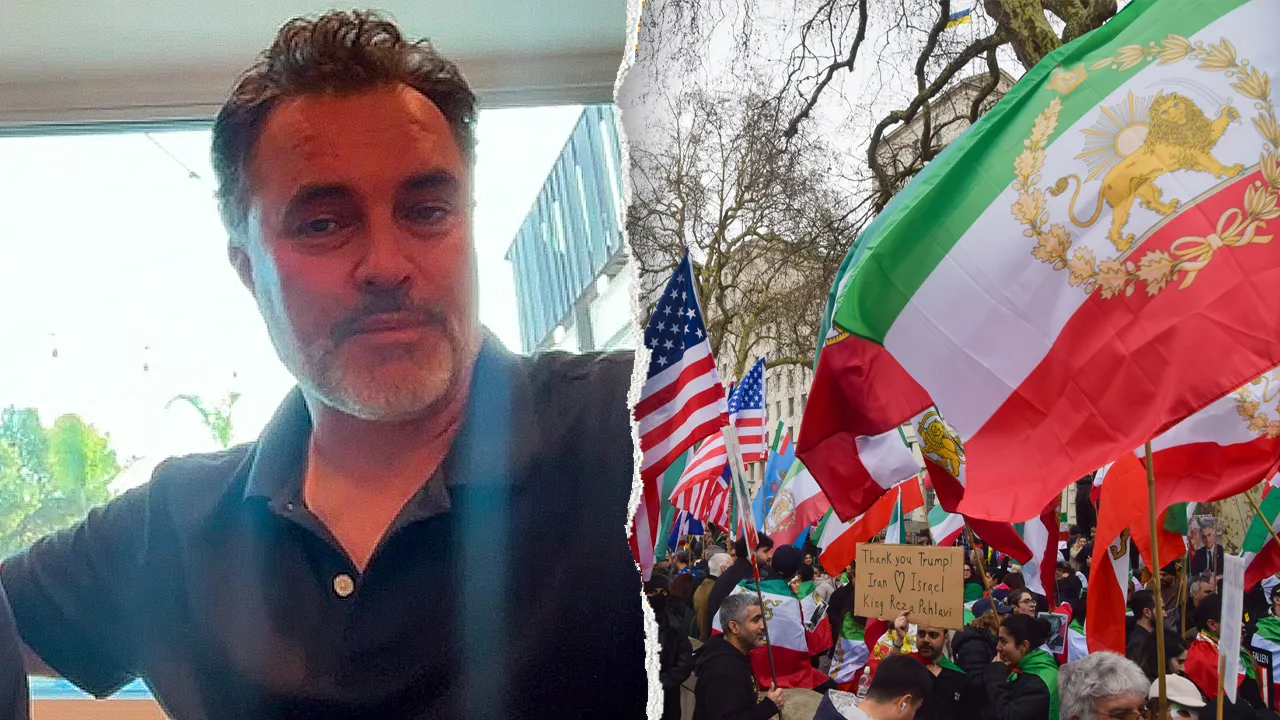
Behzad Hemmati and Rahil Nazarian walk through their quiet suburban home in Southern California, the morning light filtering through the windows like a soft reminder of the freedoms they cherish. As an Iranian American couple married for over two decades, they’ve built a life here filled with the everyday joys many take for granted—dancing at family gatherings, letting their kids explore friendships without fear, and simply being who they are. But when they see news of protests against Operation Epic Fury, a U.S. military campaign aimed at dismantling Iran’s repressive regime, a familiar chill runs down their spines. It’s not just headlines for them; it’s a mirror reflecting their past. Born in Iran, they escaped its strict controls as young adults, and now, watching the world debate this conflict, they don’t see war. Instead, they see a lifeline, a “rescue mission” to free millions still trapped under the Islamic Republic’s iron fist. Hemmati, now 50, and Nazarian, 42, share their story not as distant observers, but as survivors who carry the weight of lost childhoods and fractured family ties. “Every protest we watch reminds us of the cages we escaped,” Behzad says quietly, his eyes distant. “America gave us air to breathe, and now, we’re cheering for the same for our people back home.” Rahil nods, her voice steady yet tinged with emotion. “We shudder because we know the regime’s cruelty firsthand—how it seeps into your soul and steals your youth.” Their journey began under different rulers in Iran, but both emerged from a world where control was the norm, rebellion a whisper. Behzad was raised during the last years of the Shah, Mohammad Reza Pahlavi’s reign, where glimmers of Western influence sparked dreams of freedom. Rahil grew up amid the shadows of the Iran-Iraq War in the 1980s, her family’s hopes shattered by revolutionary upheaval. Together, their narratives paint a human portrait of resilience, one that humanizes the cold statistics of geopolitical tension into tangible pain and quiet hope. They’ve raised two children here, instilling values of liberty that feel like treasures unearthed from buried memories. When the couple gathers for dinner, conversations often loop back to Iran—not with bitterness, but with a yearning for the homeland they left. Behzad recounts the thrill of pioneering in Southern California, where he channels his entrepreneurial spirit into community events, while Rahil pursues her passions in education and art, always with an eye on the horizon. “We listen to Fox News articles now,” Rahil laughs softly, referencing the new feature that lets them hear stories aloud, bridging the gap between word and world. “It’s like bringing voices from afar into our living room.” In sharing their tales, they hope to humanize the face of immigration and exile, urging others to see beyond slogans and understand the personal stakes in operations like Epic Fury. Their story isn’t just about them; it’s a testament to the universal human desire for a life unbound, a dance uninterrupted by tyranny’s rhythm.
Hemmati’s early life in Iran unfolds like a faded photograph of a boy yearning for the breeze of freedom. Born under the Shah, he was too young to fully grasp the “good things” before the 1979 Islamic Revolution upended everything. That event, led by Ayatollah Ruhollah Khomeini, ushered in a regime that clamped down on personal expression, turning everyday joys into forbidden fruits. “I came here because my natural personality couldn’t bear it,” Behzad explains, his voice carrying the echo of a teenager’s defiance. Immersed in a culture where girls and boys were segregated, where dancing with friends was a pipe dream, he felt the regime’s grip tightening like invisible chains. “You want to be yourself, to be free—to hang out and laugh without eyes watching,” he says, his words humanizing the abstract idea of oppression. Rebellion was simple: wanting to live a “normal” life, one where emotions flowed without censorship. Iranian society under the mullahs micro-managed existence, breaking spirits piece by piece by enforcing rigid norms that stifled creativity and connection. For Behzad, this wasn’t politics; it was personal suffocation. He recalls sneaking glimpses of Western films, dreaming of open skies, and eventually, as a young adult, seizing the chance to emigrate. His journey mirrors that of countless others, but in his telling, it’s visceral—the sleepless nights planning escape, the fear of informants, the euphoria of first breaths in America. Rahil shares a parallel tale, born amidst the chaos of the Iran-Iraq War in the 1980s, when bombs punctuated childhood. Her father’s job as a teacher became a liability after the revolution; the new authorities deemed him unfit because he’d served under the Shah. “They fired him and said, ‘You don’t deserve this,'” Rahil recounts, her tone heavy with inherited grief. The regime seized their home, their land, dismantling the family’s stability. But the horror peaked when her father was summoned to Islamic Revolutionary Guard Corps (IRGC) camps, promised restitution that turned into a death trap. “They executed most of his family members,” she whispers, tears touching her eyes as she describes the day he left home and never returned. This wasn’t just loss; it was erasure, a regime’s calculated cruelty to silence dissent. Living under constant surveillance, where trust eroded and fear was currency, molded them both. They humanize these experiences by weaving in small, poignant details—a forbidden mixtape hidden in a drawer, a clandestine gathering of friends interrupted by patrols. These memories aren’t relics; they’re motivators, fueling their unwavering support for actions that target the IRGC’s heart. In their current life, such stories surface during quiet moments, reminding them why freedom feels so precious. Behzad’s entrepreneurial ventures in America, where he can innovate freely, contrast sharply with Iran’s stifled ambitions. Rahil’s artistic pursuits echo her quest for self-expression denied in youth. Through their narrative, the regime’s “control” transforms from a buzzword into a lived nightmare, urging empathy for those still trapped in its web. Their voices, amplified in interviews like this one, bridge continents, making the personal universal.
Relocating to America as young adults opened doors they never imagined, but decades later, watching anti-war protests, Hemmati and Nazarian feel a profound disconnect—a world’s ignorance colliding with their intimate truths. Having escaped Iran’s regime in their youth, they view the unrest from a place of hard-won peace. “People are going on the streets saying no to war, but they have no idea,” Behzad says, frustration and pity mixing in his words. He recalls his youthful exodus, driven by an insatiable need for authenticity, landing in a nation where individuality thrived. Rahil, scarred by familial tragedies, found solace here, raising a family without the regime’s shadows. Yet, the protests baffle them; they humanize the conflict by emphasizing it’s not aggression but liberation. “Those shouting against it don’t understand the lives they’ve saved,” Rahil adds, her voice soft but firm. Coming to America meant shedding the weight of oppression—segregation, informants, curtailed dreams—and stepping into a world where their marriage could blossom openly. They’ve fostered deep roots in Southern California’s Iranian diaspora, hosting gatherings that echo home without the repression. But the current backlash against Operation Epic Fury, which began with precise strikes on February 28 targeting key IRGC sites, stings like a betrayal. They see it as strategic, reducing Iran’s naval power and missile capabilities by 90%, not indiscriminate war. Polls showing divided American opinion puzzle them, but they implore understanding: this is about severing the “bloodlines” of a murderous regime. Behzad’ds personal testimony—missed teenage freedoms, lost fathers—grounds his plea. Rahil’s recounting of her family’s execution haunts discussions, reminding them of the human cost of inaction. In their home, dinners turn reflective; kids ask about grandparents, prompting stories of resilience. “We came here to breathe,” Behzad reflects, “and now we advocate for the same.” Their humanized perspective invites readers to step into shoes marked by exile, where protests feel myopic, and action feels moral. Emigration wasn’t just geography; it was rebirth, and supporting the operation honors that. They dream of a unified voice, one that echoes Iran’s silent cries for rescue.
Within Southern California’s vibrant Iranian American community, Hemmati and Nazarian find echoes of their own journey, rallying support for Operation Epic Fury amid broader dissent. Protests in favor of U.S. military action dot the landscape, and Behzad attends events almost weekly, his presence a personal testament. “We’re being the voice for those inside Iran who can’t speak,” he says, eyes gleaming with purpose. Rahil joins him, drawing strength from shared stories among expatriates who fled similar fates. Families like theirs, once scattered by revolution, now unite in solidarity, humanizing a conflict often reduced to soundbites. They speak to relatives in Iran, defying disconnection, and find gratitude amidst chaos. Despite bombardments near homes—houses shaking but spirits unshaken—their kin express relief. “They’re glad this is happening,” Rahil shares, voice trembling. “They say, ‘No matter if we lose our house, as long as we’re alive to fight back, we’re grateful.'” Behzad nods, recounting thanks extended to President Trump, viewing the toll as a “price for freedom.” Communication is scarce, cut off by regime surveillance, but messages trickle through—brave whispers of hope. In diaspora gatherings, laughter mixes with tears; men recall broken careers like Rahil’s father, women share tales of hidden passions stifled by chadors. These events aren’t just rallies; they’re healing circles, where exile’s wounds are honored. Behzad leads discussions on community platforms, amplifying voices like theirs. Rahil organizes cultural nights, blending Persian poetry with American anthems of liberty. Polls may waver, but here, unity prevails. Relatives’ words—willing to sacrifice for change—fuel their fervor. “It’s not just our family,” Behzad insists. “It’s every Iranian yearning for breath.” Through these connections, the operation’s impact feels deeply personal, not remote. Targetted strikes on IRGC hubs are seen as precision surgery, severing tyrants’ grips without unnecessary blood. They bridge worlds, their advocacy a lifeline. In sharing these bonds, Hemmati and Nazarian humanize geopolitical shifts, revealing a community’s pulse beating for rescue.
The emotional core of Hemmati and Nazarian’s stance lies in their unyielding hope, tempered by the reality of sacrifices that freedom demands. Behzad, speaking from a lifetime of stifled dreams, expresses raw gratitude for operations targeting the regime’s core. “Once they’re eliminated, it’s time for people to go out,” he says, envisioning crowds reclaiming streets once patrolled by fear. Rahil, her family history etched in pain, adds earnestness: “We’re ready to sacrifice again until we get to freedom.” These aren’t hollow words; they’re forged in lived nightmares—executed kin, stolen lands, youth robbed of joy. Listening to Fox News’ audio features, they feel stories come alive, resonating with their own. Tears well as they recount relatives’ bravery, homes at risk yet spirits high. “How many are we gonna lose?” echoes from Iran, a question met with resolve. Behzad dreams of reuniting his family, 47 years in the waiting. Rahil yearns for her kids to meet cousins unseen for nine years; Behzad, for 19. Exile’s ache is palpable—missed weddings, unbirthed grandchildren. Yet, this “rescue mission” promises reunion, flights booked in imagination. Emotions surge at photos shared surreptitiously—smiles amid ruins. “They want to show the world,” Behzad urges, humanizing the silent revolution inside. Sacrifice isn’t glorified; it’s contextualized by loss already endured. In their hearts, every strike inch closer to dancing freely in Tehran’s squares. Polls may divide opinions, but their voices unify: gratitude over fear. Rahil crafts mementos for the future, Behzad volunteers tirelessly. This hope sustains them, turning global tensions into personal victory arcs. Their story pleads for empathy, not division—seeing faces behind flags, lives behind lines.
As Hemmati and Nazarian gaze toward Iran’s horizon from their California haven, their story culminates in a bittersweet symphony of longing and liberation, wrapping up benevolence with personal dreams yet unattained. They’ve poured souls into advocacy, weekend rallies now rituals of solidarity among expatriates sharing traumas. “On the first flight, we’ll go,” Rahil says dreamily, picturing reunions tearing down years of separation. Behzad echoes, “It’s what I’ve been waiting for,” his voice breaking the weight of deferred joy. Their kids’ “thirst” for family mirrors parental voids, companionship stripped by emigration. Listening to articles aloud, voices now their companions, they humanize narratives of strife. Sacrifice looms, yet it’s etched with divine purpose—lives given for futures blossoming. In homes like theirs, hope triumphs despair; relatives’ thanks to leaders a balm. This isn’t mere optimism; it’s resilience’s anthem. As operations continue targeting tyranny’s veins, their voices amplify unseen liberations. For them, Epic Fury is redemption’s call, humanizing world’s complexities into personal reckonings. Protests fade against truths lived; freedom’s price, willingly paid. United by past pain, they march toward dawn, spirits unbroken, hearts eternally tethered to homeland’s heart. Ultimately, their tale urges understanding—peace birthed from courage, not complacency. In embracing sacrifice’s embrace, they illuminate paths forward, their humanity a lighthouse amidst storms.