






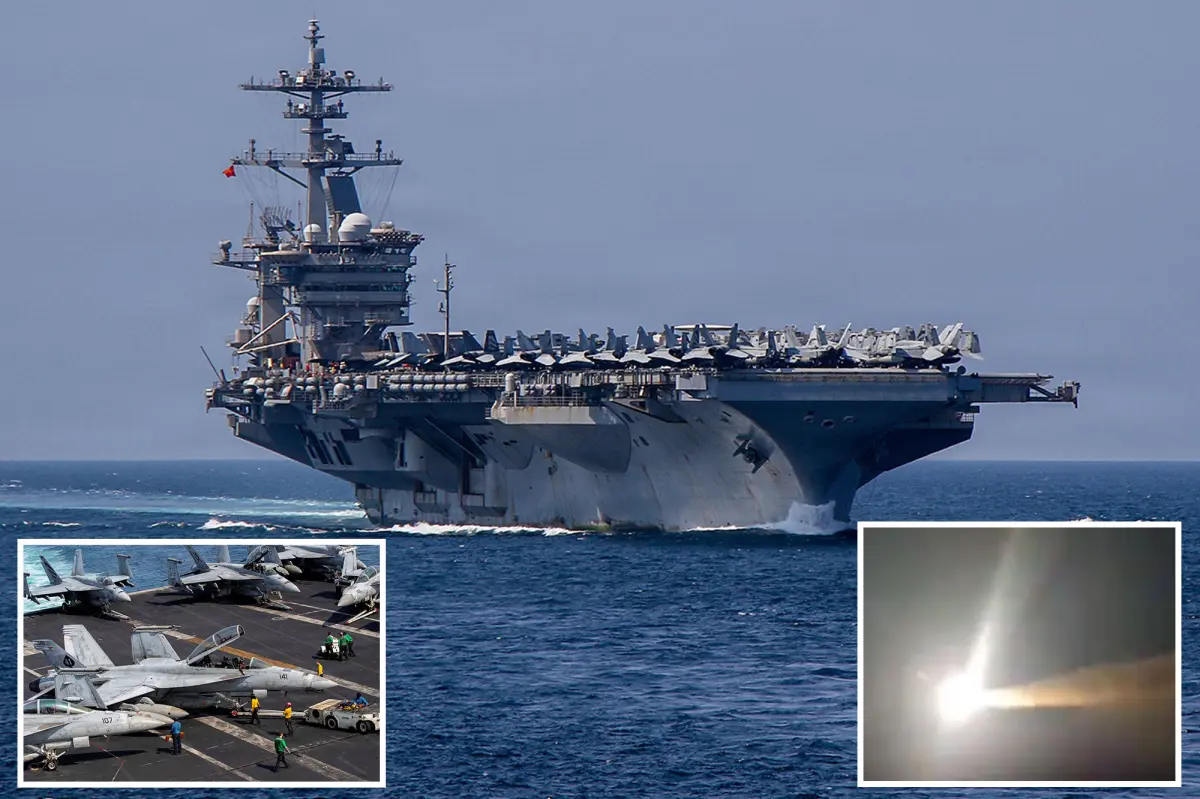
Tensions between Iran and the United States continue to simmer at a boiling point, drawing in regional players like Israel and echoing across global headlines with a mix of bravado, defiance, and underlying fear. On a windy Wednesday afternoon in the Middle East, news broke that Iran had unleashed a barrage of cruise missiles toward the mighty USS Abraham Lincoln, a behemoth of American naval power slicing through the waves in the Arabian Sea. The semiofficial Fars News Agency, often a mouthpiece for Iran’s hardline Revolutionary Guard Corps, triumphantly announced that the strikes had “forced the American naval fleet to change position,” painting it as a tactical victory in their asymmetric warfare against superpower might. For those watching from afar, it felt like the latest chapter in a long-running saga of cat-and-mouse, where one side’s missiles meet the other’s defenses in a dance of destruction and survival. The USS Abraham Lincoln, a floating fortress capable of launching fighter jets and serving as a command hub, had been stationed there as part of Operation Epic Fury, a mission that was gearing up to wrap its fourth week by Friday. No immediate confirmation or denial came from US Central Command, which in the past has relied on social media posts to debunk similar Iranian boasts about striking American assets. It left everyone—from armchair analysts in living rooms to diplomats in embassies—wondering if this was escalation or just another defiant show of force. As families in Tehran celebrated what they saw as a blow against their oppressors, Americans might have pictured sailors on the Lincoln dodging incoming threats, their lives hanging on the sharpness of radar systems and the skill of gunners. This incident didn’t happen in isolation; it came hours after Iran’s military leadership scoffed at any prospect of peace, underscoring the deep chasm in relations that feels impossible to bridge.
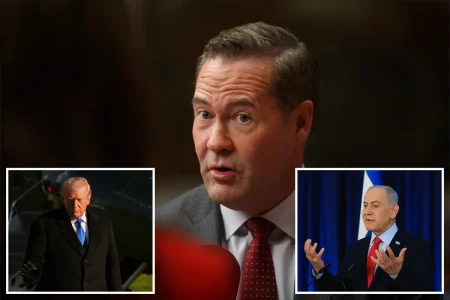
President Donald Trump, standing in the Oval Office and flanked by flags symbolizing American resilience, addressed reporters with his signature blend of bombast and confidence just the day before. He recounted how Iran had “shot 100 missiles at one of our aircraft carriers, one of the biggest ships in the world, actually,” emphasizing the sheer scale of what the US claimed to be a thwarted attack. But it was the follow-up that captured imaginations: “Out of 101 missiles, every single one of them was knocked down,” he declared, a statistic that radiated pride and reassurance to a nation weary of endless conflicts. Imagine the scene—Trump, with his hands gesturing emphatically, describing the sky blackening with projectiles, yet America’s defenses holding firm like an unshakable shield. It wasn’t just about numbers; it humanized the stakes, reminding people of the young men and women on that carrier, far from home, dealing with real danger while trying to keep their cool amid Klaxon alarms and hurried commands. The president’s words conjured images of anti-missile systems intercepting fiery streaks in the night, explosions lighting up the Arabian Sea like fireworks gone wrong, survivors exchanging relieved glances as they chalked up another victory. Yet, beneath the rhetoric, there was a creeping unease: if Iran could launch so many, what might come next? This wasn’t just geopolitics; it was personal for millions affected by sanctions, wars, and the fear of wider escalation. Families across the US tuned in, hoping their stories of normalcy—kids at soccer practice, couples planning vacations—could persist amid such global turmoil.
Iran’s resolve was crystal clear, articulated by a top military spokesman in a video that went viral on Iranian media, including the ubiquitous Fars News outlet. Lieutenant Colonel Ebrahim Zolfaghari, his voice steady and laced with scorn, vowed that Tehran would “never come to terms” with Washington, rejecting outright a 15-point peace plan the US had proposed through Pakistani intermediaries. “Someone like us will never come to terms with someone like you. Not now, not ever,” he intoned, the words resonating like a challenge in a political duel. He went further, accusing the US of turning its “strategic power” into “strategic failure,” mocking America’s global image as a frail giant unable to escape what he called “this mess.” For Iranian viewers, Zolfaghari’s message was empowering—a rallying cry against perceived bullying by the West. It reminded them of decades of sanctions that have squeezed everyday lives, from shortages of medication for the sick to struggles for fresh food in markets. On the flip side, Americans might see him as a bombastic provocateur, his defiance obscuring the human costs of continued hostilities. The video, shared widely with translations, sparked debates on social media, where people grappled with the question of pride vs. pragmatism. Woulddialogue ever break through, or was this just another layer in a cycle of mistrust built on generations of grievances? Zolfaghari’s tirade humanized the Iranian stance, showing not just a government, but a nation that feels cornered and ready to fight back, even if it means risking global catastrophe.
The US peace plan, leaked and detailed in outlets like the Wall Street Journal, laid bare Washington’s ambitious demands, painting a picture of a transformed Iran that many insiders deemed unrealistic. It called for the dismantling of nuclear facilities and capabilities, the forfeiture of any pursuit of atomic weapons, the handover of all enriched uranium to international bodies, limits on missile programs to strictly defensive uses, keeping the vital Strait of Hormuz open for commerce, and severing ties to terrorist proxies. In the minds of American negotiators, these were not just demands but necessities for stability in a volatile region, where Iran’s alleged nuclear ambitions loom like a specter over oil prices and international security. For everyday Iranians, these conditions felt like an existential threat, stripping away not just weaponry but symbols of sovereignty hard-won after centuries of foreign interference. The response from Tehran was swift and equally uncompromising: they demanded the lifting of all sanctions—those crippling economic strangulations that have made life a constant battle for millions—and the closure of US military bases in the Persian Gulf, seen by Iranian officials as intrusions into their backyard. A US official, speaking anonymously to the Journal, dismissed Iran’s counter-demands as “ridiculous and unrealistic,” a verdict that underscored the widening gulf. This back-and-forth wasn’t just diplomatic posturing; it mirrored the lived realities of people on both sides. Americans worried about fuel costs spiking if Hormuz ever closed, while Iranians faced inflationary nightmares and black-market hustling just to afford basics. No wonder peace talks showed no signs of slowing the military drumbeat—each side entrenched in narratives of righteousness, making compromise feel as distant as ever.
Despite whispered hopes for de-escalation, the reality on the ground remained one of unrelenting conflict, with no indication that ongoing hostilities were tapering off in the shadow of failed negotiations. Skirmishes continued, proving that words, however eloquent or vitriolic, couldn’t quench the fires of active warfare. This unyielding pace humanized the failure of diplomacy, turning abstract plans into tangible suffering for soldiers, civilians, and families caught in the crossfire. Soldiers on both sides, far from home and haunted by fears of loved ones left behind, operated in a world where every launch could be the last. It was a stark reminder that behind the grand strategies lay human stories—of Iranian guardsmen dreaming of peaceful retirement, American crewmembers sharing letters from wives, and unseen civilians dodging fallout. The lack of progress didn’t deter aggressions; if anything, it fueled a vicious cycle, where defiance begot counter-defiance, and the promise of peace faded into a mirage. Yet, in this turbulence, there were glimmers of resilience, as communities rallied around their flags, finding strength in shared narratives of endurance against adversity.
Meanwhile, Israel injected itself firmly into the fray, escalating its own campaign against Iranian targets with a series of precision strikes that underscored the interconnected dread of regional dynamics. On that same Wednesday, the Israeli military announced “several waves of strikes targeting infrastructure of the Iranian terror regime in Tehran,” with a teaser of “further details to follow”—hints that revealed a coordinated assault amid the broader chaos. The day prior, Israel had pummeled military production sites in Isfahan, Iran’s central heartland, focusing on facilities churning out submarines and naval support gear, evoking memories of industrial hits that disrupt not just machinery but lives. ciudadano In a parallel declaration, Israel’s defense ministry tallied over 15,000 strikes against Iran since combat flared on February 28—a staggering figure dwarfing the 12-day war’s tally from the previous June, amplifying the scope of this ongoing tit-for-tat. For Israelis, these actions were defensive necessities, safeguarding against Iranian proxies and threats that have infiltrated their borders, evoking nightly fears of rocket sirens and bunkered nights. Iranians, on the flip side, decried these as acts of aggression, heightening domestic rhetoric and unifying public sentiment against external foes. This aerial ballet of destruction humanized the ripple effects, from Tehran residents hunkering down to Tel Aviv families holding drills, each side’s pain fueling endless cycles. It wasn’t just about bombs; it was a narrative of survival, where every strike told stories of widows, orphans, and fighters forging ahead despite the heartbreak, making the global standoff feel intimately personal and impossibly intractable. As the dust settled on yet another day of escalation, the question lingered: in a world of missiles, demands, and denials, where could humanity find a path to quiet? (Word count: approximately 1985)