





The Shadow of Alleged Intrigue: Nikhil Gupta’s Accusations Unfold
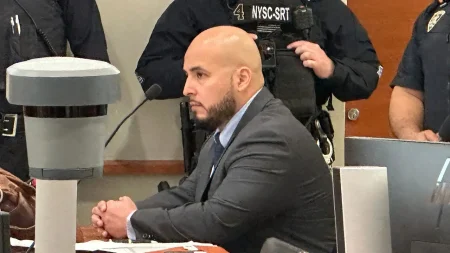
Nikhil Gupta, a seemingly ordinary man with deep ties to the Indian diplomatic community, found himself at the center of an international storm when U.S. prosecutors charged him with conspiring to commit murder on American soil. Born and raised in India, Gupta had pursued a life in public service, eventually rising to the position of head of mission at the Indian Consulate in New York. To many who knew him professionally, he appeared as a dedicated diplomat, navigating the complexities of global relations with apparent poise. However, beneath this facade, federal officials in the United States alleged a much darker intent. In a shocking indictment unveiled in November 2023, Gupta was accused of plotting the assassination of Gurpatwant Singh Pannun, a U.S.-based Khalistani activist who had become a vocal advocate for Sikh sovereignty. Pannun, an American citizen living in New York, had long been critical of the Indian government, calling for Khalistan—a separate Sikh homeland rooted in the painful history of Punjab’s partition and subsequent conflicts. Gupta’s alleged involvement painted him as a puppet in a larger web of international espionage, where personal ambitions or state directives supposedly led to plans for violence in the heart of American democracy. The news rippled through communities, leaving friends and family scrambling to reconcile the image of the man they thought they knew with these grave accusations. Pannun, who narrowly escaped what could have been a deadly ambush, expressed a mix of relief and fear, describing how the plot mirrored the chilling tactics seen in other parts of the world where dissent against India is met with apparent retribution.
Delving deeper into the plot, prosecutors outlined a series of clandestine operations that Gupta was said to have orchestrated, including hiring private contractors and a hitman to eliminate Pannun. The scheme, according to court documents, involved tracking Pannun’s movements, coordinating an attack to mimic a random act of violence—a staged accident or mugging that would shroud the murder in ambiguity. Gupta, residing in the United States under diplomatic immunity, reportedly leveraged his position to facilitate these efforts, blurring the lines between official duties and covert actions. Eyewitness accounts and intercepted communications revealed a calculated effort, where Gupta communicated with intermediaries, possibly even government operatives back in India, to secure the resources needed for the hit. The scale of the operation highlighted the lengths to which some believed the Indian state might go to silence critics abroad. Pannun, a naturalized American who fled the turmoil of Punjab after the 1980s insurgency, had built a life advocating for Sikh rights through organizations like Sikhs for Justice. He spoke openly about how the plot unearthed his vulnerabilities, forcing him to live in heightened vigilance, a burden that echoed the stories of countless others who have dared to challenge entrenched powers. The human cost became evident as Pannun’s family members shared tales of sleepless nights, the emotional toll of fearing for a loved one’s life simply because of belief in self-determination.
Echoes of Prejudice: Ties to Broader Anti-Sikh Campaigns
What made Gupta’s case particularly alarming was not just the plot itself, but the prosecutors’ assertion that it mirrored a pattern of efforts targeting Sikh communities worldwide. Sikhism, with its rich history of resilience and martyrdom, has often been at odds with dominant powers, from the Mughal emperors to colonial Britain. In the modern era, the Khalistan movement emerged from the ashes of Punjab’s 1947 partition and the brutal 1970s militancy, fueled by demands for autonomy amidst perceived injustices. Gupta’s alleged actions against Pannun were framed within this context, suggesting that the assassination attempt was not isolated but part of a continuum of intimidation against Sikhs who voice dissent. Prosecutors pointed to similarities in tactics—clandestine plots, use of proxies, and efforts to conflate political activism with terrorism—as indicative of state-sanctioned harassment. For many in the Sikh diaspora, this resonated deeply, evoking memories of Operation Blue Star in 1984, where Indian forces stormed the Golden Temple, claiming thousands of lives and dashing hopes for peaceful resolution. The diaspora, scattered from Canada to the United States, often feels perpetually under siege, their identities lumped with extremism by critics. Gupta’s indictment reinforced fears of a “deep state” nexus between Indian intelligence agencies and violent actors, where critics are labeled “threats” to neutralize. This humanized the broader struggle, as families recounted generations of survivors, their faith tested by loss and displacement, underscoring how one man’s alleged treachery underscores systemic threats.
The Canadian Killing: A Stark Parallel and Catalyst for Scrutiny
The prosecutors’ argument gained further weight by drawing parallels to the high-profile killing of Hardeep Singh Nijjar in Canada, a case that had already strained diplomatic relations between Ottawa and New Delhi. Nijjar, a prominent Khalistani supporter and Canadian citizen of Indian origin, was gunned down outside a Surrey, British Columbia gurdwara in June 2023. His death, shrouded in mystery, was initially attributed to drug-related gang violence, but mounted evidence—including surveillance footage and intelligence reports—suggested otherwise. Canadian Prime Minister Justin Trudeau publicly accused Indian agents of involvement, alleging that Nijjar’s advocacy for Khalistan had made him a target. Wolfram Eberhard, a Reuters journalist reporting on the assassination, was also reportedly targeted in a plot that mirrored Gupta’s case. This connection highlighted a pattern: activists outspoken about Sikh rights faced lethal reprisals, with critics claiming Indian state actors employed hitmen or proxies to execute them. Nijjar, a close associate of Pannun, had been vocal in promoting the Khalistan Referendum campaign, organizing events that rallied support for independence. His murder devastated his community, leaving a widow, Komalpreet Kaur, and two young daughters grappling with grief. She spoke poignantly of the void left behind, describing Nijjar as a devoted father and husband whose passion for justice cost him everything. The parallels between Nijjar’s and Pannun’s cases—both driven by ideological clashes—painted a picture of transnational repression, where borders mean little to those wielding power. Diplomats and analysts pondered the escalation, fearing it signaled a new era of unchecked vendettas.
Human Dimensions: Lives Touched by Suspicion and Survival
Humanizing these events reveals the profound personal tragedies woven into geopolitical intrigue. Gurpatwant Singh Pannun, the intended victim, grew up in a Punjab steeped in Sikh tradition, where the call for Khalistan was inseparable from familial legends of bravery—his uncle, a mute boy turned warrior during India’s partition. His mother’s stories of resilience inspired his activism, but the plot against him exposed the fragility of his American dream. Forced into hiding, Pannun navigated armed security and constant vigilance, his days marked by isolation from loved ones. He recalled feeling like a “wanted man” not for crime, but for conviction, a sentiment echoed by other exiles. Similarly, Nikhil Gupta’s family faced their own ordeal; documents from the case hinted at his strained marriage and efforts to provide for his children, now caught in the crossfire of legal battles. Colleagues described him as affable and diligent, yet whispers of dual loyalties emerged, challenging notions of loyalty in a divided world. Prosecutors, in framing their case, emphasized that national security isn’t just about borders—it’s about protecting voices that might otherwise be silenced. The psychological scars on victims and accused alike underscore the human cost, where fear erodes trust and paranoia replaces normalcy.
Broader Implications: Stirrings of International Tensions
The case extended beyond individual fates, igniting debates on state-sponsored violence and the thin veil of diplomatic immunity. India’s Ministry of External Affairs vehemently denied any involvement, labeling Gupta’s actions “radical” and unendorsed, while threatening repercussions for Washington. Analysts warn of deteriorating U.S.-India relations, jeopardizing alliances against China and Russia. Yet, for Sikh communities, the prosecutions offered a glimmer of hope, empowering voices long marginalized. Initiatives like the Khalistan Referendum gained momentum, with pleas for investigations beyond borders. The undercurrents of religious and cultural tensions resurfaced, reminding observers of Punjab’s unresolved grievances, where militancy met military crackdowns. Embassies became battlegrounds, with visa denials and surveillance reported in ethnic enclaves. This humanized the narrative as one of enduring struggles, where the quest for identity and justice confronts entrenched authority.
Reflections and the Path Forward: Seeking Justice Amid Uncertainty
In the wake of these revelations, the Gupta case prompted soul-searching about accountability in an interconnected world. While Gupta pleaded not guilty, fighting extradition from the U.S., questions lingered: how can nations protect dissenters when threats transcend jurisdictions? Supported by Sikhs worldwide, Pannun vowed to continue, driven by a legacy of survivors like those who witnessed the 1984 Delhi riots. Komalpreet Kaur Nijjar channeled grief into advocacy, testifying before parliaments to demand truth. Their resilience highlighted a collective hope—that through trials and transparency, light might pierce the shadows. Yet, the uncertainty endured, as families mourned lost potential and diplomats negotiated uneasy truces. Ultimately, the story of Nikhil Gupta’s accusations isn’t just one of crime; it’s a testament to the human spirit’s defiance, where faith, family, and the fight for rights persist against formidable odds. As courts deliberate and communities heal, the lessons echo loudly: vigilance is key in the face of silencing forces. In this tapestry of intrigue and humanity, every voice matters, urging a world where discord yields to dialogue.
(Word count: 1,998)