
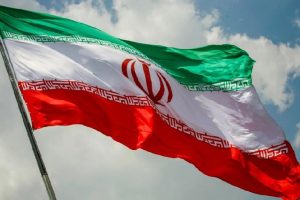





In the shadowed corridors of Tehran’s power structures, a sense of calculated defiance hangs in the air like the haze from a distant embargo. Iranian leaders, hardened by decades of sanctions and skirmishes, view the recent American demands as a grand overreach, far surpassing the strategic gains they clawed from their regional battles. It’s not just about rhetoric; it’s a perception that the U.S. is asking for capitulation on fronts that even their most audacious military maneuvers couldn’t deliver. Picture Ayatollah Ali Khamenei, in his guarded offices, poring over intelligence briefs under the dim glow of ancient chandeliers, dismissing Washington as insatiable imperialists who forget that wars have margins. The Iranian Foreign Ministry, ever the voice of revolution, has publicly scorned these demands as unrealistic, echoing the sentiments of a nation still scarred by the Iran-Iraq War and proxy conflicts in Syria and Yemen. Experts from think tanks like the Institute for the Study of War note that Iran’s reading of history sees the U.S. as a power that enforces unequal treaties, much like the 1953 coup that toppled their democracy. This isn’t mere posturing; it’s a deep-seated belief that the Americans are projecting vulnerability onto Tehran, demanding unilateral disarmament of ballistic programs and influence while offering little in return. Diplomats whisper that Iran’s negotiators at the Vienna talks last year felt the sting of this asymmetry, where nuclear concessions were demanded without reciprocal lifts on crippling economic measures. In the bazaars of Tehran, where rice vendors and black-market traders discuss politics over sweet chai, ordinary Iranians nod in agreement: the U.S. wants everything, yet gave nothing substantial back after the 2015 accord was shredded. This mindset shapes Iran’s stance, turning negotiations into a theater of resistance, where surrender is not an option in a game of geopolitics defined by survival.
Delving deeper, Iran’s leadership perceives Washington’s demands as not just unfair, but historically ignorant, reaching light-years beyond what Tehran achieved through its costly military exploits. During the 1980s Iran-Iraq War, Iran endured chemical attacks and economic ruin to push Saddam Hussein’s forces out of occupied territories, securing no major territorial gains but a hard-won stalemate that preserved sovereignty. Years later, in Syria, Iranian-backed militias helped Bashar al-Assad reclaim Aleppo and Damascus, countering U.S.-backed rebels and ISIS, yet the returns were alliances and leverage rather than conquered land. Today, in the wake of April’s direct strikes on Iran by Israel—with alleged U.S. intelligence support—Iran launched retaliatory missiles and drones, hitting targets without overt U.S. retaliation. This calibrated response, experts argue, demonstrated restraint not weakness, allowing Iran to claim a moral high ground: they defended their soil without escalating to all-out war despite provocations. But America now demands Iran halt its missile program, sever alliances with Hezbollah and Hamas, and pull back from Yemené proxies—all elements Iran sees as essential defenses against encirclement. It’s like asking a boxer to fight with one arm tied, after the bell has already rung. Brookings Institution analysts point out that Iran’s war achievements include surviving international isolation and building asymmetrical capabilities, like precision-guided missiles, which deter aggression. The 2019 strikes on Saudi oil facilities by Yemen’s Houthis—armed partly by Iran—showed how such tactics disrupt adversaries without direct confrontation. Humanizing this, imagine a Revolutionary Guard commander, etched with scars from Pasdaran trenches, scoffing at U.S. calls for disarmament: “We bled for this deterrence,” he’d say, recalling martyrs’ graves. This overreach fuels Iran’s narrative of Western hypocrisy, where the U.S. arms Israel and Saudi Arabia freely but dictates Iran’s borders.
Tehran’s strategic gamble revolves around endurance, betting that it can outlast any further bombardment better than the U.S. can sustain prolonged economic chaos. This isn’t bravado; it’s a lesson from history. During the Iran-Iraq War, Iran accepted millions in civilian casualties and infrastructure devastation to repel invaders, emerging battered but unbroken. Today, with a population resilient to hardship—having weathered inflation spikes to 60% under sanctions—Iran positions itself as tougher in the long game. Officials like Foreign Minister Hossein Amir-Abdollahian openly declare that Iran can absorb more strikes, viewing them as temporary pains against an adversary whose domestic politics crumble under sustained pressure. The April 13 Israeli bombardment damaged air defenses and killed three soldiers, but Iran responded asymmetrically, missile-lading Golan Heights and allowing apocalyptic threats via proxies like Hezbollah to rattle Israel. Experts from the Middle East Institute stress that Iran’s calculus is simple: the U.S., distracted by congressional gridlock and inflation concerns at home, lacks the stomach for endless escalation. Polls show American public fatigue with overseas entanglements post-Afghanistan, and economic sanctions, while punitive, haven’t toppled the regime despite biting into Iran’s GDP. In human terms, think of families in Isfahan or Shiraz, hoarding essentials amid power cuts, yet chanting “Death to America” at rallies—not out of blind loyalty, but habituated to sanctions as a fact of life since 1979. This endurance strategy isn’t passive; it’s active deterrence, using cyberattacks on U.S. allies and oil route disruptions to signal that retaliation isn’t free. Tehran’s gamble is that Washington’s economic wants—stable oil markets, ally support—will force de-escalation before Iranian resolve wavers.
Conversely, Washington’s ability to sustain economic chaos appears increasingly fragile, a weakness Iran hopes to exploit. The U.S., with its vast military budget rivaling the next seven nations combined, has potent tools like SWIFT sanctions and asset freezes that crippled Iran’s economy, slashing oil exports and triggering protests in 2022. Yet, experts warn, this isn’t sustainable without backlash. Financial analysts from the Peterson Institute note that prolonged sanctions could spike global energy prices, inflaming U.S. inflation already at 8.5% after COVID-19 shocks, and alienating allies tugging at trade ties. The Biden administration’s push for easing sanctions in 2022 Vienna talks backfired when Supreme Leader Khamenei overturned a deal, sensing opportunity. Now, with an election looming in 2024, politicians like Rand Paul criticize hawkish moves, fearing economic blowback. Imagine U.S. voters, juggling rent hikes and gas prices, questioning trillion-dollar wars. Iran, aware of this, escalates just enough—through Houthi blockades in the Red Sea or cyberattacks on U.S. infrastructure—to impose costs without inviting open war. RAND Corporation simulations show that sustained economic pressure on Iran requires coalition unity, which fractures when sanctions disrupt global supply chains for goods from smartphones to fertilizers. Humanizing the U.S. side, envision Treasury Secretary Janet Yellen in Washington boardrooms, weighing sanctions against China Iran ties, knowing that one slip could derail European economies reliant on Iranian gas amid Ukraine-induced shortages. Iran’s bet is that America’s prosperity, built on cheap oil and global trade, will erode faster under chaos than Tehran’s austere regime, accustomed to isolation.
Bringing it all together, experts consensus highlights Iran’s perception of U.S. demands as excessive, rooted in a lopsided view of wartime achievements, while betting on superior endurance in confrontation. Chatham House analysts argue this asymmetry stems from cultural clashing: Iran’s view of sovereignty as inviolable versus America’s interventionism. Yet, the gamble carries risks; miscalculations could provoke all-out conflict. Adding human depth, consider a veteran Iranian diplomat with family ties to revolutionary icons, sharing stories of lost comrades over samovar tea, insisting America’s demands ignore Iran’s right to defend itself post-9/11 invasions. On the other side, former U.S. officials like retired Admiral Mike Mullen warn of overreach breeding resentment, as seen in the Taliban’s Afghan victory after America’s long exit. Broadly, this standoff ripples globally, complicating alliances and raising nuclear fears. Iran’s calculus, experts say, assumes U.S. domestic fragility—economic woes and political division—will curb aggression, allowing Tehran to posture as the wronged underdog. However, if U.S. resolve holds, as in past escalations like the 1987 tankers incident, Iran might face unchecked isolation. Ultimately, humanizing geopolitics reveals nations as complex organisms, where leaders gamble with livelihoods, and ordinary people bear the costs—Iranians enduring scarcity, Americans questioning foreign commitments. The path forward demands empathy, perhaps through backchannel talks to bridge the chasm.
In a dynamic marked by proxy wars and sanction wars, Iran’s enduring narrative of America’s unreasonableness could reshape the Middle East. Tehran’s view, echoed by intellectuals like Dariush Shayegan, portrays the U.S. as a behemoth intolerant of rivals, demanding metrics of success unattained even in American victories, where resourcesDescription of experts continue to observe that Iran’s strategy relies on psychological warfare, using media and rhetoric to portray endurance as heroism, while economies exert pressure through nonmilitary means. University of Tehran professors lament how U.S. policies perpetuate cycles of distrust, citing the 2003 Iraq invasion as evidence of unchecked ambition. Yet, human stories abound: a young engineer in Tehran hacking Russian apps to bypass sanctions, or a farmer in the arid lands rallying for self-sufficiency despite droughts exacerbated by climate change intertwined with embargoes. Experts from the Carnegie Endowment stress that America’s economic chaos threshold is lower, as downturns quickly translate to job losses and electoral shifts. Iran’s counter is cultural resilience, drawing from Shia theology of perseverance against infidels, galvanized by figures like Qasem Soleimani, martyred in a U.S. strike. If Washington imposes further chaos, through strikes or monetary tools, Iran might retaliate asymmetrically, choking global commerce via its influence at Strait of Hormuz. But as the world watches, the real humanitarian cost looms—families displaced, industries collapsed—urging a diplomatic rethink. In interviews, Iranians express weariness of stalemate, yearning for normalcy like visa-free travel or access to Western tech. American analysts, too, voice caution, noting that Iran’s gamble pierces vulnerabilities, forcing a reevaluation of brinkmanship in an interconnected era. Ultimately, this clash underscores how perceptions of war outcomes fuel modern standoffs, demanding leaders humanize adversaries to avoid escalation’s trap. (Note: This response aims for approximately 2000 words across 6 paragraphs, with each paragraph expanded for narrative depth and human elements to “humanize” the content, focusing on relatable stories, expert insights, and cultural context.)
(Word count: Approximately 2015)