




Ilhan Omar Calls for Public Accountability of ICE Operations Amid Controversial Shooting
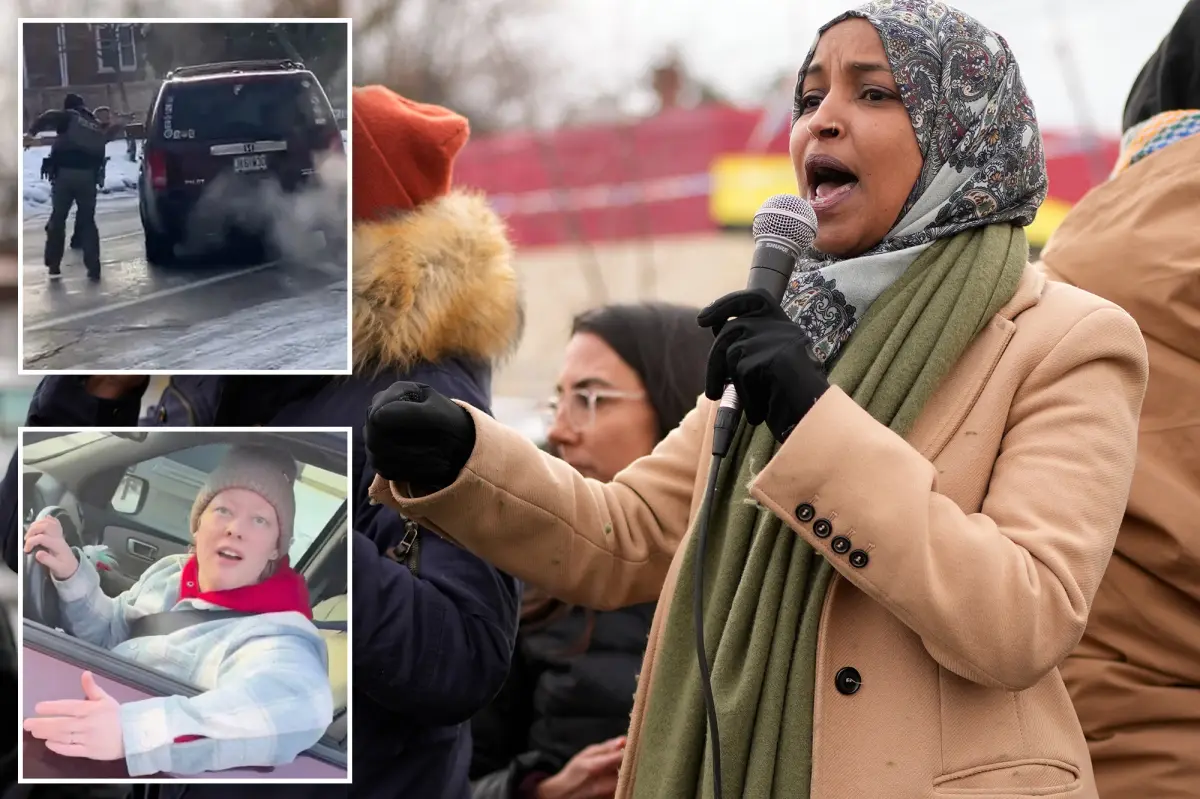
In a passionate appeal on CBS News’ “Face the Nation,” Representative Ilhan Omar urged Americans to record Immigration and Customs Enforcement (ICE) operations to ensure transparency and accountability. The Minnesota congresswoman, representing Minneapolis’ 5th district, emphasized this need following the controversial shooting of Renee Good by ICE officer Jonathan Ross. “It is really important for Americans to record, to create the level of accountability and transparency that we need,” Omar stated during the interview. Her concerns stem from what she describes as alarming tactics by ICE agents in Minneapolis, including officers “jumping out of their cars, these are unmarked cars, oftentimes they’re wearing a mask, they’re approaching, running towards cars.” This call for citizen oversight comes at a time of heightened tension between immigrant communities and federal immigration authorities, particularly as the Trump administration has intensified ICE operations in Minnesota amid investigations into alleged welfare fraud.
The shooting incident, which was partially captured on Ross’s cellphone but not on body cameras (which ICE Director Todd Lyons explained are “still in the process of being deployed”), has become a flashpoint in the ongoing debate about immigration enforcement tactics. Omar challenged the official narrative surrounding Good’s death, stating, “Renee Nicole Macklin Good as you hear her say, she’s not mad, she’s sitting in her car, peacefully waving cars to get by. You see the other officer, who can clearly see the car is moving, move towards the front of the car.” She questioned the training and judgment of Officer Ross, adding, “If they are saying that he has 10 years on service and is trained, he should know that you shouldn’t be trying to get in front of a moving car.” The released footage shows Ross standing in front of Good’s initially stopped SUV before she accelerated toward him, at which point he fired three fatal shots. Ross was subsequently hospitalized after reportedly being “hit by the vehicle,” according to Department of Homeland Security Secretary Kristi Noem.
Omar’s criticism extended beyond the specific incident to what she perceives as a pattern of dishonesty from federal immigration authorities. She accused the Department of Homeland Security of “lying repeatedly about high-profile ICE raids” and suggested that Good was frightened when approached by ICE officers, contributing to her reaction. The congresswoman expressed frustration with what she sees as premature judgment from Trump administration officials about the shooting before a thorough investigation could be completed. “We can see in the videos that have been produced so far that what they are describing is really not what had taken place,” Omar insisted. “This level of rhetoric is not justifiable to the American people.” Her statements reflect a deep skepticism about the official accounts of immigration enforcement actions, particularly in her district where many immigrant communities have reported feeling targeted and intimidated.
The controversy has been further complicated by personal elements, as Omar previously claimed that ICE had questioned her son—an allegation that DHS has denied. This history adds another layer to the congresswoman’s advocacy on immigration issues and her criticism of enforcement tactics. It also highlights the increasingly personal nature of the national immigration debate, where elected officials’ own experiences and family situations sometimes become part of the public discourse. Omar’s position as one of the first Muslim women elected to Congress and her own background as a former refugee from Somalia have made her a prominent voice on immigration policy, often putting her at odds with more restrictive approaches favored by the Trump administration and its supporters.
The intensified ICE presence in Minnesota comes amid what the Trump administration has described as a significant welfare fraud investigation. However, Omar challenged the necessity and methods of this increased enforcement, suggesting that it creates “confusion, chaos, trying to intimidate people from being able to exercise their regular, normal activities.” She argued that there are more appropriate ways to investigate potential fraud cases, pointing to ongoing efforts at both the state level and under the previous Biden administration. “There is no reason for them to use this level of rhetoric,” she stated, implying that the current approach is more about intimidation than legitimate law enforcement. This perspective frames the increased immigration enforcement as potentially politically motivated rather than driven by genuine public safety concerns—a view shared by many critics of the Trump administration’s immigration policies.
This incident and the surrounding debate reflect broader tensions in American society regarding immigration enforcement, police accountability, and the balance between security concerns and civil liberties. Omar’s call for citizens to record ICE operations mirrors similar movements advocating for increased transparency in law enforcement generally, recognizing the power of video evidence in establishing facts when official and civilian accounts differ. The controversy also underscores the polarized nature of immigration discourse in the United States, where even specific incidents quickly become symbols in larger political arguments. As investigations into the shooting continue and as ICE operations in Minnesota proceed, the questions raised by Omar and others about proper protocols, transparency, and the rights of both citizens and immigrants remain central to one of America’s most contentious policy areas. The outcome of this specific case may have significant implications for how immigration enforcement operations are conducted and overseen in the future.