





Congresswoman Omar and Colleagues Face Off with ICE Agents in Minneapolis
In a tense standoff that highlights the ongoing debates surrounding immigration enforcement in America, Congresswoman Ilhan Omar and fellow Democratic representatives found themselves literally at the frontlines this past weekend. On Saturday, Omar, along with Representatives Angie Craig and Kelly Morrison, attempted to inspect conditions at an Immigration and Customs Enforcement (ICE) processing facility housed in Minneapolis’s Whipple Building. What began as a congressional oversight visit quickly escalated into a confrontation that saw the elected officials joining protesters outside after being denied access to the detention center.
According to accounts from the scene, the three congresswomen were initially permitted entry to the facility but were abruptly asked to leave shortly afterward. “Shortly after we were let in, two officials came in and said they received a message that we were no longer allowed to be in the building and that they were rescinding our invitation and denying any further access to the building,” Omar explained to The Star Tribune following the incident. The sudden reversal raised immediate questions about transparency and oversight at federal detention facilities, particularly as immigration remains one of the most divisive political issues in the country.
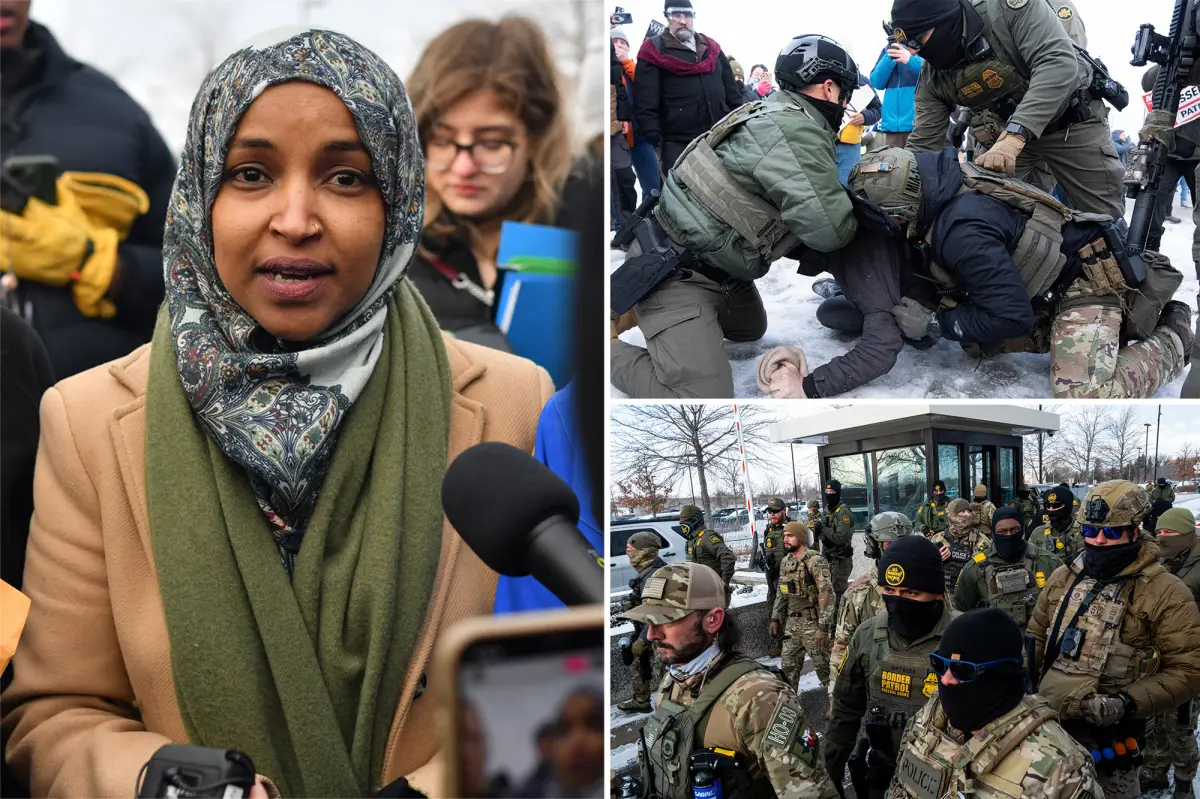
Footage circulating on social media captured the dramatic moment when Omar and her colleagues found themselves facing a line of armed personnel at the facility’s entrance. The images showed masked military members holding rifles forming a human barrier, while the congresswomen stood alongside activists and journalists. The visual contrast between elected civilian officials and armed personnel created a powerful symbolic representation of the current tensions surrounding immigration enforcement policies. The confrontation came just days after approximately a dozen protesters had been arrested at the same location during demonstrations on Thursday, suggesting escalating tensions around the facility.
Omar, who at 43 represents Minnesota’s 5th congressional district and is herself a Somali-born immigrant, has been a vocal critic of certain immigration enforcement practices. After being removed from the facility, she took to social media platform X (formerly Twitter) to assert the legal foundation for their attempted visit: “Members of Congress have a legal right and constitutional responsibility to conduct oversight where people are being detained.” Her statement underscores a fundamental tension between congressional oversight responsibilities and executive branch operations, particularly in areas as sensitive and controversial as immigration enforcement and detention.
The incident highlights broader questions about transparency in immigration enforcement and detention practices. Omar’s declaration that “The public deserves to know what is taking place in ICE facilities” reflects concerns raised by immigrant rights advocates about conditions, due process, and treatment of detainees within the immigration enforcement system. Congressional oversight visits to detention facilities have historically been important mechanisms for ensuring accountability, though such visits have become increasingly politicized in recent years as immigration has emerged as a defining national issue.
This confrontation in Minneapolis represents a microcosm of larger national debates about immigration policy, the proper role of enforcement agencies, and the balance between security concerns and humanitarian considerations. As elected representatives and federal agencies continue to navigate these complex issues, incidents like Saturday’s standoff illustrate how the abstract policy debates in Washington often manifest as very real confrontations in communities across America. The image of a Somalia-born congresswoman facing armed agents outside a facility where immigrants are processed provides a powerful visual metaphor for America’s ongoing struggle to define itself as both a nation of laws and a nation of immigrants.