





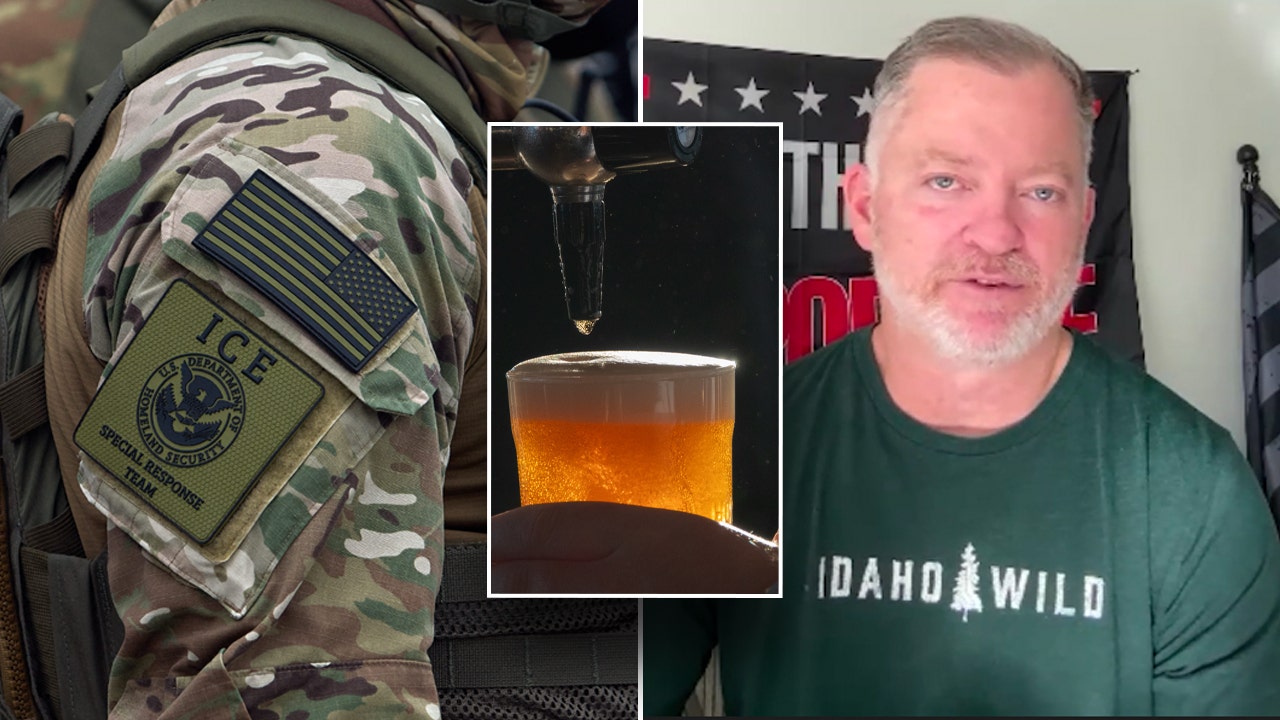
Idaho Bar Owner Faces Praise and Threats Over Controversial ICE Promotion
In a small Idaho town, Mark Fitzpatrick, owner of the Old State Saloon, has found himself at the center of a national controversy after offering “free beer” to anyone who helps Immigration and Customs Enforcement (ICE) identify and deport undocumented immigrants. Posted on November 29th, the promotion quickly went viral, garnering nearly 8 million views and even a repost from the Department of Homeland Security. What started as a local bar promotion has evolved into something much larger—a lightning rod in America’s heated immigration debate. “At Old State Saloon, we really aren’t strangers to speaking out boldly about conservative Christian values and truth,” Fitzpatrick explained, noting that his establishment has never shied away from politically charged promotions. In fact, this wasn’t his first controversial campaign; earlier in 2024, he launched “Heterosexual Awesomeness Month” during Pride month, offering discounts and free beverages to heterosexual customers, another move that drew both support and criticism.
The backlash to the ICE promotion has been swift and, in some cases, frightening. Fitzpatrick reports receiving death threats, disturbing voicemails, and even threats to burn down his business. “People are just outright saying I should die for this,” he shared, describing the messages as “really, really despicable.” His family has also been targeted in what he characterizes as an attempt to silence his views. Despite the intensity of these threats, Fitzpatrick remains defiant, stating that the negative reactions only make him want to “double down” on his positions. The bar has continued to roll out related promotions, including “Manly American Monday” where men who support ICE receive a complimentary drink, and a Tuesday special offering free beer to women who report undocumented immigrants by calling ICE. Wednesdays feature a 10% discount for heterosexual couples, further emphasizing the establishment’s politically charged atmosphere.
Behind the controversy lies Fitzpatrick’s frustration with immigration policies during the Biden administration, which he describes as a “complete disaster” that has incentivized “some of the worst of the worst people in the world to come into this country.” For him, the promotion was less about actually identifying undocumented immigrants and more about showing support for law enforcement and ICE agents. When discussing those who disagree with his views, Fitzpatrick claims, “What liberals want to do is they attack you. They go on attack and they start calling you names.” He views the online backlash as revealing the “wickedness” of his critics, suggesting their reactions expose their true character. Despite his polarizing stance, Fitzpatrick maintains that he would welcome conversation with those who disagree, saying if any critics “actually came in and were willing to talk,” they would find someone ready to “sit down with them and talk and listen to what they have to say.”
While the negative attention has been significant, Fitzpatrick has also experienced what he describes as “overwhelming support.” Encouraging messages, cards, and personal visits from supporters have helped balance the hostility. “At my saloon when I’m there after a long day of dealing with just wickedness and all the calls and everything else, people are there and they’re there just to come in and meet me and support me and encourage me,” he explained. The establishment has become something of a gathering place for like-minded individuals who appreciate Fitzpatrick’s willingness to take a public stand on controversial issues. This community support has apparently reinforced his commitment to continue with similar promotions despite the backlash.
Interestingly, Fitzpatrick acknowledges that he doesn’t expect many patrons to actually claim their free beer by reporting undocumented immigrants. He did mention one exception: Ryan Spoon, vice chair of the Ada County Republican Central Committee in Idaho, who reportedly claimed his reward after providing evidence that he helped ICE make an arrest. This detail highlights how the promotion has connected with local political figures who share Fitzpatrick’s views on immigration enforcement. For the most part, however, Fitzpatrick admits the promotion is “not really about beers” but rather about drawing attention to immigration issues and sparking conversations—something it has certainly accomplished, though perhaps not always in the manner he might have hoped.
As this local story gained national attention, it has come to represent the deep divisions in American society regarding immigration policy, free speech, and the appropriate boundaries of political expression. The Old State Saloon has transformed from a simple neighborhood bar into a symbol in America’s culture wars. Fitzpatrick remains undeterred by the controversy, continuing to use his business as a platform for his conservative views despite the risks. “I think the way it’s working is it’s drawing attention to the issue and conversations are happening,” he concluded, suggesting that regardless of one’s position on his specific promotions, they have succeeded in their fundamental goal of bringing attention to issues he believes deserve more public discussion. Whether viewed as a bold stand for conservative values or a divisive stunt that encourages targeting of vulnerable populations, the Old State Saloon’s promotion has undeniably made its mark on the national conversation.