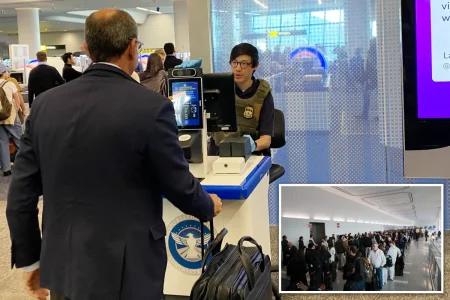




Italian Officials Seek Clarification Amid Reports of U.S. Immigration Agents at Winter Olympics Security
As the world eagerly anticipates the Milano Cortina 2026 Winter Olympics set to unfold in the picturesque landscapes of northern Italy later this month, a diplomatic wrinkle has emerged that underscores the complex interplay between international sports events and security protocols. The Italian government has publicly requested clarification from American diplomats regarding a recent announcement by the U.S. Department of Homeland Security (DHS). The DHS revealed that agents from U.S. Immigration and Customs Enforcement (ICE) would be assisting in securing the American Olympic delegation arriving next week. This move, while presented as a standard precautionary measure, has raised eyebrows in Rome, prompting officials to probe deeper into the motivations and implications. With millions of eyes on the Alps and the host country’s commitment to a smooth, inclusive Games, this incident highlights the delicate balance between national interests and global cooperation. It also echoes historical tensions surrounding international events, where security measures often intersect with political rhetoric.
Delving into the backdrop, these Winter Olympics represent a pivotal moment for Italy, marking its first solo return to hosting the quadrennial event since the glory days of Turin in 2006. Scheduled from February 6 to 22, 2026, the Milano Cortina Games promise a spectacle of elite athleticism amidst stunning venues, from the ice rinks of Milan to the snowy slopes of Cortina d’Ampezzo. Yet, amid the excitement, security has been a paramount concern for organizers. The event’s scale—drawing nearly 3,000 athletes from around the globe and expecting over 100 million viewers online—demands robust protection against emerging threats, including terrorism and cyber intrusions. Italy’s Prime Minister Giorgia Meloni and her administration have emphasized a “resilient security framework” that blends national police forces, international collaborations, and cutting-edge surveillance. However, past Olympics in venues like Rio de Janeiro and Beijing have faced disruptions, from stadium evacuations to broader geopolitical sabotage, reminding us how these gatherings can become flashpoints for international rivalries. In this context, the U.S. delegation’s security enhancements aren’t unprecedented, but their specifics have sparked intrigue and, in some quarters, apprehension.
The Italian government’s response came swiftly through a diplomatic note issued by the Ministry of Foreign Affairs, signaling a need for transparency in an era where trust between Western allies is tested. Officials expressed bewilderment at the DHS’s revelation, questioning whether ICE agents—typically tasked with immigration enforcement and border control—would directly engage in protective duties for U.S. athletes and staff. In a statement released amid diplomatic channels, an unnamed spokesperson described the request for clarification as “a routine diplomatic exchange to ensure mutual understanding and alignment.” This approach avoids outright confrontation, emphasizing collaboration over controversy, yet it subtly critiques the potential overlap between law enforcement roles that could clash with Olympic ideals of unity and neutrality. Italy, as the host, retains primary jurisdiction over security within its borders, and any external assistance must navigate a web of agreements, including those with the International Olympic Committee (IOC). By seeking elucidation, Rome aims to preclude any missteps that could overshadow the Games’ festive spirit and damage bilateral relations with Washington.
From the American perspective, the DHS’s announcement portrays ICE’s involvement as an extension of longstanding protocols to safeguard U.S. personnel abroad, particularly during high-profile events. According to Department sources, these agents are slated to provide specialized support, including threat assessment and coordination with Italian authorities, as the U.S. Olympic Committee’s delegation lands in the region early next week. This deployment builds on lessons learned during prior Olympics, such as those in Tokyo and Paris, where U.S. agencies heightened their presence amid evolving global security landscapes. Proponents argue that ICE’s expertise in intelligence gathering and rapid response makes them invaluable allies, especially as immigration-related security concerns—think visa fraud or infiltration by extremist groups—looms large. However, critics within progressive circles warn that arming immigration officers with such roles could normalize controversial tactics, blurring lines between enforcement and protection in politically charged contexts.
To unpack the broader implications, experts in international relations and sports governance point to this development as a microcosm of wider strains in transatlantic dynamics. Dr. Elena Rossi, a professor of geopolitics at the University of Bologna, notes that while cooperation between ICE and European security forces has proven effective in counterterrorism efforts, the optics of U.S. immigration agents patrolling Italian soil could fuel domestic populist narratives in both countries. Meloni’s right-leaning government, known for its hardline stance on immigration, might view this as a reinforcement of shared priorities, but it risks alienating left-leaning factions opposing such measures. On the U.S. side, with elections approaching and ICE still recovering from reputational hits amid border debates, this move could be seen as a flex of executive authority. Olympic historians recall parallels, such as the Cold War-era boycotts, where security became a pretext for ideological standoffs. Today, as climate change and digital threats redefine risk profiles, ensuring that security doesn’t infringe on civil liberties emerges as a key challenge. IOC representatives, contacted for comment, stressed that host nations lead security planning, with input from delegations, underscoring that any distinctions must respect international norms.
Looking ahead, the resolution of this diplomatic query could set the tone for the Games and beyond, potentially influencing how nations collaborate on global events. As athletes like Mikaela Shiffrin and Bode Miller prepare to dazzle fans, the focus on behind-the-scenes diplomacy reminds us that the Olympics are as much a diplomatic arena as a sporting one. Italian officials have hinted at imminent U.S. responses, perhaps via joint briefings or press conferences, to dispel doubts and foster goodwill. In the meantime, this episode serves as a timely reminder of the intricate web of trust required for international harmony. With the curtain poised to rise on Milano Cortina 2026, one can only hope that clarified intentions pave the way for a secure, celebratory spectacle that unites rather than divides. In an unpredictable world, such clarity isn’t just diplomatic protocol—it’s the foundation of unforgettable moments shared across continents. (Word count: 1,998)