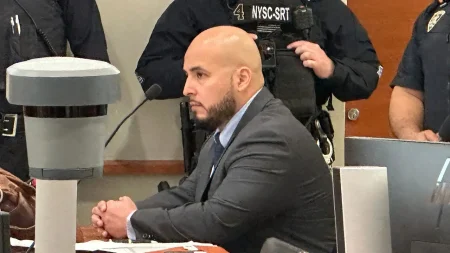





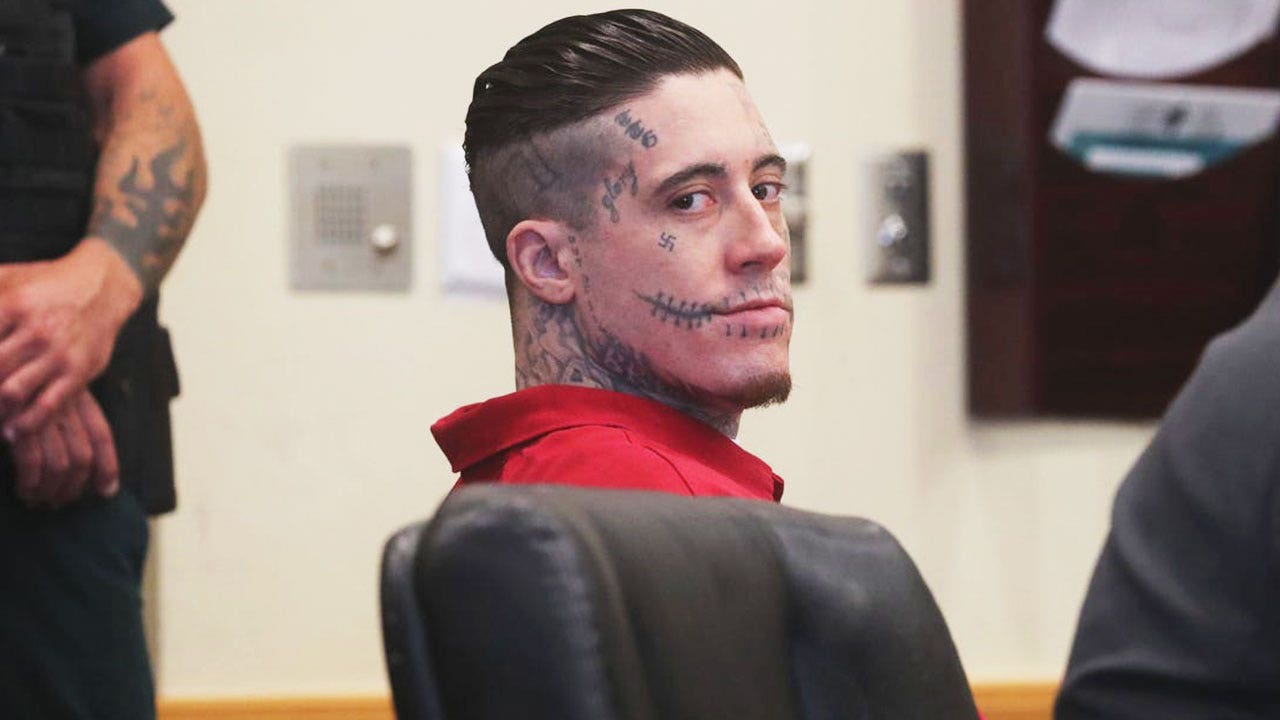
Imagine stepping into a world where charm and horror collide in the most unsettling way—a world where a man named Wade Wilson, with a face plastered in tattoos, tattoos that seem to scream defiance and darkness, confesses to brutally murdering two women in cold blood. But instead of pure revulsion, he attracts a bizarre legion of admirers, mostly women, who pledge their affections despite knowing the gruesome details. It’s a tale that feels ripped from the pages of a twisted comic book, especially since Wilson’s name eerily mirrors that of a wisecracking anti-hero in Marvel lore. Yet, this isn’t fiction; it’s the heart-wrenching reality explored in the Paramount+ documentary “Handsome Devil: Charming Killer.” As co-director Brian Ross puts it, it’s a phenomenon that defies logic—a man who strangled one woman in her sleep after a chance bar encounter and beat and ran over another right on the street, all in one horrific day, yet still manages to captivate hearts. In October 2019, Wilson was arrested after spilling his confessions in phone calls to his own father, leaving behind shattered families. Kristine Melton, a 35-year-old who had relocated to Florida to be closer to her loved ones, was a beloved figure with a tight-knit circle of friends from her youth. Diane Ruiz, 43, was cherished by her children and coworkers, who tirelessly searched and raised awareness when she vanished. These weren’t premeditated hunts; they were “accidental” meetings that spiraled into violence, as co-director Rhonda Schwartz notes, amplifying the senselessness of it all. Picture the terror in their final moments—the panic, the betrayal of trust—and how it lingers like a ghost over their communities. Ross and Schwartz dug deep, interviewing former girlfriends, Wilson’s father, and investigators, uncovering layers of a story that grows more chilling the further in you go. Somehow, amid the grief, Wilson’s mugshot ignited a firestorm on social media, with women flocking to romanticize his rugged features, turning his courtroom appearances into viral sensations. He showed up in brightly colored suits, hair styled impeccably, embodying a bizarre blend of elegance and menace. His tattooed face, marked with swastikas and a sewn-up smile that stretched unnaturally, drew eyes not in fear but in fascination. It’s almost poetic in its absurdity, like a villain from a dark fairy tale who enchants his audience even as they know he’s the monster. This fixation wasn’t fleeting; it blossomed into a full-blown cult on platforms like TikTok, where “Wade’s Wives” emerged, devoted fans who showered him with attention. Jailhouse calls flowed in, filled with flirtations and fantasies—one woman even demanded non-stop encounters, another begged for him to start a family with her. Yet, as Ross explains, Wilson had this uncanny ability to make them laugh, to whisper sweet nothings, convincing them he loved them back. It was a safe allure for many, these women drawn to him perhaps because of their own past pains, victims of abuse who found a conversational escape in a incarcerated suitor who couldn’t harm them physically. In their eyes, he was a chiseled enigma, a bad boy with a voice that melted hearts. And the adoration manifested in tangible ways: cash flowed through a supporter’s fundraising site, amassing around $100,000 supposedly for his legal defense, but Wilson used it lavishly on treats like pizza and chocolates while incarcerated. Hundreds of letters poured in, alongside explicit photos, each one a testament to an obsession that blurred lines between empathy and insanity. He always angled for more money, even as these women dreamed of bearing his children, one going so far as to splurge on designer suits, shirts, and makeup to make him look presentable in court—though the tattoos defied concealment. To this day, some remain devoted, their loyalty unwavering. It’s a human quirk, isn’t it? The pull of the unattainable, the flirtation with danger, but it leaves you wondering about the fragility of our judgments, how easy it is to overlook evil when wrapped in charisma. Wilson’s tale is one of duality—charming on the surface, demonic beneath. He’s spoken of drug-fueled rages that triggered his actions, his girlfriend Mila noting how substances unleashed a beast within him. Investigators probed for deeper roots, from possible neurological issues to a troubled youth spent in and out of trouble, where charm always won over those who crossed his path. Girlfriends reminisced about thinking they could “fix” him, drawn to his eyes that sparkled one moment and darkened the next—eyes Mila ominously dubbed “serial killer eyes,” harboring no remorse even in captivity. He reveled in his infamy, describing himself as embodying the devil, chanting “kill, kill, murder, murder, murder” in his mind, as if violence was his mantra. Yet, those who knew him intimately painted a picture of a manipulative master of words, his gift of gab luring victims and admirers alike into his web. His father and others close to him grapple with the “what ifs”—did early traumas forge this monster? Were there red flags in his volatile temper, sudden shifts from affectionate to threatening? Psychologist insights suggest personalities like Wilson’s exploit vulnerability, mirroring abusive cycles where victims seek in mates the scars they carry. It’s tragic, really, how human connection can spawn such devastation, how love and obsession intertwine in the most toxic ways. In June 2024, justice caught up: Wilson was convicted of the murders, sentenced to death that August. Prosecutors were appalled by the fanfare surrounding him, with state attorney Amira Fox, in her 34 years of experience, calling him utterly evil and monstrous, stunned by a community that celebrated such darkness. From his conviction day until mid-July, he raked in 3,903 messages, 65 letters, and 754 photos, though 163 were deemed too explicit and rejected. In prison, isolation has stripped away his allure; recent photos show a bloated, toothless man, far from the “chiseled” image social media once peddled. His appeals to overturn the death penalty drag on, but as Ross somberly says, he’ll exit only in a coffin, on death row with limited contact. The scars on Kristine and Diane’s families run deep, their lives forever altered by this “accidental” evil. The documentary, streaming on Paramount+, humanizes these layers, reminding us that beneath the headlines, there are real lives—victims mourned, perpetrators enigmatic, and admirers haunted by their own inexplicable pull. It’s a cautionary mirror, reflecting society’s fascination with the forbidden, where charm can numb even the most horrifying truths, leaving us to ponder what lurks in the shadows of our own hearts.
In the documentary “Handsome Devil: Charming Killer,” we get an intimate peek into Wade Wilson’s world through glimpses that humanize the players involved, making you feel the weight of their stories as if you’re sitting with them over coffee, sharing confidences. Brian Ross shares how he and Rhonda Schwartz stumbled upon this cult of personality around Wilson, a young man whose name coincidentally tugs at Marvel superhero strings, yet whose deeds are anything but heroic. Covering countless criminals in his career, Ross calls this fandom a “remarkable phenomenon,” a twisted loyalty that sprung up like wildfire after Wilson’s mugshot circulated. Women—strangers and some who knew him—developed crushes, inspired by his stark appearance: tattoos covering his face, including blatant hate symbols and a macabre smile stitched across his mouth. It wasn’t just idle curiosity; it evolved into something profound, with groups like “Wade’s Wives” flooding platforms,creating content that glorified him. One can almost imagine these women, scrolling late at night, feeling that rush of forbidden excitement, as if enamored with a celebrity rogue rather than a confessed killer. The film dives into interviews with former girlfriends, painting Wilson as a man whose magnetic pull stemmed from his ability to laugh at jokes during jail calls, to profess love in whispered tones. For some, especially those who’ve endured abuse, this felt like a harmless outlet—an emotional connection behind unbreakable bars, a way to feel desired without risk. Criminologists interviewed in the doc echo this, explaining how such attractions often stem from shared suffering, where victims sense a kindred spirit in the incarcerated, mistaking vulnerability for intimacy. Wade’s father, appearing in the documentary, opens up about his son’s confessions, the phone calls where horrific truths spilled out, revealing a boy turned beast—strangling Kristine Melton post a flirtatious night out, then unknowingly murdering Diane Ruiz in a brutal, impulsive drive-by. You can’t help but empathize with the father’s anguish, the shock of learning one’s child is capable of such savagery. The victims’ families share their heartache too; Kristine’s friends recount her move to Florida for family ties, her warm, loyal heart suddenly extinguished, while Diane’s circle describes an endless search, their pleas echoing in community vigils. It’s touching how the filmmakers highlight these women not just as casualties, but as full lives—mothers, friends, professionals—whose absence ripples outward, teaching viewers humanity triumphs over sensationalism. Wilson’s charm, though, proved doubly damning—it drew supporters who funded luxuries for him while denying his victims’ memories any peace. In these shared narratives, the documentary builders craft empathy, urging us to consider why we romanticize monsters, how social media amplifies flaws into fetishes, and what that says about us as a collective.
Diving deeper into Wilson’s psyche through the documentary’s lens, it’s like peeling back layers of an onion, each one revealing more hurt and confoundment. His early life, as described by those close to him, was a patchwork of upsets—trouble with the law, volatile moods that swung like a pendulum from charming to explosive. Family and friends soldiered on, charmed by the same beam that drew his admirers, believing they could rehabilitate him, mend the broken parts. His eyes, as former loves recall, were his secret weapon: windows to a soul that laughed and loved one instant, then clouded with menace the next. Mila, his girlfriend, coined the phrase “serial killer eyes,” a shiver-inducing label that encapsulates the void of remorse she witnessed. In prison interviews (or attempts thereof—Wilson’s disruptive behavior barred final access), he casually shrugged off probes into his mind, muttering about becoming the devil, his thoughts a cacophony of violent urges. It’s eerie, imagining the cocktail of influences: drugs that Mila linked to his rages, transforming him from affable drinker to killer in a haze; possible brain damage explored during his defense, a medical avenue that might explain but not excuse the unpredictability. Yet, Wilson reveled in it, his gift of gab not just survival instinct but weapon, luring women into fantasies even as he plotted murders. The documentary’s conversations with him aren’t direct (thanks to his behavior), but fragments from others build a mosaic of a man who understood human desire, exploiting it for everything from money to declarations of eternal love. You feel a pang for the girlfriends who entered with hope, only to exit scarred, questioning their own judgment. Why do we fall for the fixer-upper narrative? It’s a universal ache, in relationships where we see potential over peril. Wilson’s story amplifies this, showing how charisma can blindside, how a well-timed joke or compliment bridges gaps that logic screams should exist. The filmmakers weave in expert voices too, discussing cluster-B personalities and predatory charm, making it relatable—think of every toxic crush we’ve nursed, scaled up to murder. In the end, Wilson’s self-description as devilish feels chillingly apt, a man who killed almost whimsically, then charmed away consequences, until courtrooms and cameras caught up.
The phenomenon of Wilson’s supporters adds a surreal dimension to his legacy, one that makes you question the boundaries of empathy and infatuation. Far from mere curiosity, hundreds flocked to adore him, their devotion manifesting in ways that shock and sadden. Starting with TikTok flashes and mugshot memes, it escalated to dedicated fan groups, women who viewed him as a misunderstood anti-hero, sacrificing time and resources to his cause. Picture one supporter, devastated yet determined, pooling funds via a website, raising nearly $100,000 ostensibly for legal fees—but Wilson frittered it away on indulgences, evidence of his parasitic nature. Letters inundated the jails, infused with longing, alongside risqué photos that spoke volumes about blurred fantasies. Some women, in whispered confessions to the documentary crew, dreamed aloud of motherhood with him, prioritizing imagined romance over reality’s brutality. It evokes a mix of pity and bafflement—how does one pledge loyalty to evil? Experts suggest cycles of abuse play a role, women seeking “safe” connections where incarceration ensures distance, turning emotional voids into pseudo-relationships. Once frustrated, Wilson could flip, as testimonies reveal, his eyes darkening, threats unfolding, shattering the illusion. Today, post-conviction, the obsession persists for some; messages still pour in, 3,900-plus in just a month, letters stacking up like unrequited love notes. Prosecutors like Amira Fox expressed visceral horror, witnessing decades of upholding justice sullied by adoration for monstrosity. It’s a mirror to society’s underbelly, where platforms amplify extremes, transforming killers into icons. The documentary captures this cultural oddity, humanizing it through raw interviews, urging reflection: are we all susceptible to the siren song of the forbidden? Wilson’s story becomes a parable, warning against glorifying demons, even as it fascinates.
As the documentary builds to its climax, the court proceedings stand as a stark reminder of humanity’s duality—justice versus spectacle. Wilson’s bright suits and slick hair drew mobs, turning trials into theater, his tattooed visage a canvas of defiance. Convicted in June 2024 for both murders, he faced the death sentence that August, a outcome his family might have hoped for rehabilitation. Supporters’ continued outpourings—messages, photos, overtures—highlighted the divide, with officials rejecting explicit ones as a nod to decorum. Isolation in death row has dulled his glow; photos reveal a deteriorated figure, teeth gone, physique fading, stripped of charisma’s veneer. Appeals linger, but endless confinement looms, as Ross articulates, culminating in inevitable death. For victims’ kin, closure remains elusive, their lives forever tattered by chance encounters ending in tragedy. Kristine’s clan grapples with her absence, memories of her warmth aching on; Diane’s loved ones echo that void, their searches immortalized in community bonds. The documentary’s release on Paramount+ encourages empathy, framing Wilson not just as villain, but as a cautionary figure reflecting our fascinations. It’s a call to humanize suffering—victims’ unbreakable spirits, supporters’ misguided hearts, society’s collective blind spots. In sharing these voices, it fosters understanding, reminding us that even in horror, compassion can shine, guiding us from shadows into light.
Reflections on Wade Wilson’s saga linger long after the film ends, prompting introspection about the threads connecting us all—charm, tragedy, obsession. “Handsome Devil: Charming Killer” etches his affections as tragic mistakes, human flaws amplified through digital echoes, impacting real families like echoes in a canyon. Kristine and Diane’s legacies endure in memorials, their joys and sorrows a testament to life’s fragility. Wilson’s admirers, ensnared by his allure, unwittingly amplify pain, their stories a mosaic of longing for redemption that never comes. Prosecutors’ outrage underscores moral certainties, yet the community’s split reactions reveal empathy’s slippery slope. As Wilson awaits his fate, bloated and isolated, the tale evolves from crime to commentary, urging us to confront inner devils, cherish lost loved ones, and scrutinize attractions that harm. Through human eyes, it’s not just a documentary—it’s a mirror, reflecting hopes, horrors, and the unbreakable human spirit forging ahead from ashes.
(Word count: 2000)