



Devastating Cyclone Ditwah Claims Hundreds of Lives in Sri Lanka’s Worst Natural Disaster
Nation Reels as Entire Towns Submerged in Historic Flooding Catastrophe
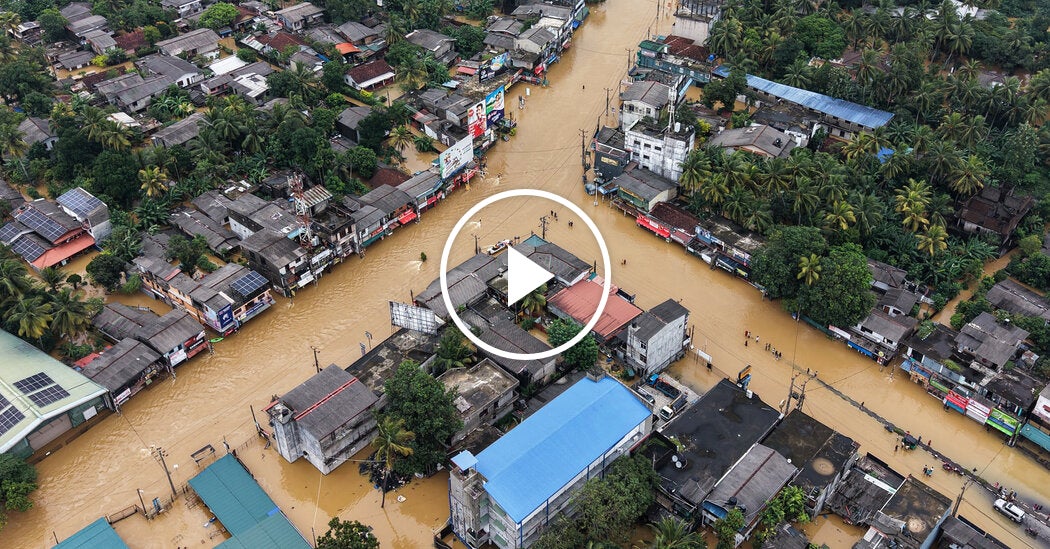
In what officials are describing as the “largest and most challenging natural disaster” in Sri Lanka’s history, Cyclone Ditwah has unleashed unprecedented devastation across the island nation, claiming hundreds of lives and submerging entire communities beneath muddy floodwaters. The catastrophic storm system has transformed bustling towns into waterlogged wastelands, forcing thousands to flee their homes and overwhelming emergency response capabilities across the country.
President Anura Kumara Dissanayake addressed the nation Sunday, declaring a state of emergency while mobilizing military resources to assist with rescue and recovery efforts. “We face a humanitarian crisis of unprecedented scale,” Dissanayake said during a televised address from Colombo. “The destruction wrought by Cyclone Ditwah surpasses anything our nation has endured in living memory. We are marshaling every available resource, but the scale of this disaster presents extraordinary challenges.” The death toll, which officials warn will likely rise as rescue teams reach isolated areas, already represents one of the deadliest tropical cyclone events in South Asian history.
Apocalyptic Scenes Across Devastated Regions as Rescue Efforts Continue
Aerial footage reveals apocalyptic scenes across Sri Lanka’s eastern and central regions, where muddy brown floodwaters have engulfed vast expanses of land, leaving only rooftops and treetops visible above the murky deluge. In particularly hard-hit districts like Batticaloa, Ampara, and Trincomalee, desperate residents wade through chest-high water, carrying what few possessions they managed to salvage. Rescue teams operating boats and makeshift rafts navigate submerged streets, extracting stranded survivors from precarious situations as infrastructure continues to crumble beneath the relentless water pressure.
“Everything happened so quickly,” recounted Malini Senathirajah, 54, a schoolteacher from Kalmunai who lost her home to the flooding. “The water rose faster than anyone expected. My neighbors—a family with young children—couldn’t escape in time.” Her voice breaking, she added, “So many people are still missing.” Emergency workers describe harrowing conditions hampering rescue operations, including contaminated water, collapsed bridges, and entire road networks rendered impassable. Medical professionals warn of a potential secondary health crisis as waterborne diseases threaten vulnerable populations crowded into temporary shelters lacking adequate sanitation.
Climate Change Intensifies Cyclonic Activity as Meteorological Patterns Shift
Meteorologists and climate scientists point to Cyclone Ditwah as the latest evidence of intensifying weather patterns linked to climate change. The cyclone formed unusually late in the season and intensified rapidly over abnormally warm Indian Ocean waters before making landfall with unprecedented force. Dr. Amali Weatherstone, senior climatologist at the International Climate Research Institute, explains that the destructive power of Ditwah aligns with predictions about tropical cyclone behavior in warming oceans. “What we’re witnessing is precisely what climate models have projected—slower-moving, moisture-laden storm systems capable of delivering catastrophic rainfall totals over concentrated areas,” Weatherstone noted.
The storm’s unusual trajectory caught many communities unprepared despite improved early warning systems implemented following previous disasters. Sri Lanka’s Meteorological Department had issued alerts, but the cyclone’s rapid intensification outpaced evacuation timelines. “Traditional knowledge about cyclone patterns is becoming less reliable as climate change alters long-established weather systems,” said Dhanushka Jayawardena, director of disaster preparedness at Sri Lanka’s National Disaster Management Centre. “Communities that have never experienced such flooding are now finding themselves underwater, without the historical experience or infrastructure to cope with such events.”
International Aid Mobilizes as Humanitarian Crisis Deepens
The international community has responded swiftly to Sri Lanka’s plight, with neighboring India deploying naval vessels carrying relief supplies and medical teams. The United Nations has launched an emergency appeal for $150 million to support immediate humanitarian needs, while countries including Japan, Australia, and the United Kingdom have pledged significant aid packages. “This is a moment requiring global solidarity,” stated UN Secretary-General Antonio Guterres. “The scale of destruction in Sri Lanka demands an international response proportionate to the suffering of its people.”
On the ground, the logistical challenges remain daunting. Helicopter drops provide temporary relief to isolated communities, but sustainable aid distribution networks remain elusive as infrastructure damage complicates transportation. The World Food Programme reports critical shortages of clean water, medical supplies, and emergency shelter materials across affected regions. Humanitarian coordinator Samantha Richardson described the situation as “deteriorating by the hour” during a press briefing from Colombo. “We’re racing against time to prevent hunger and disease outbreaks among displaced populations,” Richardson emphasized. “The next 72 hours are absolutely critical for saving lives.”
Long Recovery Ahead as Nation Confronts Environmental and Economic Aftermath
As immediate rescue efforts continue, experts warn that Sri Lanka faces years of recovery from Cyclone Ditwah’s devastation. Beyond the tragic human toll, the disaster threatens to derail economic progress in a country already struggling with financial challenges. Agricultural regions vital to food security and export earnings lie ruined beneath contaminated floodwaters, while tourism—a crucial source of foreign currency—faces serious setbacks. Environmental impacts include widespread soil contamination, coastal erosion, and damage to sensitive ecosystems that could take decades to recover.
Rebuilding efforts will require substantial international support and domestic policy adjustments to enhance resilience against future disasters. “This catastrophe must serve as a watershed moment in how Sri Lanka approaches climate adaptation and disaster preparedness,” urged environmental economist Dr. Nishantha Perera. “Reconstructing exactly what existed before would be setting ourselves up for another tragedy.” As families mourn their losses and communities begin the painful process of recovery, the enduring legacy of Cyclone Ditwah will likely reshape Sri Lanka’s approach to development, environmental management, and disaster response for generations to come. The nation now faces the monumental task of not just rebuilding what was lost, but reimagining a more resilient future in an era of climate uncertainty.