






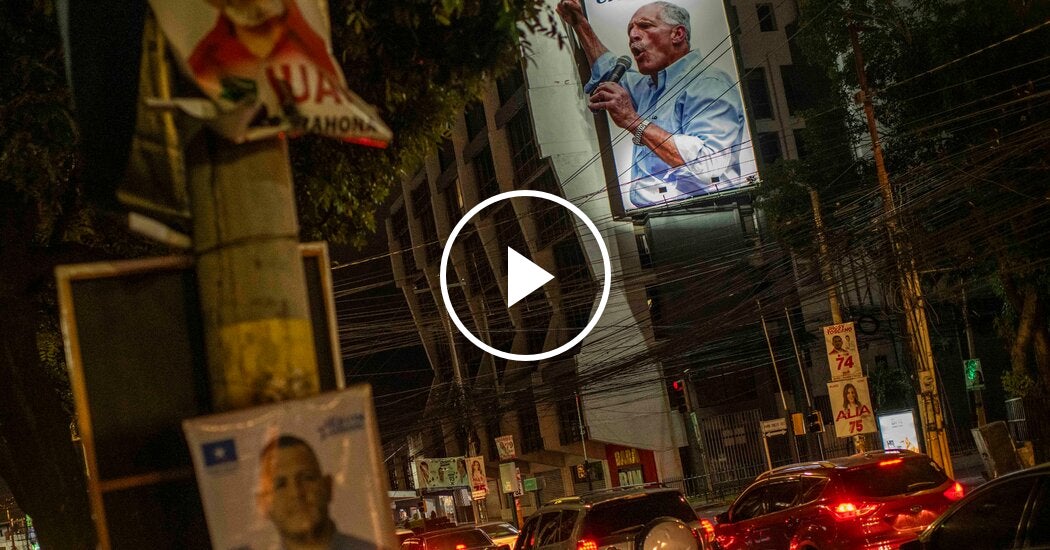
Honduras Votes in Presidential Election: Democracy in Action Amid Political Tensions
Electoral Showdown Takes Center Stage as Nation Decides Its Future
In a pivotal moment for Central American democracy, Hondurans streamed to polling stations across the nation on Sunday to cast their ballots in what observers describe as one of the most consequential presidential elections in the country’s recent history. The electoral process, marked by heightened security measures and international scrutiny, represents a critical juncture for a nation grappling with deep-rooted challenges of poverty, violence, and political polarization. Against the backdrop of regional instability and growing international interest, the election has emerged as not merely a domestic affair but a geopolitical event with implications extending far beyond Honduras’s borders.
The electoral atmosphere in Honduras has been charged with tension even before the unexpected interjection of former U.S. President Donald Trump, who stirred controversy by publicly endorsing one of the right-wing candidates. This unusual move by a foreign political figure into another nation’s democratic process has intensified what was already a deeply polarized campaign season. “Today is about the voice of the Honduran people, not outside influences,” remarked Elena Castillo, an election observer in Tegucigalpa, as voters formed orderly lines outside polling stations in the capital. “The resilience of our democratic institutions is being tested, but Hondurans understand what’s at stake.”
Political Landscape Shaped by Economic Hardship and Security Concerns
The electoral competition unfolds against a complex backdrop of socioeconomic challenges that have defined Honduras’s recent history. With nearly 60% of the population living below the poverty line according to recent World Bank data, economic development has emerged as the foremost concern for voters across demographic groups. Campaign platforms have centered on promises to address chronic unemployment, particularly among youth, while tackling the structural inequalities that have fueled waves of migration northward. “We need leadership that understands the daily struggles of ordinary Hondurans,” said Marco Hernandez, a 43-year-old carpenter waiting to vote in San Pedro Sula. “This election isn’t about ideology for most of us—it’s about survival and creating opportunities so our children don’t feel forced to leave.”
Security concerns have similarly dominated campaign discourse, with candidates offering competing visions for addressing Honduras’s persistent challenges with organized crime and gang violence. The country has struggled to reduce one of the highest homicide rates in the world, though recent years have seen modest improvements in public safety metrics. Electoral promises range from hardline security approaches to community-based prevention strategies, reflecting broader ideological divisions about how to tackle the complex roots of violence. Notably, several candidates have emphasized judicial reform and anti-corruption measures as foundational to any meaningful security improvements, acknowledging the undermining effect of institutional weakness on public safety efforts. “Without honest courts and police, no security policy can succeed,” noted political analyst Gabriela Mendez in a pre-election assessment. “The candidates know this, but implementing true reform requires confronting powerful interests that benefit from the status quo.”
International Attention Underscores Strategic Importance
The unexpected endorsement from former President Trump has thrust Honduras’s electoral process into international headlines, highlighting the country’s strategic importance in regional politics. Trump’s public support for one of the conservative candidates—an unusual move even by the standards of his unconventional political style—has raised questions about appropriate boundaries of influence in sovereign democratic processes. The endorsement came via social media, with Trump praising the candidate’s “tough stance on illegal migration and commitment to strong borders,” themes that resonate with his own political messaging but that complicate the already delicate relationship between migration policies and U.S.-Honduras relations.
The intervention has drawn criticism from democracy advocates and electoral observers, who emphasize the importance of Hondurans determining their own political future without external pressure. “Foreign endorsements, regardless of their source, risk distorting the democratic conversation,” explained Carlos Mendoza, director of an electoral monitoring organization. “They shift focus from local issues to international relationships and can create perceptions of external manipulation.” The reaction within Honduras has been mixed, with some voters expressing appreciation for international attention to their electoral process while others view it as unwelcome interference. The situation underscores the complex relationship between Honduras and the United States, where migration policies, security cooperation, and economic ties create multifaceted dependencies that inevitably influence political dynamics.
Candidates Present Competing Visions Amid Polarization
The leading presidential contenders represent starkly different visions for Honduras’s future, reflecting broader ideological divides within the nation. On the right, candidates have campaigned on platforms emphasizing business-friendly economic policies, stronger security measures, and traditional social values. Their economic proposals focus on attracting foreign investment, reducing regulations, and expanding export-oriented industries, particularly in agriculture and manufacturing. “Honduras needs to become competitive in the global marketplace,” argued one conservative candidate during the campaign’s final debate. “We must create conditions that encourage investment and entrepreneurship rather than dependency.”
In contrast, progressive candidates have emphasized social welfare expansion, addressing economic inequality, and institutional reform as their priorities. Their platforms include proposed investments in public education and healthcare, stronger labor protections, and more progressive taxation systems. Environmental protection has also featured prominently in left-leaning campaigns, with specific attention to defending indigenous land rights against extractive industries. “Our natural resources should benefit all Hondurans, not just multinational corporations,” declared a leading progressive candidate at a rally in a rural community affected by mining operations. The ideological divide extends to approaches on tackling corruption, with progressives generally favoring international anti-corruption mechanisms while conservatives emphasize strengthening domestic institutions. These competing visions reflect fundamental disagreements about Honduras’s development path and its relationship with global economic systems.
Democratic Stakes High as Nation Navigates Challenging Transition
As polling stations prepared to close and vote counting commenced, the stakes for Honduran democracy remained extraordinarily high. The country’s recent electoral history has been marked by controversies, including contested results and allegations of fraud that have undermined public confidence in democratic processes. International observers deployed throughout the country reported generally orderly proceedings with isolated incidents of irregularities, though comprehensive assessments will require days to complete. “What matters most is not just the voting but what comes after,” emphasized electoral commissioner Luisa Martinez. “The peaceful acceptance of results by all parties is the true measure of democratic maturity.”
The election represents more than just a transfer of executive power; it stands as a referendum on Honduras’s democratic trajectory and its ability to address systemic challenges through institutional channels rather than extra-constitutional means. Citizen participation appeared robust across both urban centers and rural communities, with many voters expressing determination to have their voices heard despite logistical challenges and security concerns in certain regions. “I walked two hours to reach this polling station,” said Elvia Ramirez, an indigenous voter from a remote village in western Honduras. “Our communities are often forgotten by politicians, but today our votes count exactly the same as anyone else’s.” As night fell across Honduras, citizens awaited initial results with a mixture of hope and apprehension, understanding that the election’s true success would be measured not just by the process itself but by the peaceful transition that must follow—a critical step in consolidating democratic governance in a region where such transitions have not always been guaranteed.
As Honduras stands at this crossroads, the international community watches closely, recognizing that the success or failure of this democratic exercise carries implications far beyond one election cycle. It represents a crucial test of institutional resilience in a nation striving to overcome historical patterns of political instability while addressing the fundamental challenges of development, security, and governance that will determine its future path.