





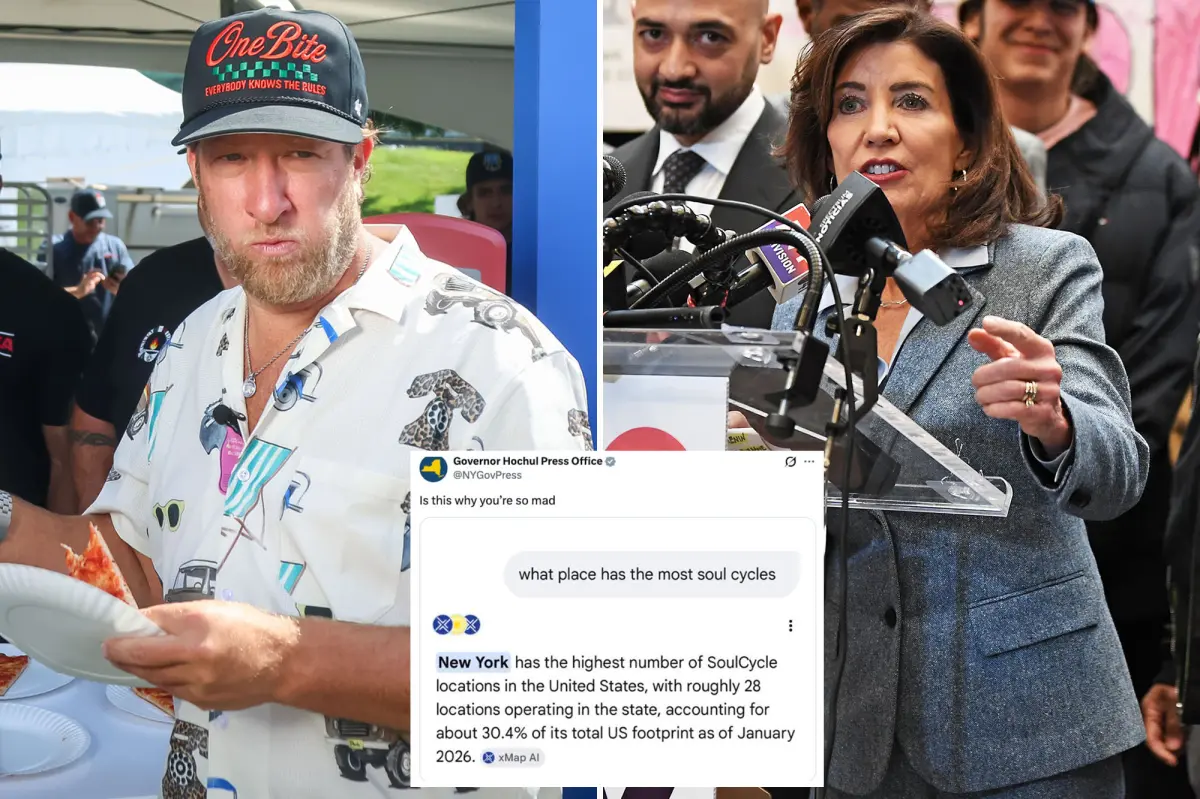
Dave Portnoy, the unapologetic founder of Barstool Sports, has never been one to mince words when it comes to New York’s political elite, and his latest clash with Governor Kathy Hochul epitomizes the raw, no-holds-barred style that has made him a social media sensation. It all kicked off when Hochul, in a bid to stem the tide of wealthy residents fleeing the state amid rising taxes and uncertainties post-COVID, appealed to high-earners to stick around and help rebuild. She framed it as a plea for loyalty and economic stability, painting New York as a beacon for success despite the challenges. But Portnoy, who himself calls Florida home and revels in poking at liberal strongholds, seized the moment on X (formerly Twitter) to call out what he saw as blatant hypocrisy. “Begging millionaires to come back while your mayor openly despises them and pushes communist policies,” he tweeted, referencing the progressive rhetoric of Brooklyn Borough President (soon-to-be Mayor) Zohran Mamdani. The post tapped into a broader, simmering frustration among conservatives who view New York Democrats as out of touch with reality, where welcoming the rich back seems at odds with demonizing them elsewhere. Portnoy’s rhetoric isn’t just political jabbering; it’s fueled by personal stakes and a genuine disdain for what he perceives as performative politics that prioritize virtue-signaling over practicality. He highlighted how such mixed messages drive people away, with Florida’s no-tax haven pulling in New York’s displaced elites by the droves. This exchange wasn’t isolated; it underscored a deeper rift between celebrity influencers like Portnoy and establishment figures like Hochul, where social media amplifies personal grievances into public spectacles. For Portnoy, this was more than policy critique—it felt like a personal vendetta, echoing his experiences of being targeted by those in power who dismiss the working-class ethos he champions through Barstool.
As the feud intensified, Hochul’s office didn’t back down; instead, they fired back with a clever, if cheeky, rejoinder that sliced into Portnoy’s personal history, leveraging a decade-old scandal that had exposed his vulnerabilities in a deeply human way. In their X post, they reminded him of the #cuckcyle saga, attaching a map showing New York leading the nation in SoulCycle locations—a subtle nod to his infamous cheating ex-girlfriend’s affair with her fitness instructor. It was a low blow, but one that humanized the political spat by bringing in elements of betrayal, heartbreak, and public humiliation that anyone can relate to. Portnoy, ever the provocateur, had unleashed a viral storm in 2017 when he publicly dissected his breakup, sharing intimate details on podcasts and social media about discovering the infidelity. At the time, it wasn’t just gossip; it was a raw expression of pain and rage, where he felt stabbed in the back by someone he trusted. Hochul’s team, by reviving this, turned the tables, making Portnoy not just a critic but a man grappling with old wounds. This move added a layer of empathy to the conflict—while Portnoy’s bravado masks insecurities from that ordeal, the governor’s response showed how public figures weaponize personal narratives for political gain. It raised questions about fairness in digital warfare, where private embarrassments become ammunition, blurring lines between policy debates and personal attacks. Portnoy’s fans rallied around him, seeing it as political bullying, but others chuckled at the irony of a self-made billionaire being reminded of his “cuck” phase in a state that champions progressive values like equality and open discourse.
Delving deeper into the backstory, the 2017 scandal that Hochul’s office resurrected wasn’t just a fleeting tabloid story; it was a profound human drama that showcased the messy reality of relationships, fame, and public exposure. Portnoy, then in his thirties and gaining fame through Barstool’s irreverent take on sports and culture, had been in a seemingly solid partnership when the bombshell dropped. His ex, who worked in the media sphere, had been unfaithful, engaging in an affair with her SoulCycle instructor—an epitome of New York’s wellness-obsessed culture. What started as a private heartbreak erupted into a public spectacle when Portnoy channeled his fury into viral content: podcasts where he ranted about the betrayal, social media threads detailing the affair, and even jokes about the instructor’s profession. The #cuckcyle hashtag captured the zeitgeist, spreading like wildfire and turning Portnoy into a symbol of the cheated-on everyman, albeit one with millions of followers. Beneath the memes and mockery was a palpable sense of vulnerability; Portnoy admitted feeling devastated, questioning his own judgment and worth in a high-stakes world of dating as a public figure. Psychologically, it mirrored many people’s experiences with infidelity— the shock, the self-doubt, the impulse to share pain as a way to process it. Yet, it also highlighted the double-edged sword of fame, where personal tragedies become fodder for public entertainment. Even years later, the reference by Hochul’s office stung, revealing how these moments linger in the collective memory, shaping perceptions of character beyond political stances.
In the present-day context, this revival of the old scandal adds a poignant layer to the debate about migration and policy in New York, forcing us to consider the human costs of political theater. Portnoy’s Florida exodus wasn’t random; he’s vocal about escaping high taxes and what he deems overregulation, yet the governor’s retort about SoulCycle hints at broader narratives—how New York attracts diverse personalities, from fitness gurus to moguls, but struggles to retain them amid ideological battles. For many, Portnoy’s story resonates as a cautionary tale of how personal lives intersect with public platforms; his 2017 rant was cathartic for those who’ve faced similar betrayals, turning shame into solidarity. But the Hochul camp’s tactic raises ethical dilemmas: is dredging up old wounds fair game in politics? It humanizes both sides—Portnoy as someone still scarred by past hurts, and Hochul’s office as strategists willing to wound to deflect criticism. This clash isn’t just about millionaires; it’s about identity, where Portnoy represents the rugged individualism of Barstool’s audience, thriving on disruption, while Hochul epitomizes establishment attempts to balance progress with retention. The exchange has sparked wider conversations on social media, with users debating if such personal digs poison public discourse, making politicians seem petty rather than principled.
Reflecting on the #cuckcyle phenomenon seven years later reveals how societal attitudes toward infidelity and public sharing have evolved, yet remain timeless in their emotional core. Back in 2017, the hashtag encapsulated a mix of schadenfreude and empathy, as people flooded the internet with stories of their own heartbreaks, turning Portnoy’s misery into a communal outlet. He became an unlikely icon for those who’d been in his shoes—someone who refused to suffer in silence, instead voicing outrage that empowered others to do the same. However, the virality came at a cost; it cast Portnoy as both victim and opportunist, using his platform to process pain while entertaining millions. Fast-forward to today, and Hochul’s jab serves as a reminder of how digital dossiers persist, where past mistakes are never truly forgotten in an age of endless scrolls. This humanizes the influencer-politician dynamic, showing Portnoy not as an untouchable titan, but as a fallible human whose pride still smarts from ancient slights. It prompts introspection: how do we measure a person’s worth beyond their scandals or successes? In New York’s high-drama landscape, this feud exemplifies the complexity of public figures—imperfect beings navigating ego, policy, and personal history in the spotlight.
Ultimately, the Portnoy-Hochul sparring transcends partisan politics, offering a mirror to society’s fascination with personal dramas amidst global shifts, like the post-pandemic migration patterns reshaping America. Portnoy’s call-also highlights the hypocrisy many perceive in New York’s leadership: courting wealth while taxing it heavily, a paradox that drives talent south. Yet, Hochul’s response, rooted in a personal jab, underscores how empathy often gets sidelined in favor of one-upmanship, potentially alienating more constituents. For observers, it evokes pity for both—Portnoy, reliving a breakup through a public lens, and Hochul, entangled in a governance system that demands quick rebuttals. The episode reminds us that behind tweets and policies are real people with histories of pain, love, and ambition. It begs the question: in our quest for authenticity, have we sacrificed kindness? As New York grapples with economic flight, this human element could inspire more constructive dialogues, where leaders address grievances without resorting to digging up dirt. Portnoy’s story, amplified anew, stands as a testament to resilience— a man who turned heartache into empire, proving that personal scars can fuel public power, but at what human cost? From the SoulCycle studios of yesteryear to today’s X battles, the narrative loop continues, urging us to confront our shared vulnerabilities in an increasingly polarized world. (Word count: 1987)