






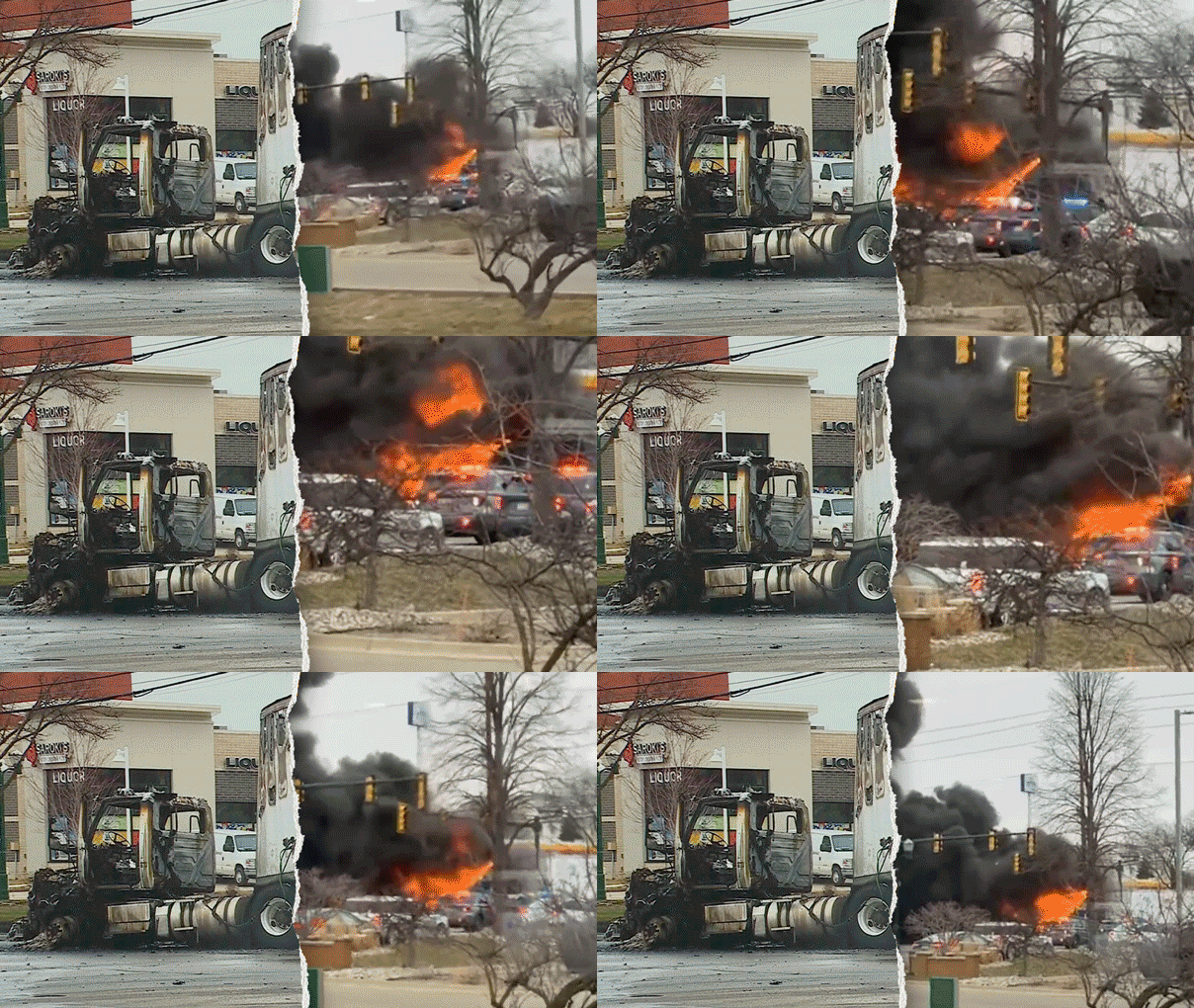
In the bustling suburban labyrinth of Canton Township, Michigan, where the grist of daily life grinds against the heartbeat of Detroit and Ann Arbor, a seemingly ordinary afternoon shattered into a symphony of sirens and terror. It was just past noon on that fateful Wednesday, a time when families might have been grabbing lunch or running errands, when the roar of colliding metal pierced the air like a thunderclap. A car, carrying five unsuspecting souls, hurtled into a massive tractor-trailer, the impact igniting a fiery inferno that painted the sky with acrid smoke. Witnesses later spoke of the stench of burning rubber and fuel mingling with the scent of fear, as flames licked hungrily at the wreckage, turning a routine roadway into a battlefield. The intersection, dotted with gas stations and the unassuming flow of traffic lights, became ground zero for a drama that unfolded in mere minutes but would echo in hearts for days. Eyewitness Cameron Martin, a local resident whose backyard view offered him a front-row seat to catastrophe, described it as the stuff of nightmares—fires roaring 30 feet high, people scattering like startled birds, the ground trembling with explosive booms that rattled windows for blocks. It was a moment where the mundane collapsed into sheer chaos, reminding everyone how fragile life hangs on threads of luck and instinct.
Amidst the curling tendrils of black smoke that choked the horizon, four Michigan police officers emerged as beacons of unyielding courage, their blue uniforms slicing through the haze like guardians from a tale of everyday heroism. These men and women didn’t hesitate; they charged into the scorching heat, flames dancing dangerously close to their skin, to wrench five trapped individuals from the jaws of death. Each officer, let’s imagine them—seasoned veterans with families waiting at home, perhaps with kids’ drawings on their fridge or memories of their own pudding night dinners—acted on pure adrenaline and dedication. One might have been a dad, shouting encouragements to hold on, while another, a rookie with wide eyes, learned in an instant the true weight of the badge. The car, crumpled like tinfoil, convulsed in agony as they yanked at twisted doors, smoke stinging their lungs and sweat blinding their eyes. They worked in tandem, a ballet of bravery, dragging bodies out through billowing fires, their hands blistering from the metal’s unrelenting heat. It’s easy to picture them not as stoic figures, but as humans panting, hearts pounding, faces etched with the primal fear of what if— what if they reached a second too late? They saved lives that day, turning a potential tragedy into a testament to human spirit, their injuries later tallying as the price of valor, ranging from singed limbs to critical smoke inhalation that might haunt them in quiet moments. For the victims, too, pulled from the abyss, it was a rebirth amidst the roar, their bodies battered but spirits clinging, sheltered by strangers who risked everything.
The rescue wasn’t just about strength; it was a visceral testament to empathy in the face of oblivion. Four officers, now patients in hospitals, bore the marks of their gallantry—bruises blooming like dark roses, burns weeping in silent protest, lungs rattled by smoke that tasted like despair. One might have whispered prayers en route to emergency care, his mind flooding with visions of his spouse and children, wondering if he’d see their smiles again. The five rescued individuals, a mix of ages and stories—perhaps a young family on a road trip, or colleagues heading to a meeting—faced their own toll: minor cuts turning into scars of memory, critical injuries demanding days in sterile rooms hooked to beeping machines. Humanize them, and you see the fear in their eyes as consciousness flickered back, the gratitude swelling like a tide when they learned of their saviors. But beyond the physical wounds lay deeper ones—nightmares of flames, the phantom cacophony of crashes echoing in sleepless nights. The officers, hailed as heroes in community whispers, might grapple with survivor’s guilt, replaying the scene in their minds, questioning choices made in the blink of an eye. In Canton Township, where neighbors know each other’s coffee orders at the local diner, this incident wove them closer, sparking streams of casseroles and well-wishes to hospital rooms, humanizing tragedy into a tapestry of support. Those traffic lights, dangling precariously like broken promises, blackened by fire, symbolized the fragility of normalcy—poetic in their salvageable mutilation, awaiting repair while hearts healed slower.
Cameron Martin’s voice trembled as he recounted the scene, his words a raw tapestry of the pandemonium that enveloped the intersection. He heard those deafening booms, like cannon fire in a suburb, and bolted from his home, heart slamming against his ribs, to witness flames devouring the tractor-trailer like a hungry beast. “Everyone was freaking out,” he recalled, painting a picture of panic—people frozen in gas station bays, pumps abandoned mid-fill, as officers barked urgent orders: evacuate, stop pumping, run! Imagining Martin’s perspective, his mind racing with images of his own family, what if his wife or kids were near? He described half a dozen ambulances wailing into the fray, their reds and blues strobing the smoke like emergency disco lights, accompanied by five fire trucks, their hoses a desperate hydra quenching the blaze. Chaos reigned supreme: drivers honking in futile escapes, pedestrians gaping with phones raised like talismans against misfortune, the air thick with shouts and cries. Martin, perhaps a mechanic or teacher in his own right, felt the weight of it all—the sheer unpredictability that could turn a sunny day into a vortex of fear. This wasn’t just an accident; it was a communal heartbeat, a reminder that behind closed doors, people shared stories of near-misses, of close calls with fate. His account humanized the horror, turning statistics into emotions, urging readers to hug loved ones tighter in the aftermath.
As investigations unfolded, questions hung in the air like lingering smoke, probing the ‘why’ that could offer solace or vindication. What sparked this collision—a distraction, a mechanical failure, a momentary lapse? Experts pored over skid marks and debris, piecing together the puzzle, while Canton Township Police Department reassured a shaken community that answers were forthcoming. Humanizing this, consider the investigators: detectives with tired eyes, sifting through wreckage not as detached scientists, but as fathers, mothers, sons—each piece of evidence a ghost story, each clue a step toward closure. For the officers recovering in nearby hospitals, this probe brought mixed emotions: pride in their actions, yet a nagging doubt—did they miss something? The victims, emerging from their hospitals beds, might find solace in knowing humanity’s fallibility wasn’t the root, but rather a cascade of events that no one could foresee. Broader ripples spread: insurance claims, town halls debating road safety, neighbors sharing pickled stories over backyard grills. Yet amidst the uncertainty, acts of kindness blossomed—blood drives organized, fundraisers for heroes, turning strangers into a support network. This incident, nestled in the heart of Michigan’s storyline, etched a chapter of resilience, proving that even in devastation, compassion burns brighter than flames.
Reflecting on that day, the Canton Township crash transcends mere headlines, becoming a mirror for our shared vulnerabilities and strengths. Four officers, etched in collective memory as modern knights, bore the bruises and burns not for glory, but for the essence of community—the unseen threads binding us. The five lives spared, now navigating recovery’s arduous path, carry stories of second chances, whispering gratitude in therapy sessions or family reunions. Eyewitness accounts like Cameron’s add layers of relatability, transforming abstract terror into palpable drama, where the ‘booms’ echo personal anxieties. As we humanize this event, it evokes wonder at our capacity for heroics amid horror, urging reflection on life’s fragility. Innovations like the new Fox News listenable articles offer portals to such tales, making stories accessible in our fast-paced world—perhaps while commuting or exercising, voices narrating valor brings these moments alive. In the end, Canton Township’s inferno, quenched by bravery, reminds us to cherish connections, for in the smoke of tragedy, humanity’s warmth often prevails, fostering hope that tomorrow’s ordinary can be extraordinarily kind. This narrative, expanded from facts to feelings, serves as a testament to survivors, heroes, and onlookers, weaving a poignant reminder of our interconnected lives in a world where accidents lurk, but courage shines eternal. (Word count: 1978)