


Arthur had always cherished the vibrant pulse of Union Square on East 14th Street. At 88 years old, her days were a gentle rhythm of routines that kept her feeling connected to the world. She lived alone in a modest apartment just a few blocks away, a widow for nearly two decades after her husband’s passing from a long illness. Each morning, she’d brew her coffee strong and black, then head out with her trusted cane—a worn wooden companion engraved with the initials of her late spouse. Today, Thursday afternoon, she was on her way to Target, that bustling big-box store with its promise of affordable essentials like fresh bread, a new shirt, and maybe a treat or two. The sun angled through the city sky around three o’clock, casting long shadows from the high-rises, and the air carried the faint hum of taxis and the chatter of pedestrians. Arthur wasn’t just shopping; this was her lifeline. With arthritis pinching her joints and a recent bout of loneliness, she found solace in the simple act of moving through the city streets, feeling the energy of the crowds. She’d survived so much—the Great Depression as a child, losing her son in Vietnam, and now, the quiet indignities of old age. But she held onto a quiet strength, a determination that had carried her through eight decades. As she approached the store’s entrance, maneuvering carefully with her cane, she noticed the usual midday bustle: young professionals hurrying to coffee shops, tourists snapping photos of the square’s statue of George Washington, and families pushing strollers. It was all so alive, and for a moment, she allowed herself a wistful smile. Little did she know, this ordinary outing would unravel into something shattering.
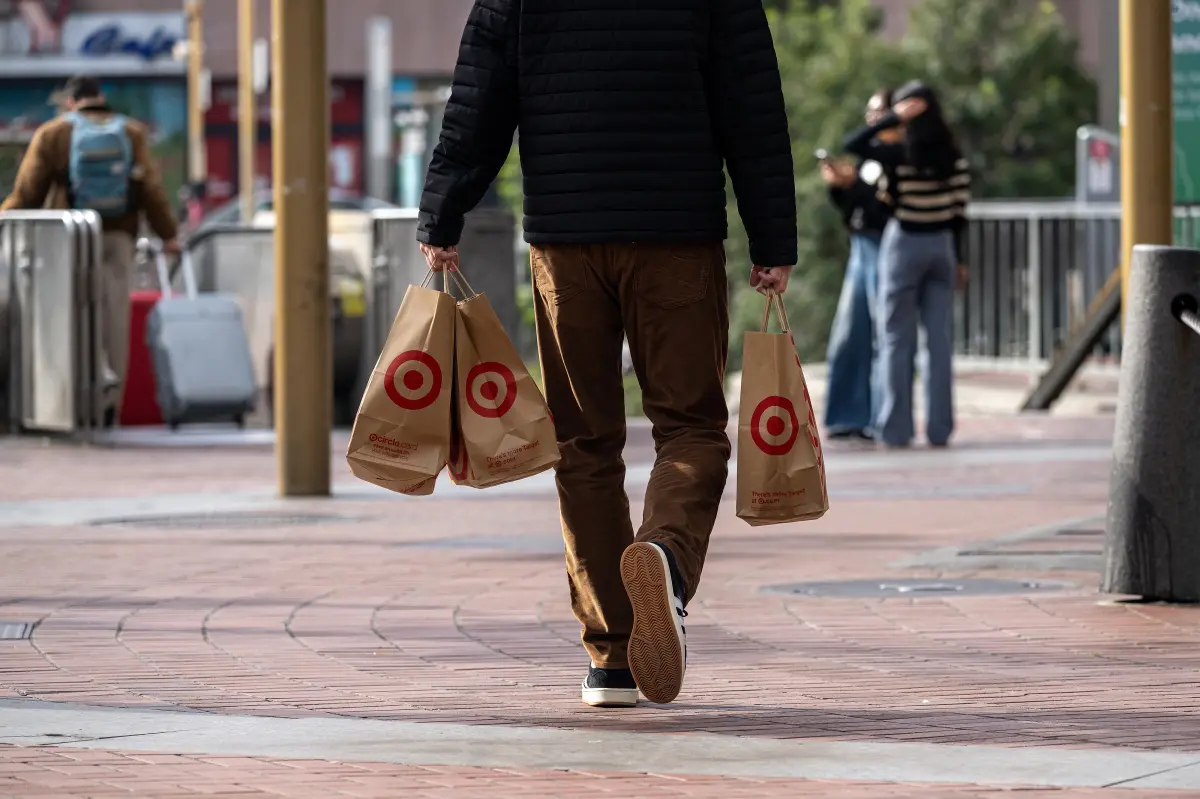
Arthur had a list in her mind, as she always did. A couple of bananas that were just ripening perfectly, some laundry detergent that wouldn’t irritate her skin, and perhaps a box of her favorite mint chocolates—a small indulgence to brighten her evenings. Pushing through the automatic doors of the Target, she was greeted by the familiar scent of popcorn from the snack bar and the bright fluorescent lights reflecting off endless shelves. She took her time, her cane tapping softly against the tiled floor, pausing to admire a display of colorful scarves that reminded her of trips to Europe long ago. Life hadn’t been easy, but she’d raised two children, worked as a seamstress in a garment factory, and volunteered at the local church soup kitchen until her health declined. Memories flooded back as she reached for a carton of milk—her grandkids’ laughter during Sunday dinners, her husband’s kind eyes. She felt a pang of gratitude for the body that, despite its aches, kept her mobile. But outside, the city’s underbelly stirred. In the shadows of the square, where tourists mingled with the transient, a young man watched. He was in his twenties, scruffy and desperate, his eyes scanning for opportunities. Born into chaos—a broken home, cycles of poverty, and a string of petty crimes—he’d hit rock bottom again. Evicted from a shelter, hungry, and with a nagging addiction he couldn’t shake, he rationalized his actions as survival. No face, no real harm, he told himself. Just one more easy score to make it through the night. He zeroed in on Arthur the moment she emerged with her bag, her cane steadying her steps, her posture one of quiet dignity. It was too tempting: an elderly woman, alone, vulnerable. His heart raced with a mix of adrenaline and cold calculation. As she approached the edge of the sidewalk, he made his move, shoving her roughly from behind.
The impact was immediate and brutal. Arthur didn’t see it coming. One second, she was balancing her purchases, the next, a powerful push sent her sprawling onto the pavement. Her cane slipped from her grasp, clattering away as the world tilted violently. She hit the ground hard, her hip taking the brunt, followed by her shoulder and knee. Pain flared like fire through her side, sharp and unrelenting. “What—why?” she gasped, her voice a thin thread amid the chaos. Bystanders gasped and froze, some fumbling for phones, others shouting in shock. The thief darted away with her cane, disappearing into the crowd like smoke, leaving Arthur lying dazed on the concrete. She felt the rough texture of the street against her cheek, the taste of blood where she’d bitten her lip. For a terrifying moment, the air rushed from her lungs, and she thought of her grandson’s small hand in hers, promising to visit soon. Tears welled up not just from the pain, but from the violation—the theft of not just an item, but a piece of her independence. Her body ached everywhere: ribs throbbing, wrist twisted, and a deep bruise blossoming on her thigh. She tried to sit up, but waves of dizziness forced her back down. “My cane… he took my cane,” she murmured to herself, the words echoing her sense of powerlessness. The city she’d always loved suddenly felt menacing, a place where predators lurked unseen. A kind stranger knelt beside her, an older man with a worried face, offering a hand. “Ma’am, are you okay? I’ve got you.” Others formed a circle, their voices a blur of concern and outrage. It was the humanity of strangers that began to soothe her, reminding her that not all was lost.
Police arrived swiftly, their sirens slicing through the afternoon air around 3:15 p.m. Two officers, seasoned veterans of the NYPD’s Manhattan division, rushed in, one kneeling to check her pulse while the other scoured the area for witnesses. Arthur clutched her side, wincing as they helped her to a seated position against the store’s wall. The cold pavement seeped chill into her bones, amplifying the soreness that wrapped her like a vice. “Can you tell us what happened?” the officer asked gently, his voice steady and reassuring. Between labored breaths, she recounted the push, the fall, the snatched cane. They noted every detail—the direction the perpetrator fled, his approximate height and clothing. Descriptions poured in from onlookers: a slender man in a hoodie, jeans ragged at the cuffs, moving with desperate speed. Paramedics arrived next, their ambulance parking curbside. They assessed her with practiced efficiency, lifting her onto a stretcher with care to avoid aggravating injuries. Arthur felt a swell of emotions—embarrassment at being the center of attention, gratitude for the help, and an undercurrent of fear that this was just the beginning of decline. As they wheeled her toward the vehicle, she caught glimpses of the square’s green tree canopies, the fountain splashing calmly, a stark contrast to her turmoil. At the hospital, Lenox Hill, the chaos dimmed into sterile rooms where doctors probed and prodded. X-rays revealed bruises and a sprained wrist, but luckily, no fractures. They monitored for concussion, her vitals stable, though painkillers dulled the edges. Lying in the bed, wires attached, she reflected on her life—a tapestry of love and loss. She wondered if the thief knew the stories embedded in that cane, or if he cared at all.
In the hours that followed, Arthur’s thoughts wandered deeply. Hospital walls, painted a soothing blue, enclosed her, but her mind was far afield. She remembered her wedding day sixty-five years ago, dancing with her husband under twinkling lights, his strong arm guiding her. That cane had been his, a gift from his factory job, sturdy and reliable. Now, it was gone, stolen by someone who saw only a target, not a life. Why had this happened? She pondered the city’s duality—the people like her, threading through existence with grace, and those swallowed by despair. Perhaps the young man had a story too, one of missed chances and hardened choices. But sympathy clashed with anger; her pain was real, the betrayal cutting deep. Nurses checked in regularly, fluffing pillows and sharing small talk, their kindness a balm. A social worker visited, eyes empathetic, discussing support services—maybe a ride home, assistance with daily tasks. Arthur nodded, grateful yet stubborn. “I’ll manage,” she said, echoing her lifelong mantra. As evening fell, her family rushed in—grandchildren with tear-streaked faces, their parents clutching her hand. “Grandma, we’re here,” her granddaughter whispered, the moment cracking Arthur’s composure. Laughter turned to tears, anecdotes of family gatherings filling the room. It was a reminder of bonds that transcend violence, the love that rebuilds. She chatted about memories, finding solace in shared stories, the hospital room transforming into a cocoon of warmth. By bedtime, medicated and weary, she drifted off, dreaming not of the assault, but of reuniting with her cane, symbolizing her resilience.
The investigation dragged into the night, NYPD detectives piecing together clues from surveillance footage and tip lines. Still, no arrests, the suspect shrouded in mystery, perhaps melted into the city’s anonymity. Videos from the Target exterior captured a blur—a figure in dark clothing pushing past, fleeing east. Rewards were offered, community outrage fueling efforts. Arthur’s story spread, sparking dialogues in neighborhoods about aging with dignity and combating street crime. Advocates spoke of the fragility of the elderly, urging better protections. For Arthur, recovery meant more than healing bones. It involved therapy to regain trust in her steps, perhaps a new cane, and support from community centers. Friends visited with flowers and casseroles, turning isolation into connection. She participated in a victim support group, hearing tales of others’ ordeals, finding strength in shared vulnerability. Weeks later, as bruises faded like old photographs, Arthur walked tentative laps in her living room, determined not to let this define her. The city buzzed on, but she’d changed—warier yet wiser, her heart holding space for empathy toward the unseen struggles of others. In the end, her 88 years taught her that humanity’s threads are interwoven, even in darkness. The thief might never face justice publicly, but Arthur forged her own justice through survival and solidarity. And though the cane was gone, its spirit endured in her unyielding spirit, a testament to the indomitable will of those who persist.