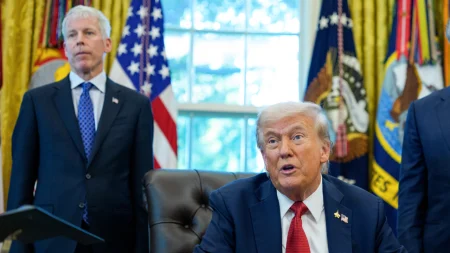


Harold Hamm: The Oklahoma Oil Magnate Who Reshaped American Energy Policy
Harold Hamm’s journey from humble beginnings to becoming one of America’s most influential oil tycoons reads like a quintessential American success story. Born in rural Oklahoma as the youngest of 13 children to sharecropper parents, Hamm began his career pumping gas and repairing cars before founding what would become Continental Resources, now one of the nation’s largest oil producers. His pioneering work in the Bakken formation of North Dakota helped usher in America’s shale revolution, transforming the United States from an energy-dependent nation into the world’s largest oil producer. This remarkable rise not only made Hamm a billionaire but positioned him as a pivotal figure in American energy circles, where his practical experience and entrepreneurial vision earned him respect across the industry.
What truly distinguishes Hamm from other energy executives, however, is his exceptional political influence, particularly during the Trump administration. Recognizing a kindred spirit in Donald Trump—another businessman who challenged conventions—Hamm became an early and enthusiastic supporter of Trump’s presidential bid. Their relationship blossomed from mutual admiration into a powerful alliance that would reshape American energy policy. As an informal advisor and later as a member of Trump’s economic advisory team, Hamm gained unprecedented access to the highest levels of government. His philosophy of “American energy dominance” through deregulation and expanded drilling permissions closely aligned with Trump’s “America First” agenda, creating a harmonious partnership that would have far-reaching consequences for the nation’s energy landscape.
The fruits of this alliance quickly became apparent as the Trump administration systematically dismantled Obama-era environmental protections and energy regulations. Hamm’s fingerprints were evident on numerous policy decisions: the approval of controversial pipeline projects, the opening of federal lands and waters to drilling, the weakening of methane emission standards, and the withdrawal from the Paris Climate Agreement. These changes represented precisely the kind of business-friendly environment Hamm had long advocated for, arguing that excessive regulation stifled innovation and economic growth. For Hamm and his allies, these policy shifts weren’t just about corporate profits but about energy security, job creation, and reducing foreign dependencies—a perspective that resonated strongly with Trump’s core supporters in energy-producing states.
Yet Hamm’s influence extended beyond traditional energy policy into broader economic and geopolitical realms. His advocacy for using American energy as a foreign policy tool helped shape the administration’s approach to international relations, particularly with energy-dependent allies in Europe and adversaries like Russia and Iran. By promoting American natural gas exports as an alternative to Russian supplies, Hamm helped advance both business interests and strategic objectives. Domestically, his emphasis on the economic benefits of energy production—jobs, tax revenue, and community development—provided political cover for controversial environmental rollbacks. This multidimensional approach to energy policy demonstrated Hamm’s sophisticated understanding of how energy intersects with economics, national security, and political dynamics, making him far more than just another corporate lobbyist.
Critics, however, view Hamm’s influence through a more troubling lens—as the epitome of regulatory capture, where industry insiders gain control over the very government bodies meant to oversee them. Environmental organizations and climate scientists point to the long-term consequences of policies Hamm championed: increased greenhouse gas emissions, delayed transition to renewable energy, and potentially irreversible ecological damage. Public health advocates highlight the localized impacts of relaxed drilling regulations on communities near extraction sites, including air and water quality concerns. Even from a purely economic perspective, some analysts question whether the fossil fuel-friendly policies Hamm advocated truly served America’s long-term interests, as the global energy landscape increasingly shifts toward renewables. These critiques raise important questions about the appropriate balance between industry expertise and public interest in policymaking.
As the Biden administration works to reverse many Trump-era energy policies and address climate change more aggressively, Hamm’s legacy remains complex and contested. His remarkable personal story and business achievements are undeniable, representing the opportunity and innovation that characterize American enterprise at its best. His policy influence demonstrates how individual actors can shape national direction at pivotal moments. Yet the environmental and climate implications of the agenda he helped implement will continue to unfold for generations. Perhaps most significantly, Hamm’s story illustrates the profound tensions in American energy policy—between economic growth and environmental protection, between energy independence and global climate responsibility, between short-term prosperity and long-term sustainability. As the nation continues to navigate these tensions, understanding figures like Harold Hamm becomes essential to charting a balanced path forward in an era of energy transition and climate challenges.