




A Father’s Grief and Call for Immigration Reform
In the quiet college town of Urbana, Illinois, Joe Abraham’s life changed forever on January 19, 2025. His daughter Katie, vibrant and full of promise, was killed when a drunk driver slammed into her vehicle at nearly 80 mph while she sat at a stoplight. The pain of losing a child is unfathomable, but for Abraham, this tragedy has been compounded by what he describes as a systemic failure in immigration policy and a deafening silence from state leadership.
“Katie was a productive, talented, beautiful woman, so intelligent, so funny, so witty. She had this way of bringing people in and making them feel seen,” Abraham recalls with the unmistakable ache of a father who will never see his daughter marry or have children of her own. The driver responsible for Katie’s death was Julio Cucul-Bol, a Guatemalan national who had previously been deported from the United States. Authorities apprehended him on a bus headed to Mexico, carrying fake identification. The circumstances surrounding the case – including Cucul-Bol’s illegal status, prior deportation, and the fact that he could neither read nor write in English or Spanish – have forced Abraham to confront what he sees as fatal flaws in America’s immigration system. “The issue was that when he came into the U.S. there were no background checks. There were no health checks,” Abraham explains, noting that court documents revealed the driver was HIV-positive and had previous drunk driving incidents.
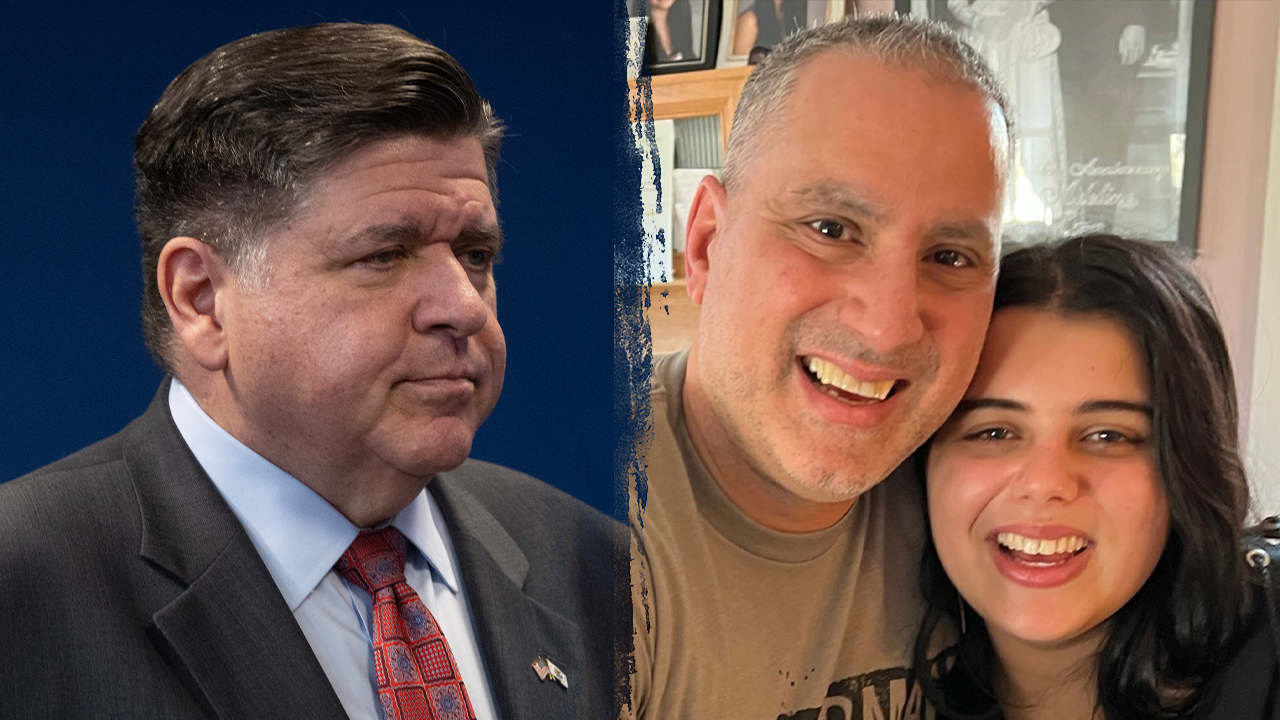
What has perhaps wounded Abraham most deeply in the aftermath of Katie’s death is what he describes as complete indifference from Illinois state leadership. “I received utter silence and indifference from my governor,” he says. “Katie got disrespect and silence.” He recalls sitting just feet away from Governor Pritzker during a congressional Oversight Committee event where his daughter’s case was mentioned, yet the governor never acknowledged him. “Father to father – I expected him to care,” Abraham laments. “I wanted him to say, ‘Things got out of control. We’re working on it.’ I wanted leadership and wanted him to acknowledge Katie’s life. She was worth five seconds of his time.” This perceived callousness stands in stark contrast to his experience with former President Donald Trump, who invited Abraham to the White House and “looked me in the eye, father to father,” acknowledging Katie’s life and promising to address the issues at hand.
Abraham’s grief has transformed into advocacy as he navigates the complex terrain of immigration policy. He’s careful to emphasize that his criticism centers on weak policy rather than immigrants themselves. “If you want to really be part of America and come in here, then you have got to do things the right way,” he says in a video for The American Border Story, a national initiative highlighting the human impact of America’s border crisis. “There has got to be an orderly process where people have to understand how to behave here.” His call isn’t for xenophobic restrictions but for what he terms “rational policy and some common sense.” Abraham expresses particular frustration with sanctuary policies that nullify federal law without creating alternative frameworks for public safety. “You can’t throw out the welcome mat to anyone and everyone, unchecked and unvetted, and then wash your hands of the consequences,” he argues.
The aftermath of Katie’s death has revealed the tensions between federal and local authorities in immigration enforcement. Following the tragedy, the Department of Homeland Security launched Operation Midway Blitz, an immigration enforcement operation targeting criminal illegal immigrants that officials say was created in honor of Katie Abraham. Yet this federal intervention has met resistance, with Illinois and Chicago filing a lawsuit against the federal government, alleging “unlawful and violent” enforcement tactics that violate Tenth Amendment protections. Abraham observes this conflict with frustration: “ICE has to go out on the streets now, because Illinois won’t cooperate.” The legal and political battles surrounding immigration enforcement illustrate how deeply polarized the issue has become, with victims’ families often feeling caught in the crossfire of competing agendas.
For Joe Abraham, the past year without his daughter has been “the most brutal year of my life.” Katie and her friend Chloe Polzin, who died the day after the crash from her injuries, represent the human cost of policy failures that transcend partisan politics. Their stories serve as a painful reminder that behind statistics and policy debates are real lives irrevocably altered by tragedy. Abraham continues to advocate for practical policies that protect the public while supporting immigrants who come legally and with good intentions. As he navigates his grief, he remains committed to ensuring that Katie’s death is acknowledged and that meaningful reforms are enacted to prevent similar tragedies. His experience highlights a crucial truth: effective immigration policy must balance compassion with order, openness with security, and above all, must never lose sight of the human lives affected by its implementation or failure.