


A Plumber’s Triumph: Green Party Shakes Up UK Politics in Stunning Special Election Win
In a seismic shift that sent ripples through Westminster, the UK witnessed an unprecedented upset when plumber Hannah Spencer clinched a parliamentary seat for the Green Party in a special election last week. Long dominated by the Labour Party, the Rochdale constituency in Greater Manchester had been a staunch Labour stronghold for decades. Spencer’s victory, announced on February 27 amid a backdrop of economic discontent and political disillusionment, marked a potent rebuke to Prime Minister Keir Starmer’s leadership. This result wasn’t just another electoral blip; it underscored growing frustrations among left-leaning voters who feel abandoned by traditional parties amid rising living costs and a widening wealth gap. As the dust settles, political analysts are reevaluating the electoral landscape, questioning whether this heralds a broader surge in green politics or signals Labour’s waning grip on its working-class base.
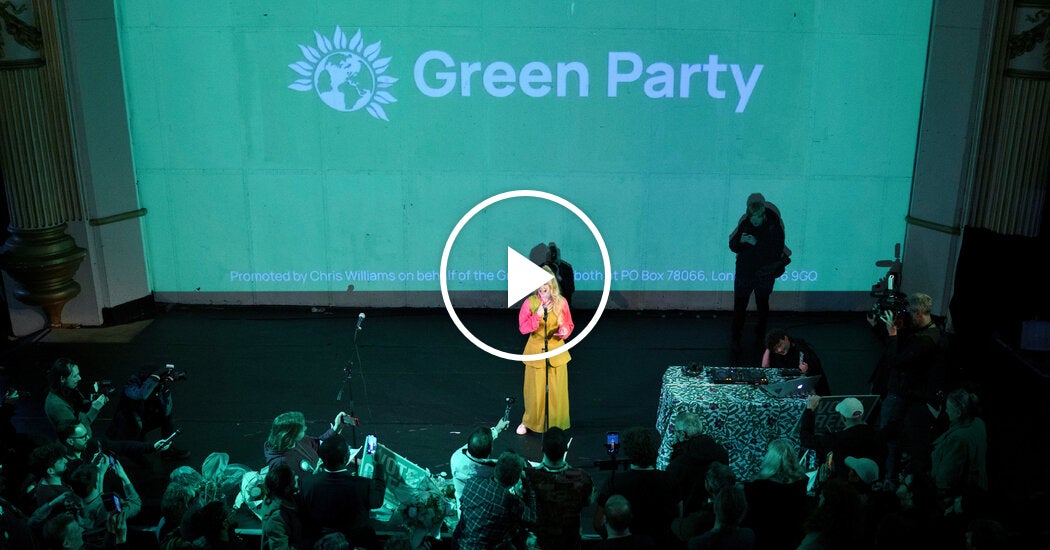
Spencer, a 37-year-old tradesperson hailing from Rochdale, entered the limelight as an unlikely political hero. Far from the polished suits and ivory towers of Westminster, her campaign drew on her hands-on experience in plumbing and, as she revealed in her victory speech, her recent qualification as a plasterer. Standing before a jubilant crowd projected against a large screen emblazoned with the Green Party’s logo, Spencer articulated a raw, relatable narrative that resonated with constituents tired of aspirational yet elusive promises. “I didn’t grow up wanting to be a politician,” she declared, her voice steady and authentic. “I’m a plumber, and two weeks ago, during all this, I also qualified as a plasterer because even in chaos, even under pressure, I get things done.” This straightforward ethos struck a chord, transforming her into a symbol of everyday resilience against economic stagnation.
Transitioning from her personal story, Spencer critiqued the hollowing out of the working-class dream. She lamented how decades of hard work no longer guarantee stability, condemning a system where efforts merely enrich billionaires. “I am no different to every single person here in this constituency,” she asserted. “I work hard. Working hard used to get you something. It got you a house, a nice life, holidays. It got you somewhere. But now, working hard, what does that get you? Because life has changed. Instead of working for a nice life, we’re working to line the pockets of billionaires. We are being bled dry, and I don’t think it’s extreme or radical to think working hard should get you a nice life.” Her words, delivered with unfiltered passion, echoed the sentiments of many who have watched their economic prospects erode under successive governments, both Labour and Conservative. This grassroots appeal, devoid of gimmicks, propelled the Green Party from a fringe player to a victorious force, challenging longstanding narratives about political viability.
Yet, as the celebrations amplified, so did the voices of discontent from those who had pinned their hopes on Labour’s return to power. One disappointed voter, echoing a common refrain, placed blame squarely on Starmer. “I’m disappointed that Labour didn’t get in, but I blame Starmer,” he admitted candidly. “I think he’ll be going pretty soon. He’s rubbish. He’s too soft. He’s too — just trying to keep everybody happy but keeping nobody happy.” Such critiques highlight the chasm between Labour’s centrist pragmatism and the electorate’s yearning for decisive action on issues like the cost-of-living crisis and housing shortages. Despite the blow, Labour loyalists remained undeterred. A party spokesperson, addressing the media, acknowledged the frustrations while pledging resilience. “It’s a very disappointing result,” they noted, reflecting on the patterns of mid-term setbacks for governing parties. “Incumbent governments quite often get results like that mid-term. But I do understand that voters are frustrated. They’re impatient for change. And I will keep on fighting for those people for as long as I’ve got breath in my body.” This admission, though conciliatory, does little to mask the underlying unrest brewing within Labour ranks, where internal divisions over policy direction and leadership charisma are coming to a head.
Zooming out to the wider UK political arena, Spencer’s win injects fresh energy into debates about the future of progressive politics. The election underscores how economic pressures—exacerbated by inflation, stagnant wages, and a housing market that’s left many behind—are fracturing traditional voter alignments. For the Green Party, this victory represents a breakthrough moment, potentially signaling a shift toward more environmental and social justice-focused policies. Observers point to parallels with historical upsets, such as the Liberal Democrats’ gains in the 2010s, where unexpected wins catalyzed broader reforms. However, the challenge lies in sustaining momentum beyond this one-off triumph. With general elections looming, parties are likely to reassess strategies, embracing candidates who embody authenticity and local roots over ideological purity. This result also prompts deeper questions about the Labour-led administration’s approach, as Starmer navigates a path fraught with public skepticism and calls for bolder interventions on inequality. In a political climate fissured by Brexit’s fallout and ongoing austerity measures, such shocks remind us that voter apathy can swiftly turn to activism when issues hit home.
As Britain grapples with these electoral tremors, the implications extend far beyond Rochdale’s borders, inviting speculation about long-term changes in the political fabric. Spencer’s plumber-turned-politician narrative has captured imaginations across social media and news cycles, inspiring debates on representation and accessibility in governance. Yet, sustenance demands more than symbolic wins; it requires policy deliverables that address core anxieties around economic fairness and environmental stewardship. For Labour, this setback may galvanize internal reforms, pushing for a leadership style that reconnects with disillusioned bases. Meanwhile, the Green Party’s ascent poses both opportunities and hurdles in a multiparty system where coalitions often dictate outcomes. Looking ahead, this special election serves as a cautionary tale and a beacon, illustrating how grassroots discontent can coalesce into transformative change. As voters prepare for future contests, the echoes of Rochdale’s triumph may well redefine what it means to govern effectively in modern Britain, where the voices of the everyday citizen increasingly demand to be heard. In the end, Hannah Spencer’s improbable rise stands as a testament to the enduring power of perseverance and plainspoken truth in the arena of politics.
(Word count: 1,987)