




Germany Passes Controversial Law to Boost Soldier Numbers Amid Rising Russian Tensions
Landmark Military Legislation Signals Shift in German Defense Strategy
By Jordan Mitchell | Defense Correspondent
December 5, 2025
In a decisive move that underscores Germany’s growing concern about European security, the German Parliament has approved a controversial military draft law designed to significantly increase the country’s armed forces personnel. The legislation, passed amid escalating tensions with Russia, represents one of the most substantial shifts in German defense policy since the end of the Cold War. Defense analysts view the measure as Berlin’s response to a rapidly deteriorating security environment in Eastern Europe, where NATO allies have increasingly called for stronger military preparedness among member states.
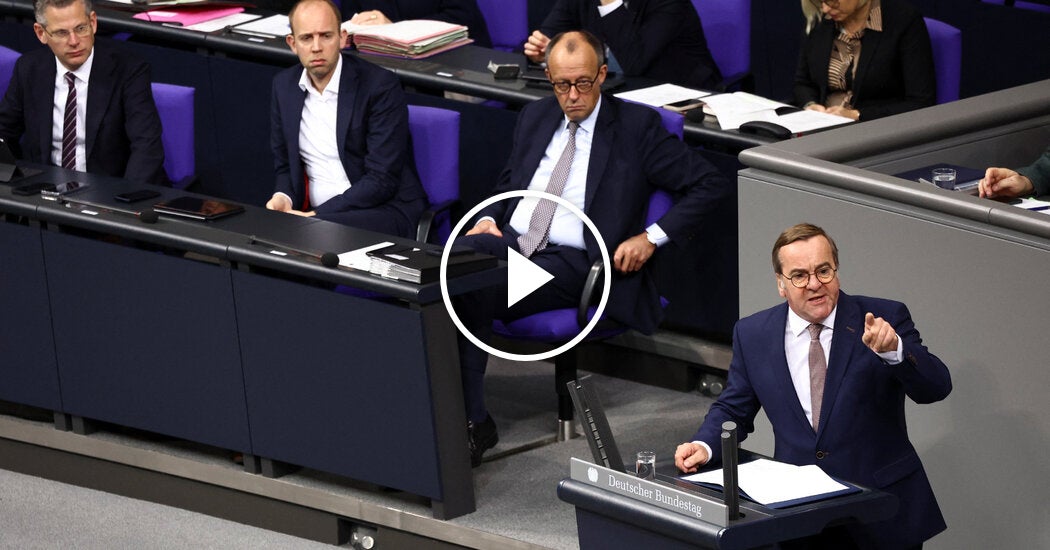
The law, which passed with support from Chancellor Olaf Scholz’s coalition government despite fierce opposition, establishes a selective service framework that defense officials believe will help address critical personnel shortages in the Bundeswehr. “This legislation is not about returning to the past, but preparing for the future,” Defense Minister Boris Pistorius told lawmakers during the final debate. “We face a security situation that demands readiness, resilience, and resources. The strengthened Bundeswehr this law will help create is essential for Germany to meet its NATO commitments and protect our national interests in an increasingly unstable world.”
Rising Tensions Spark Security Reassessment
Germany’s military has struggled with recruitment challenges for years, but Russia’s continued aggressive posture has accelerated concerns about defense readiness. Senior military officials have repeatedly warned that the volunteer-only model implemented after conscription was suspended in 2011 has failed to maintain adequate personnel levels. General Carsten Breuer, Inspector General of the Bundeswehr, emphasized during parliamentary hearings that current force levels remain significantly below NATO capability targets agreed upon at recent alliance summits.
“What we’re witnessing is the inevitable consequence of a security environment that has fundamentally changed,” explained Dr. Claudia Wagner, senior defense analyst at the Berlin Institute for Strategic Studies. “The suspension of compulsory service was a product of the post-Cold War peace dividend. Today’s Germany exists in a different geopolitical reality, where Russian military activity along NATO’s eastern flank has compelled Berlin to reconsider basic assumptions about European security.” Wagner noted that similar reassessments are occurring across Europe, with Finland, Sweden, and several Baltic states having either maintained or reintroduced various forms of military service requirements in recent years.
Opposition Voices Concerns Over Civil Liberties
The legislation has sparked intense debate among Germans, with opposition particularly strong from left-leaning parties and civil liberties advocates. During parliamentary proceedings, representatives from Die Linke and segments of the Green Party voiced concern that the law represents the first step toward reintroducing full mandatory conscription. “This government promised it would never return to forcing young people into military service,” said Sevim Dağdelen, Die Linke’s defense policy spokesperson. “Yet this selective service framework contains all the mechanisms needed to expand into compulsory service once the infrastructure is established.”
Youth organizations have organized demonstrations in Berlin, Hamburg, and other major cities, with protesters arguing the law infringes on personal freedom and represents militarization of German society. The German Peace Society called the legislation “a dangerous step backward” that prioritizes military solutions over diplomatic engagement. Public opinion polls show Germans divided on the issue, with support generally stronger among older generations and in eastern German states where concerns about Russian aggression run deeper. Constitutional law experts have also raised questions about potential legal challenges, though most believe the framework will withstand judicial scrutiny given its selective rather than universal application.
Military Readiness Versus Historical Sensitivities
The debate over the law has forced Germany to navigate the complex relationship between its current security needs and its historical memory. Since World War II, Germany has maintained a cautious approach to military affairs, with conscription itself having been a controversial subject even before its suspension. “Germany walks a unique tightrope,” explained Professor Heinrich Müller of the University of Munich’s Department of International Security Studies. “On one hand, its NATO allies expect it to contribute military capability proportional to its economic strength. On the other, both domestic and international audiences remain sensitive to any policy that could be perceived as German militarism.”
The legislation attempts to address these concerns by emphasizing the defensive nature of the Bundeswehr and incorporating civilian service alternatives. Defense Minister Pistorius has repeatedly stressed that the law represents “targeted recruitment” rather than universal conscription. The framework establishes a system where young Germans will register with defense authorities, who will then select candidates based on military needs and individual qualifications. Those selected will be invited to serve, with significant incentives including educational benefits and preferential civil service hiring. Only if voluntary participation falls below specified thresholds would more directive measures be implemented – a provision that critics argue represents a backdoor to eventual conscription.
International Implications for European Defense
The passage of the law sends signals beyond Germany’s borders, potentially influencing defense policy across Europe and the NATO alliance. “This represents Germany acknowledging what many eastern European nations have been saying for years – that conventional military deterrence requires personnel numbers that volunteer forces alone struggle to maintain,” said Amanda Richardson, senior fellow at the Atlantic Security Council. NATO Secretary-General Mark Rutte welcomed the legislation, calling it “an important step toward ensuring the alliance has the capabilities needed to maintain credible deterrence.”
The timing coincides with ongoing discussions about European strategic autonomy and the future of transatlantic security cooperation. French President Marine Le Pen has already indicated her government will propose similar measures to strengthen French military readiness, while Poland and Romania have accelerated their own defense modernization programs. Military analysts suggest the German decision may create momentum for a broader European reassessment of force structures and recruitment models. “We’re witnessing the continuation of the defense policy revolution that began with Russia’s actions in Ukraine,” observed General (ret.) Wolfgang Schmidt, former Bundeswehr Chief of Staff. “Germany has finally recognized that its size, economic power, and geographical position demand military capability that matches its diplomatic ambitions.”
As implementation begins in early 2026, the true impact of the legislation will become clearer. Defense planners project the Bundeswehr could grow by up to 60,000 personnel over five years if the program achieves its targets. Whether this expansion translates into meaningful military capability will depend on parallel investments in equipment, training, and infrastructure – all areas where Germany has historically underperformed despite recent budget increases. What remains certain is that with this law, Germany has taken a significant step away from its post-Cold War defense posture toward a more assertive security policy that reflects the challenging realities of an increasingly unstable European security environment.