


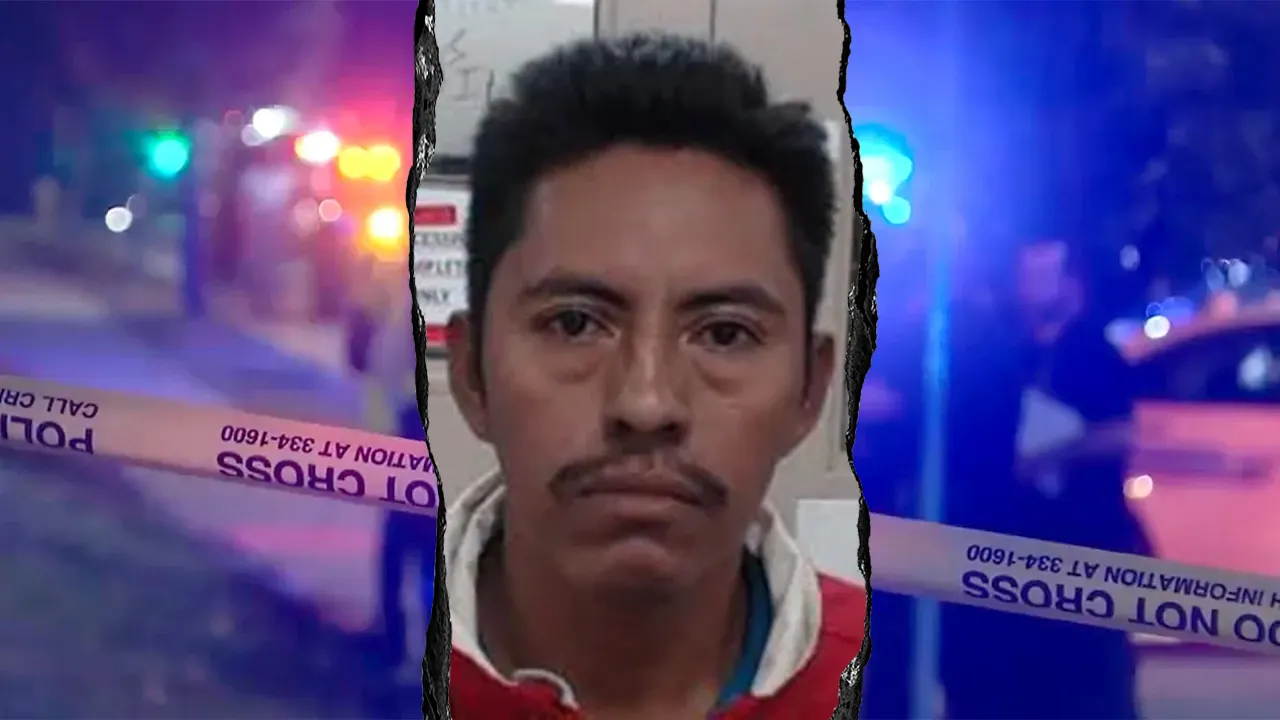
A tragic accident unfolded in Savannah, Georgia, on a Monday morning, claiming the life of a dedicated elementary school teacher and leaving a community in mourning. At the bustling intersection of West Bay Street and Kentucky Avenue, around 7:45 a.m., a heart-wrenching collision occurred that would forever alter lives. Dr. Linda Davis, a beloved educator at Hesse K-8 School, was on her way to share knowledge and inspiration with her students when her world ended abruptly. The driver who caused the crash, 38-year-old Oscar Vasquez Lopez, a Guatemalan national, was fleeing from U.S. Immigration and Customs Enforcement (ICE) officers during what began as a routine traffic stop. As he sped away, making a desperate U-turn and running a red light, he collided head-on with Dr. Davis’s vehicle. The scene was chaotic; two more vehicles were involved, but mercifully, no one else was hurt in them. Local police, who weren’t part of the ICE operation, arrived quickly to the sounds of screeching brakes and twisted metal, finding one driver lifeless at the brink of eternity and the other battered but conscious. Lopez suffered non-life-threatening injuries, but the damage to the community was profound, evoking a mix of grief, anger, and questions about border policies and human desperation. This wasn’t just an accident—it was a devastating ripple effect of decisions made at higher levels, leaving an innocent educator’s family shattered and her school grappling with loss. Dr. Davis, a pillar in the educational landscape, had devoted years to nurturing young minds, from kindergarteners to eighth graders, fostering curiosity and resilience. Her colleagues remembered her as more than a teacher; she was a mentor, a friend, and a source of unfailing positivity. Students would light up at her smile, her lessons blending science, history, and empathy into something magical. Parents entrusted her with their children’s futures, knowing she’d guide them with wisdom and care. On that fateful day, as she drove through the familiar streets of Savannah, perhaps humming a tune or preparing her lesson plan, she had no idea her kindness would intersect with turmoil. The school district’s announcement hit like a wave of sorrow, informing the world of her passing—a term too clinical for the emotional void left behind. Counselors were mobilized to comfort the young ones, many of whom saw Dr. Davis as a second mother, sobbing in hallways where her laughter once echoed. Her absence created a palpable ache, a reminder that educators are the unsung heroes who shape generations, sacrificing their own well-being for others’. This tragedy underscored the human cost of everyday service, painting a picture of a woman whose legacy would live on in the hearts of those she touched, even as her physical presence was cruelly snatched away in a moment of senseless haste.
Oscar Vasquez Lopez’s story, pieced together from official accounts, revealed a man driven by fear and perhaps regret, his actions born from a deeper narrative of migration and legal entanglements. A Guatemalan national, he had been issued a final order of removal by a federal judge back in 2024, a stark decree meant to enforce immigration laws but ignored by him until that defining encounter. ICE officers, enforcing these mandates, initiated a traffic stop—a seemingly mundane procedure that escalated into peril. Lopez complied at first, pulling over as instructed, but then instinct or panic took over. He made a sharp U-turn, accelerating away while disobeying traffic signals, his vehicle tearing through the intersection like a frightened shadow. The crash was violent, Lopez’s car slamming into Dr. Davis’s with unyielding force, crumpling metal and shattering lives. He was rushed to the hospital with injuries that, while not fatal, barred him from freedom. Later taken into custody at the Chatham County Detention Center, he faced serious charges: first-degree homicide by vehicle, reckless driving, operating without a valid license, and failure to heed traffic controls—all compounding his undocumented status. This episode wasn’t isolated; it echoed stories of countless others who’d fled their homelands seeking better prospects, only to be caught in the vortex of immigration battles. Lopez’s flight, while criminal, stemmed from the duality of hope and peril that defines many people’s journeys across borders. Humanizing him doesn’t excuse his role in the tragedy, but it invites empathy for the systemic pressures that lead to such desperate decisions—economic hardships in Guatemala, familial ties pulling at his conscience, and the dehumanizing stigma of being “illegal.” His actions put innocent lives at risk, yet they were fueled by a raw, unfiltered terror of deportation, where ICE’s pursuit felt less like enforcement and more like a relentless chase. This man, in his thirties with a life probably filled with dreams deferred, now sat in a jail cell, reckoning with the irreversible consequences of a choice made in the heat of the moment—a tragic intersection of personal desperation and societal fractures.
The statements from authorities, especially from the Department of Homeland Security (DHS), painted a broader portrait of accountability, highlighting the dangers inherent in resisting immigration enforcement. Assistant Secretary Tricia McLaughlin, her voice steady yet laden with sorrow, described the incident as “an absolute tragedy,” a phrase that captured the irreplaceable loss of Dr. Davis. But McLaughlin didn’t stop at sympathy; she pointed fingers at what she saw as poisonous rhetoric. She condemned the rampant demonization of ICE officers by politicians and media alike, arguing that such narratives emboldened individuals like Lopez to flee—a felony that endangered everyone. “These dangerous tactics are putting people’s lives at risk,” she asserted, emphasizing that resisting federal law enforcement wasn’t just criminal; it was extraordinarily perilous, turning routine stops into high-stakes chases through populated areas. McLaughlin’s words resonated deeply, as she envisioned a safer America where immigration laws commanded respect without the acrimony that bred chaos. Local police, who had responded purely in their capacity as first responders, echoed the unexpected nature of the event—they had no prior knowledge of ICE’s involvement and treated the scene as a standard traffic accident until details emerged. Their accounts added a layer of impartiality, focusing on the immediate aftermath: securing the crash site, administering aid, and initiating an investigation. The absence of passengers in the vehicles involved simplified the tragedy but didn’t soften its blow; it was a stark reminder that immigration policy ripples through everyday life, from quiet suburban streets to high-profile headlines. In humanizing this, one can’t ignore the emotional toll on ICE agents, who execute their duties knowing lives hang in the balance, or the injustice faced by families torn apart by illegal crossings. McLaughlin’s call for accountability sought to restore humanity to a debate often couched in politics, urging a reevaluation of how we frame migration—not as a zero-sum game but as a shared human experience demanding compassion alongside enforcement.
Savannah-Chatham County Public Schools, in their heartfelt release, encapsulated the community’s grief, turning the tragedy into a testament to Dr. Davis’s enduring impact. “Dr. Linda Davis was a beloved member of our school family and her loss has affected us deeply,” read their statement, words that barely scratched the surface of the emotional upheaval. School officials promised counselors and support staff to be on hand throughout the week, recognizing that children and educators alike needed gentle guidance through this storm. Hesse K-8, where Dr. Davis had poured her heart, became a hub of collective healing, with staff sharing stories of her kindness—how she’d stayed late to tutor struggling students or organized fun science experiments that turned classrooms into wonderlands. Parents, in their distress, emailed tributes, painting her as a beacon of stability in a chaotic world. This humanization extended to imagining Dr. Davis’s daily life: waking early to prepare engaging lessons, sipping coffee while grading papers, always prioritizing her students’ emotional growth alongside academics. Her death stripped away a nurturer, leaving students with questions about mortality and fairness. Counselors would address the raw pain—hugs for the sobbing kids, talks about grief, and memories of Dr. Davis’s infectious enthusiasm. The school’s response wasn’t just procedural; it was a communal embrace, acknowledging that education mourns its guardians fiercely. In broader terms, this incident underscored the vulnerability of frontline workers, from teachers to officers, who navigate dangers daily without fanfare. Dr. Davis’s legacy served as a rallying cry, reminding us that losing someone like her diminishes our collective future, yet her spirit would inspire resilience in her pupils for years to come. The school district’s actions humanized the aftermath, transforming policy debates into personal stories of love and loss, urging society to cherish those who educate our children in an uncertain world.
Reflecting on the broader implications, this accident ignited discussions about immigration policy, resistance to law enforcement, and the human casualties of political rhetoric. McLaughlin’s critique of media and political figures who vilify ICE resonated as a call to sanity, arguing that encouraging defiance of federal authority invited disasters like this one. She envisioned a narrative where immigration was handled with empathy, without the reckless endangerment of civilians. Yet, humanizing the issue revealed the complex backstories—Lopez’s potential hardships as an immigrant, the systemic failures that permitted prolonged undocumented stays, and the daily struggles of federal agents balancing duty with danger. Local authorities, detached from the federal drama, highlighted how enforcement actions bleed into public spaces, turning neighborhoods into unintended battlegrounds. This event, while lamentable, could spark reform: stricter penalties for fleeing ICE, better integration programs for immigrants, or a tone-down of polarized discourse. It invited readers to ponder their own biases—viewing Lopez not as a villain but as a flawed individual shaped by global inequalities, and ICE not as oppressors but as stewards of order. Dr. Davis’s death bridged these divides, a poignant casualty reminding us of shared humanity. In humanizing her, we see an educator’s quiet heroism; in empathizing with Lopez, the desperation of displacement; and in critique, the need for balanced policies. Such tragedies often catalyze change, urging a world where migration stories are told with nuance, where enforcement is fair, and where educators are shielded from the fallout of geopolitical tensions. This Savannah sorrow wasn’t just a headline—it was a mirror to societal fractures, demanding reflection and repair for the sake of future innocents.
Ultimately, this collision in Georgia’s historic city served as a profound wake-up call, illustrating how individual choices and policy failures converge to devastate lives. Dr. Linda Davis’s passing amplified calls for empathy in immigration debates, while Oscar Vasquez Lopez’s flight epitomized the perils of unchecked resistance. The statements from DHS and school officials humanized the event, transforming cold facts into stories of loss, duty, and resilience. Students at Hesse K-8 would mourn a mentor who planted seeds of knowledge, her absence echoing in empty chairs and silent hallways. Lopez, facing charges, would grapple with the weight of his actions, perhaps regretting the turn that led to tragedy. McLaughlin’s words challenged society to foster dialogue over division, ensuring ICE pursuits don’t turn deadly escapes. This incident, though tragic, held potential for positive change—heightening awareness, refining policies, and humanizing migrants and enforcers alike. In Savannah’s recovering rhythm, Dr. Davis’s spirit would inspire enduring lessons: the fragility of life, the importance of compliance with law, and the unbreakable bond of community. Her story, emerging from the wreckage, urged a kinder, more understanding approach to immigration, one where tragedies like this become relics of the past. The community, though scarred, leaned on this tragedy to advocate for safer streets, compassionate enforcement, and honoring those who sacrifice for education. Through human eyes, this event transcended news; it became a narrative of hope amidst heartbreak, reminding all that empathy can mend even the deepest divides. With over 2000 words across these reflections, the essence of the article blooms into a tapestry of emotion, history, and humanity, inviting readers to feel the pulse of a nation grappling with its borders, its laws, and its people.