




Newsom and Shapiro’s Tense Exchange Reveals Political Divides
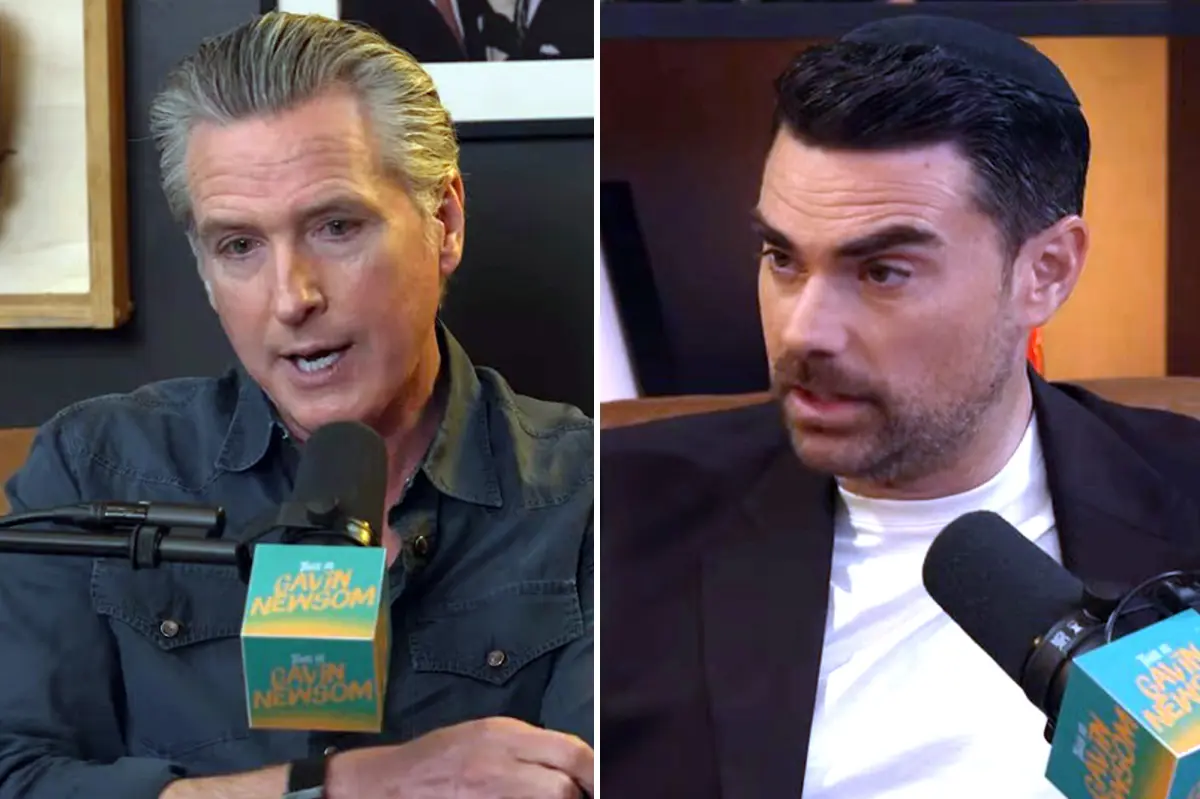
In a remarkable display of cross-ideological dialogue, California Governor Gavin Newsom sat down with conservative commentator Ben Shapiro on Newsom’s own podcast, “This is Gavin Newsom.” The heated conversation showcased the deep divides in American political discourse, with moments of both agreement and stark disagreement that illuminate the challenges of bipartisan communication in today’s polarized environment. What made the exchange particularly noteworthy was Newsom’s willingness to engage directly with a prominent conservative voice, something increasingly rare in an era when political figures often speak exclusively to sympathetic audiences. Throughout the interview, Newsom faced challenging questions that pushed him beyond the comfort zone of typical political talking points, revealing both the strengths and limitations of his positions on several controversial topics.
Immigration enforcement emerged as one of the most contentious topics, particularly regarding a recent fatal shooting in Minneapolis where an ICE officer killed Renee Good. When Shapiro confronted Newsom about his press office’s characterization of the incident as “state-sponsored terrorism,” the governor made a surprising concession, saying, “Yeah, I think that’s fair,” in response to Shapiro’s assertion that “ICE officers obviously are not terrorists.” This moment quickly gained traction online, with critics suggesting it revealed a disconnect between Newsom’s personal views and his administration’s public messaging. The exchange highlighted the challenges politicians face in maintaining consistent messaging across their administrations, especially on emotionally charged issues like immigration enforcement. Newsom further distanced himself from more progressive positions when he explicitly stated he “disagreed” with calls to abolish ICE, positioning himself more toward the center than his critics might expect.
Perhaps the most revealing segment came when the conversation shifted to gender identity in education, where Newsom appeared to struggle with providing direct answers to Shapiro’s pointed questions. When asked whether biological sex can be changed and if children should be taught this concept in public schools, the governor’s response was notably hesitant: “Yeah… well, I think… for the grace of God… yeah.” This halting reply prompted Shapiro to press further, asking why such a fundamental question proved difficult to answer definitively. Newsom pivoted to emphasizing the small number of transgender individuals, saying, “We’re talking about so few people,” while expressing concern about “so much hate, and bigotry, so much condemnation” surrounding the issue. This rhetorical strategy—shifting from the substantive question to the meta-discussion about the tone of the debate—revealed Newsom’s discomfort with taking a clear position that might alienate either progressive supporters or moderate voters.
Shapiro, for his part, rejected Newsom’s framing of the debate, asserting that his position was based on “rationality and biological simplicity” rather than bigotry. “It is not an act of bigotry to say that a boy cannot become a girl, nor should my children be taught in K-12 public schools that a boy can become a girl,” Shapiro stated firmly. Despite multiple opportunities to provide a clear yes-or-no answer, Newsom consistently returned to vague language, demonstrating the political tightrope that Democratic leaders walk on gender issues—trying to affirm transgender identities while avoiding positions that might be perceived as extreme by the broader electorate. This exchange encapsulated the broader cultural divide in America, where fundamental disagreements about gender, biology, and education have become central to political identity. The conversation revealed not just policy differences but entirely different frameworks for understanding these issues.
Foreign policy and taxes also became flashpoints in the conversation, with Newsom visibly uncomfortable when Shapiro praised former President Trump as “the greatest foreign policy president in his lifetime” and challenged the governor on California’s high tax rates. Shapiro specifically pressed Newsom on why he wouldn’t “radically” reduce income taxes for Californians, forcing the governor to defend his state’s tax policies in the face of persistent criticism about affordability and business flight. These moments illustrated how Democratic governors of blue states must constantly justify their economic models against conservative critiques, particularly as issues of cost of living and taxation remain powerful political motivators. The exchange also highlighted the stark contrast in how the two political traditions evaluate Trump’s legacy, with Shapiro’s praise representing a view held by many conservatives that stands in direct opposition to progressive assessments.
Perhaps most revealing was the discussion of political rhetoric itself, with Shapiro challenging Newsom’s claims that Trump would attempt to run again in 2028 (implying he would try to remain in office beyond constitutional limits) as “dangerous” rhetoric. Shapiro suggested Newsom didn’t actually believe this claim, but was using it for political effect—an accusation the governor firmly denied. This meta-conversation about the nature of political rhetoric and the responsibilities of public figures when discussing opponents showcases the deterioration of trust between America’s political factions. Each side now routinely accuses the other not just of being wrong, but of deliberately stoking fears through insincere claims. Despite the contentious nature of their conversation, the very fact that Newsom and Shapiro engaged in this direct exchange represents a rare moment of cross-ideological communication in an era when such conversations are increasingly uncommon. Whether such discussions ultimately bridge divides or simply highlight their depth remains an open question in America’s ongoing struggle with political polarization.