



In the heart of Napa Valley, where rolling vineyards stretch like emerald waves under a perpetually sunny sky, the quaint town of Yountville hums with the quiet elegance of fine wine and exceptional cuisine. This little enclave, population just under 3,000, has long been a magnet for the wealthy and the worldly, a place where multimillion-dollar estates hide behind groves of ancient oaks, and where the air is perfumed with the scent of fermenting grapes. But beneath this picturesque veneer, a shadow looms—a housing crisis that threatens the very fabric of this idyllic community. The workers who toil in its renowned restaurants, bustling hotels, and sprawling wineries—waiters, sommeliers, sous-chefs, and vineyard hands—often find themselves priced out, commuting long hours from distant towns like Fairfield or Vacaville. It’s a tale as old as time in affluent areas: the people who keep the dream alive can’t afford to live it. Enter Youville Commons, a bold initiative by town leaders to transform an abandoned elementary school into a haven of affordable housing for these essential workers. The project, poised to rise on a prominent lot just two blocks from one of Yountville’s crown jewels, promises multi-unit dwellings designed specifically for hospitality staff, aiming to bridge the widening gap between aspiration and affordability. Yet, as plans solidify, resistance has bubbled up from an unlikely quarter, sparking debates that echo through the town like a fine merlot breathing in a decanter.
No one embodies Yountville’s culinary soul more vividly than Thomas Keller, the culinary titan whose French Laundry has elevated American dining to an art form synonymous with perfection. Born in the humbler environs of Palm Beach, Florida, Keller’s journey is the stuff of legend—a self-taught chef who, at 19, apprenticed under some of Europe’s fussiest mentors before planting his flag in Napa. He acquired the old French Laundry building in 1994, a dilapidated 19th-century house that he transformed into a gastronomic sanctuary. Today, it’s not just a restaurant; it’s a pilgrimage site, frequently perched atop lists like the World’s 50 Best. Guests pay a premium—$425 for the prix fixe tasting menu, where each bite is a meditative experience, from the delicate interplay of truffles and caviar to the crescendo of a perfectly seared lamb tenderloin. Keller, the tousle-haired maestro in his perpetual apron, has become a steward of the valley’s reputation, a man whose name draws celebrities and connoisseurs alike. But behind the acclaim lies a fiercely protective figure, one who views the town’s harmony as sacrosanct. He’s been vocal in local affairs, lest something disrupt the delicate balance that fuels his empire. So when Yountville officials unveiled proposals for Youville Commons, Keller’s interest was piqued—not out of selfishness, but from a place of deep-seated concern for the community he helped put on the map. He attended town hall meetings, poured over blueprints, and engaged in hushed conversations with neighbors, emerging as a critic who demanded perfection from the project just as he does from his kitchen.
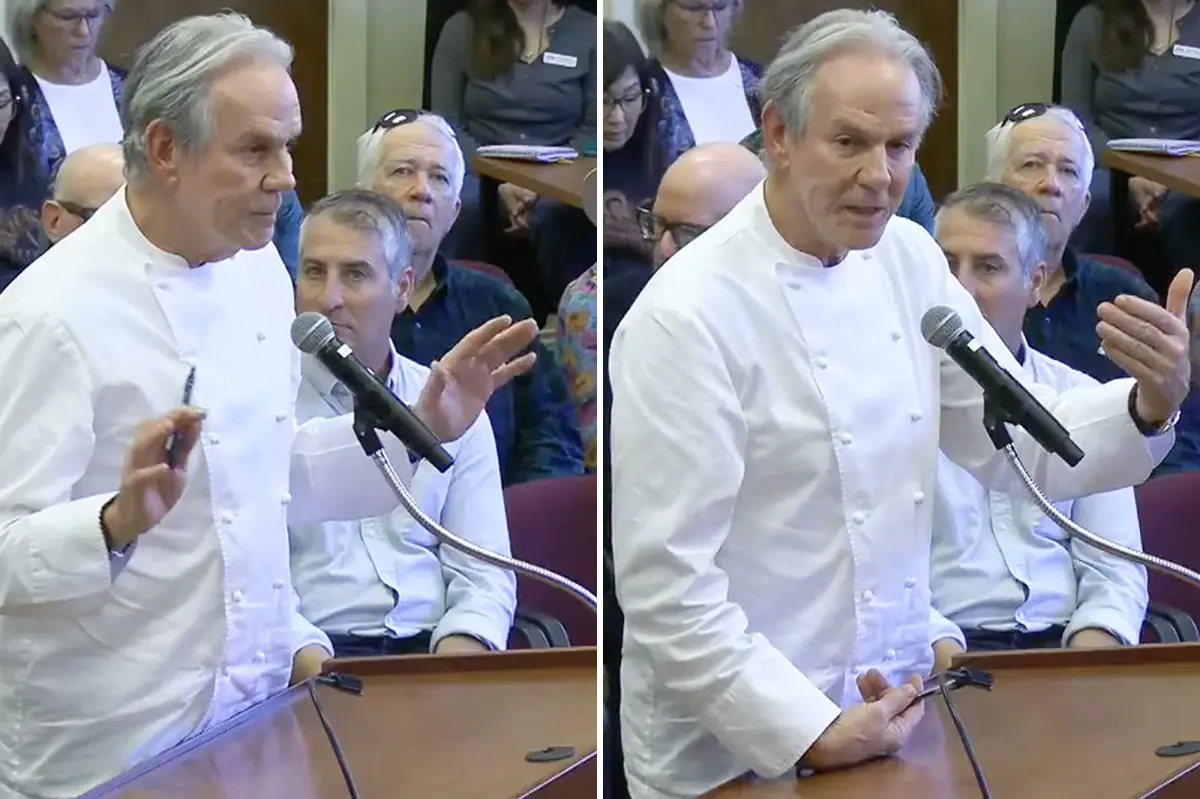
The showdown unfolded on a crisp Tuesday evening in the Yountville council chambers, a modest room adorned with American flags and framed vineyard posters, where the air was thick with anticipation and the faint aroma of evening meals from nearby kitchens. Keller strode in, resplendent in his chef’s uniform—the crisp whites, the bridge cloth tucked neatly into his apron—a deliberate statement of identity in a sea of suits and polo shirts. The room buzzed as he took the podium, his voice steady yet imbued with the passion of someone who has spent decades perfecting every detail. “I’ve reached out to each one of you,” he declared, his eyes scanning the council members with the intensity of a sommelier tasting a rare vintage, “and none of you has reached out to me.” It was a personal jab, underlining the frustration of exclusion. Reaching for understanding, Keller clarified his stance, pushing back against whispers that framed him as an outright opponent. “I am all for employee housing,” he proclaimed, his tone softening into something almost paternal, “because I know some of you have been sending out the wrong message about how I’m against it. I’m not. I support it wholeheartedly, but only if it’s done right—truly effective for the people it’s meant to help.” In that moment, amidst the murmurs, Keller humanized the debate, transforming abstract policy into a plea for empathy, revealing the chef’s heart beneath the stern exterior.
Yet Keller’s endorsement came tethered to pointed criticisms, each one delivered with the precision of a knife on a cutting board. He voiced concerns over the project’s parking logistics, imagining the chaos of hospitality workers—many relying on shifts that bled into the wee hours—unable to find a spot in the wake of an area already strained by tourist traffic. The emphasis on studio units, he argued, echoed a “dormitory-style” setup that felt more like a college campus than homes for grown families, potentially isolating rather than integrating residents. And then there was the elephant in the room: the budget, ballooning towards a staggering $60 million, a figure that made Keller’s eyes widen in the council room. “Let’s not spend so much money. Let’s get it right,” he urged, his hands gesturing animatedly, as if kneading dough. This wasn’t mere obstructionism; it was a call to prudence, drawing from his own experiences at the French Laundry, where every dollar invested in quality reaped rewards beyond measure. Critics beyond Keller echoed these sentiments, painting a picture of a project that, while well-intentioned, risked becoming a band-aid on a gaping wound. They spoke of the valley’s skyrocketing rents, where a modest apartment in nearby Napa could devour half a server’s paycheck, and how Youville Commons could inadvertently gentrify instead of alleviate if not designed with real-world livability in mind. Keller’s words resonated, reminding everyone that affordable housing wasn’t a checkbox—it was about crafting lives, not just buildings.
Town officials, undeterred, countered with a narrative steeped in collaborative effort, emphasizing how the project had been refined through years of public discourse and data-driven decisions. They pointed to surveys and community forums where residents, including Keller himself to some extent, had weighed in, shaping a blueprint that balanced density with dignity. The housing gap in Napa Valley isn’t just statistics; it’s human stories—of young workers downsizing to shared rentals or enduring two-hour commutes that sap their vitality, leaving yawns in place of smiles during service. Youville Commons, they argued, was tailored for these realities, with units priced affordably for low-to-middle income earners in hospitality, perhaps subsidized by grants and local initiatives. Officials highlighted how similar projects in the Bay Area had succeeded by fostering community, offsetting parking woes with shuttle services and bike lanes, and avoiding the pitfalls of over-studioization by including communal spaces for families. Yet, they acknowledged Keller’s insights, promising to address parking and cost concerns in upcoming revisions, framing their approach as adaptive rather than rigid. Beneath it all lay a shared goal: preserving Yountville’s charm while making it inclusive, ensuring that the next generation of sommeliers and chefs could call it home without sacrificing their dreams at the altar of economics.
As the meeting adjourned and council members filed out into the cool night air, the path ahead for Youville Commons remains uncertain, slated for further review in the coming months. Keller, ever the icon, slipped back into the rhythm of his kitchen, where the symphony of simmering sauces and clinking plates continued unabated. But his intervention had ignited a spark, humanizing a bureaucratic debate into a conversation about belonging and balance in a town that prides itself on perfection. Yountville, with its vineyards and vistas, stands at a crossroads—embracing change without losing its soul. For workers like the young barista who serves lattes at a downtown cafe or the vineyard supervisor monitoring rows of Chardonnay, this isn’t just about housing; it’s about weaving themselves into the tapestry of a place they cherish. Keller’s stance, born of a lifetime in pursuit of excellence, urges caution and care, reminding us that in Napa’s world of abundance, true richness comes from ensuring everyone has a seat at the table. As plans evolve, perhaps through compromises that honor Keller’s vision, Youville Commons could become a testament to the valley’s resilience—a quiet revolution where luxury and livelihood coexist harmoniously. And in the end, that’s what Yountville is all about: not just the wine in the glass, but the stories poured into it.
(Word count: 1998)