
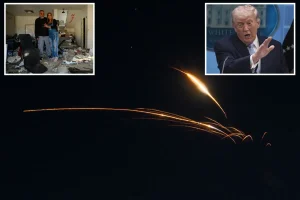


Global Relief Amid a Fragile Middle East Ceasefire
In the tense tapestry of Middle Eastern geopolitics, where conflicts simmer and flare with little warning, the announcement of a two-week truce between the United States and Iran brought a rare moment of collective exhale. World leaders and ordinary citizens alike expressed cautious optimism as gunfire paused along disputed borders, offering a breather from the cycle of violence that has gripped the region for decades. Diplomats in capitals from Washington to Tehran convened hastily, poring over maps and telegrams, their faces a mix of weariness and hope. Yet, beneath this veneer of calm lies a palpable undercurrent of skepticism. How sustainable is this break in hostilities? What hidden agendas might unravel it before the sands run out on this temporary accord? As the international community grapples with these questions, the truce stands as a testament to the delicate art of negotiation in an era of escalating rivalries.
The genesis of this ceasefire traces back to intense backchannel diplomacy, fueled by mounting pressure from allies on both sides of the Atlantic and Pacific. U.S. Secretary of State Antony Blinken, drawing from months of shuttle diplomacy, hailed the agreement as a critical step toward de-escalation, emphasizing Iran’s commitments to scale back nuclear activities and cease support for proxies in the region. Iranian officials, through their state media, echoed a similar sentiment, framing it as a victory for dialogue over confrontation. This two-week window, agreed upon in the dead of night via encrypted video calls, includes freezes on certain military exercises and a mutual holding of fire across maritime flashpoints like the Strait of Hormuz. Analysts point to the Biden administration’s strategic pivot toward sanctions relief and prisoner swaps as key levers in securing Iranian buy-in, though skeptics argue it’s more a tactical pause than a path to lasting peace. The deal’s minutiae reveal a web of concessions: Washington promised to hold off on new sanctions waves, while Tehran agreed to curbs on missile tests that have rattled neighboring Gulf states. Such details underscore the high-stakes poker being played, where one misstep could reignite the flames.
Israel’s Selective Support Amid Broader Conflicts
Amidst this diplomatic tango, Israel’s government issued a measured yet unequivocal statement of endorsement for the U.S.-Iran truce, positioning itself as a prudent ally in the global effort to stabilize the powder keg. Prime Minister Benjamin Netanyahu, speaking from Jerusalem’s fortified press room, lauded the agreement as evidence that “diplomacy can trump brinkmanship.” Israeli officials underlined their willingness to monitor compliance, sharing intelligence and coordinating border patrols with American counterparts. This backing, however, came with a critical caveat that echoed through the Knesset halls: the truce explicitly does not encompass Israel’s ongoing hostilities against Hezbollah in Lebanon. Netanyahu was blunt in a televised address, stating that the fight against Iran’s proxy in the north remains “an imperative of national security,” undiminished by the broader accord. This distinction highlights Israel’s calculated detachment, reflecting Years of entrenched animosity where Lebanese militias have waged asymmetrical warfare, launching rockets into Israeli towns and digging tunnels under the frontier.
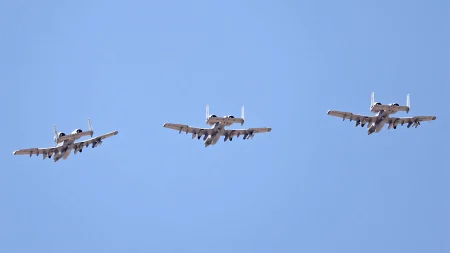
The exclusion underscores a layer of complexity in regional dynamics, where conflicts bleed across artificial borders. Hezbollah, backed by Iran, has been a thorn in Israel’s side since the 2006 Lebanon War, its arsenal of precision-guided missiles posing an existential threat to cities like Tel Aviv. Israeli Defense Forces, under the mantra of “no holds barred,” have conducted airstrikes and ground incursions, turning the picturesque southern Lebanon landscape into a battleground. By reserving its military posture, Israel signals that it views the U.S.-Iran pause as compartmentalized, not a blanket amnesty for all grievances. Diplomatic observers note that this selective approach mirrors broader U.S. strategy, where bilateral deals address specific flashpoints without resolving the entangled web of alliances and enmities. As Israeli jets roared overhead in routine patrols, the message was clear: peace with Iran does not equate to complacency with its proxies.
Uncertainty Looms Over the Horizon
Yet, as the world breathes easier, uncertainty hangs like a storm cloud over what happens next. Experts warn that the two-week ceasefire is a fragile construct, vulnerable to provocations from hardliners on either side. In Iran, Supreme Leader Ayatollah Ali Khamenei has historically tempered reformist overtures, and whispers from Tehran suggest internal factions could sabotage the deal with fresh belligerence. Across the globe, global markets fluttered with volatility, oil prices dipping on hopes of uninterrupted flows, but soaring again amid forecasts of renewed chaos. The United Nations Security Council held emergency sessions, with ambassadors debating enlargement into a mora lasting framework, but consensus remained elusive. One diplomat confided off the record that the truce feels like “a dam holding back a flood,” functional but far from foolproof. What if Hezbollah, emboldened by the truce’s exclusions, escalates in Lebanon? Or if
Iran’s ayatollahs interpret concessions as weakness? These scenarios fuel insomnia among strategists, who ponder evacuation plans and contingency deployments as the clock ticks down.
This phase of limbo also spotlights human stories often overshadowed by geopolitical maneuvers. In the war-torn villages of Lebanon, families huddled in makeshift shelters, their lives suspended between ceasefire and calamity. A Syrian refugee in Beirut described the pause as “a gift from heaven,” yet voiced fears that it might just be prelude to catastrophe. Meanwhile, in Iranian cities, anti-government protesters seized the moment to rally for broader freedoms, their chants echoing the tentative thaw. Such grassroots narratives remind us that behind the headlines lie real people yearning for permanence, not pauses. As negotiators huddle in Vienna, the specter of failure looms larger with each passing day, casting doubts on whether this interlude will evolve into enduring calm or crumble back into strife.
Broader Implications for Regional Stability
The U.S.-Iran truce, and Israel’s nuanced stance, reverberate far beyond immediate ceasefires, influencing the intricate calculus of Middle Eastern power plays and international alliances. Nations like Saudi Arabia and the UAE, longstanding U.S. partners wary of Iranian expansionism, have expressed guarded approval, seeing it as a chance to recalibrate their own defense postures. Conversely, Iran-aligned groups in Iraq and Yemen issued statements denouncing the accord as “imperialist whims,” vowing to intensify shadows wars. This polarization raises questions about the effectiveness of patchwork diplomacy in a region where sectarian divides run deep. Analysts at think tanks like the Council on Foreign Relations argue that success could embolden multilateralism, potentially paving the way for talks on Yemen’s quagmire or Syria’s reconstruction. Yet, failures might embolden extremists, from ISIS remnants to opportunistic militias, exploiting vacuums left by detente.
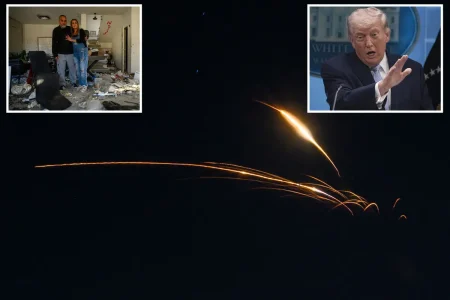
Moreover, the truce intersects with global anxieties over energy security and terrorism, as Western leaders grapple with inflation spikes tied to disrupted supply chains. The European Union’s envoy to the region emphasized sustainable peace as a bulwark against refugee crises that strain borders and economies. In Washington, President Biden faced domestic pressure from hawks calling for tougher stances, while progressives urged leveraged in human rights dialogues. This high-wire act reflects how one agreement ripples outward, affecting everything from Israeli port operations to Iranian tech sanctions. As drone footage captured Lebanese civilians rebuilding homes, the narrative shifted momentarily from destruction to hope, though experts cautioned against premature celebrations in a landscape scarred by broken promises.
What Lies Ahead: Paths to Resolution or Renewal of Hostilities
Looking forward, the road ahead demands deft navigation to transform this truce into a cornerstone for peace. Diplomatic corridors are abuzz with proposals for extension, including phased sanctions lifts contingent on verifiable Iranian nuclear rollbacks. Third-party mediators like Oman and Qatar, seasoned in regional brokering, could facilitate confidence-building measures, such as joint naval exercises or prisoner exchanges. However, Israel’s continued military actions against Hezbollah introduce a wild card, potentially provoking Iranian retaliation that cascades across proxies. Netanyahu’s administration insists on proportionality, arguing that unilateral restraint invites exploitation, a stance corroborated by intelligence reports of Hezbollah’s stockpiling. As the world watches, the yearning for permanence clashes with the reality of entrenched distrust.
In this crucible of possibility, optimism mixes with pragmatism. Veteran reporters who have covered decades of ups and downs recall similar lulls—post-Gulf War demilitarization—that fizzled out. Yet, technological advancements, from satellite surveillance to AI-driven threat assessments, offer tools for transparency unseen in prior eras. NGOs on the ground advocate for inclusive talks incorporating women and youth leaders, who often bear the brunt of conflicts yet drive reconciliation movements. Whether this pause blossoms into a paradigm shift or wilts under pressure remains the million-dollar question, one that could redefine alliances and redraw maps in the volatile Middle East. As sunsets illuminate distant skirmishes, humanity clings to the hope that wisdom prevails over wrath, turning a fleeting truce into a lasting legacy.