



Paragraph 1
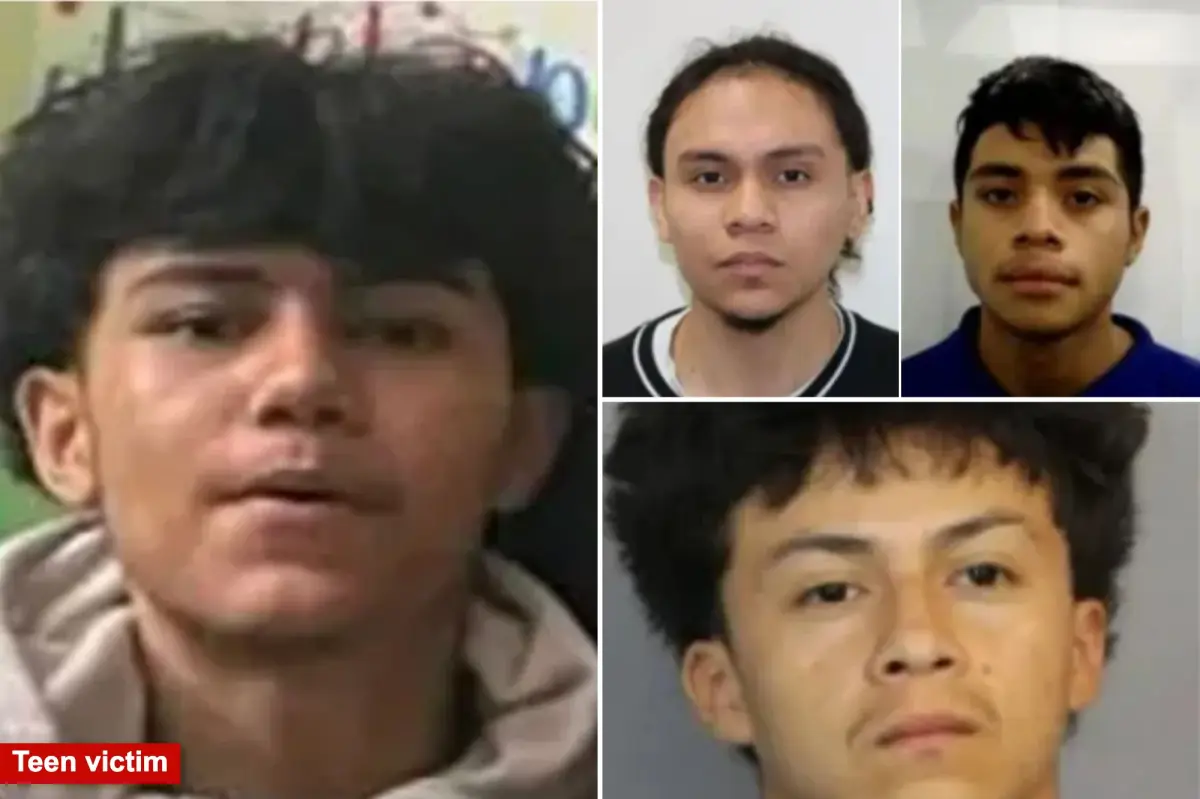
In the heart of Prince George’s County, Maryland, a sun-dappled park that usually echoed with children’s laughter and the rustle of leaves in the breeze became the scene of unimaginable horror. Jefferson Amaya-Ayala, a 14-year-old boy from Washington, DC, whose life was just beginning—filled with school crushes, video games, and dreams of becoming a soccer star—was lured to this seemingly innocent spot on August 2, 2025. His disappearance sent ripples of fear through his community, as family and friends waited in agonizing silence, hoping for his safe return. Jefferson was known as a kind-hearted kid, always quick with a smile, helping out neighbors with small chores or sharing snacks with classmates. His parents, immigrants themselves striving for a better life, worked tirelessly to provide for him, dreaming of his bright future in a new country. Little did they know that their son, trusting and naive in the way teenagers can be, had crossed paths with danger in the form of predators tied to one of the most violent gangs in the hemisphere. Nearly three months later, on November 3, detectives stumbled upon what they initially feared were discarded debris in the park’s underbrush: “possible human remains” that would shatter a family’s world forever. The Office of the Chief Medical Examiner confirmed the worst—multiple brutal injuries that painted a picture of a heinous murder, not an accident. As news spread, the community grappled with grief and outrage, questioning how such savagery could unfold in a place meant for families and recreation. Jefferson’s story wasn’t just a statistic; it was a reminder of the fragility of innocence, cut short by hands that knew only violence. His classmates remembered him in schoolyard whispers, teachers paused to honor a life lost too soon, and local leaders decried the erosion of safety in their suburbs. The park, once a haven, now bore the weight of unspoken terrors, its green lawns forever stained by the blood of a boy who trusted the wrong people.
Paragraph 2
The investigation that followed was a painstaking journey through shadows, as detectives pieced together Jefferson’s final hours like detectives in a grim novel. Police revealed that the teen had been lured to the park, a tactic often used by predators to isolate their victims. He reportedly knew at least one of the suspects, suggesting a chilling betrayal—perhaps a false promise of friendship or some shared acquaintance that masked sinister intent. The murder appeared gang-related, its motive shrouded in mystery, but the brutality spoke volumes: multiple injuries inflicted with cold calculation, leaving no room for mercy. Authorities scoured surveillance footage, interviewed witnesses with trembling voices, and combed through digital trails that led straight to a network of violence. The four men now at the center of this storm had allegedly planned and executed the act, their alliance rooted in a culture of fear and loyalty that transcended borders. Jefferson’s family, devastated beyond words, clung to each other in living rooms adorned with his photos, his drawings, and mementos of happier days. They imagined his last moments—the hope turning to terror, the park’s serenity shattering into chaos—as gang members, fueled by their own twisted codes, turned on a boy who posed no threat. The community’s reaction was one of collective heartbreak; vigils sprang up, with candles flickering in the dark, symbolizing lost potential and the urgent need for change. Parents hugged their own children tighter, haunted by the “what ifs” and the realization that evil could strike anywhere. Detectives, often veterans hardened by years on the force, admitted this case hit different, the image of a 14-year-old’s remains tugging at their humanity. As evidence mounted, the story unfolded not just as a crime but as a tragedy, exposing the cracks in a system meant to protect the vulnerable.
Paragraph 3
At the forefront of the suspects stood Jose Vladimir Merlos, an 18-year-old whose short life had already veered into darkness. Born in El Salvador, he had entered the U.S. illegally, seeking opportunity but finding refuge in the ranks of MS-13, a gang notorious for its machete-wielding members and acts of extreme violence. The Department of Homeland Security painted a picture of a young man spiraling: previously arrested in Washington, DC, for defacing public property with MS-13 graffiti—spray-painted symbols that marked territory like a wolf’s scent—and possession of a prohibited weapon. Merlos, once perhaps a boy with dreams of education or family, had been drawn into the gang’s web, where loyalty trumped law and cruelty was currency. He embodied the lost generation, immigrants fleeing poverty in Central America only to be ensnared by transnational crime syndicates that preyed on the desperate. Residents in his past neighborhoods recalled him as reclusive, maybe bullied in school, turning to the gang for a sense of belonging and power. His hands, now charged with Jefferson’s death, carried the weight of choices made in desperation. Officials pondered the human cost— how a teenager from a war-torn country ended up wielding weapons instead of a pencil, his path leading to a Maryland park and irrevocable harm. Merlos’s story served as a stark warning, humanizing the faceless ” ospiti illegali” and forcing a mirror on how immigration, when unguarded, could foster monsters. As indictments loomed, one couldn’t help but wonder about the boy he might have been, before MS-13 twisted him into something unrecognizable.
Paragraph 4
Beside Merlos stood Alam Josai Garcia-Padilla, 21, another Salvadoran national whose life was a tapestry of criminal missteps and systemic failures. DHS revealed he was an MS-13 member, previously convicted in D.C. Superior Court for attempted unlawful possession of ammunition—a conviction that should have kept him out of circulation. Yet, he had been found with fraudulent documents, a fake Social Security card and a lawful permanent resident card, tools of deception that allowed him to navigate a country not his own. Alarmingly, Garcia-Padilla had been released from custody during the Biden administration, a decision that echoed through the courts as a potential lapse in judgment. Friends or associates in the immigrant community might have whispered about his charisma, how he presented himself as a survivor of hardship, perhaps holding a blue-collar job by day while indulging in gang activities by night. But beneath that facade lay a history of weapons possession and evasion, painting him as a chameleon in the shadows. Garcia-Padilla’s path intersected with Jefferson’s in a clash of youths from different worlds—one fleeing violence, the other entangled in it. His release raised eyebrows, sparking debates on immigration policies and the dangers of second chances for repeat offenders. As a father himself, or so whispers suggested, one felt a pang imagining the fork in the road where he chose gang loyalty over redemption. The indictment’s weight hung heavy, indicting not just a man but a system that allowed predators to roam free, their crimes culminating in the brutal end of a 14-year-old’s life.
Paragraph 5
Equally chilling was the profile of William Cuellar Gutierrez, 19, yet another Salvadoran immigrant ensnared by MS-13’s grip. DHS confirmed his affiliation, detailing a rap sheet that included arrests by the Metropolitan Police Department for an arsenal of weapons charges: possession of a large-capacity ammunition feeding device, an unregistered firearm, carrying a pistol without a license in restricted areas, and unregistered ammunition. He, too, had been released from custody under the Biden administration, setting off alarms about recidivism and public safety. Gutierrez personified the young gangster archetype—perhaps growing up with stories of migration, only to embrace a criminal identity that promised status and protection. Neighbors might recall him as intense, eyes always scanning, his body inked with symbols of allegiance that screamed defiance. In the gang’s world, he was a soldier, trained in violence that escalated from petty crimes to outright murder. His involvement in Jefferson’s killing underscored the transnational threat, where Salvadoran gangs operated with impunity across American borders. One could visualize Gutierrez’s trajectory: a boy arriving hopeful, but facing rejection, poverty, and peer pressure in under-resourced communities, turning to MS-13 for brotherhood. The charges against him were not just legal but moral indictments, questioning how society allowed such individuals to slip through the cracks. As the fourth suspect, a 17-year-old also charged, remained nameless in reports, the quartet’s shared origins highlighted a pattern of vulnerability exploited by evil. Their stories begged for compassion even as they demanded accountability, reminding us that behind the headlines were families mourning both victims and lost perpetrators.
Paragraph 6
State’s Attorney Tara Jackson announced the indictments with a heavy heart, charging the four MS-13 members and illegal immigrants—Merlos, Garcia-Padilla, Gutierrez, and the 17-year-old—with first-degree murder, use of a firearm in a felony, and participation in a criminal organization. The charges reflected the severity of the crime, a gang-orchestrated homicide that claimed a child’s life without remorse. Prince George’s County and beyond grappled with the implications: how gang violence, fueled by immigration loopholes, infiltrated suburban parks and shattered families. Jefferson’s parents, in their sorrow, advocated for stricter border controls and gang prosecutions, their voices joining a chorus of communities demanding action. The human toll reverberated—teachers revisited safety protocols, park-goers felt unease in familiar spaces, and policymakers debated reforms to prevent future tragedies. This case wasn’t isolated; it echoed stories of other vulnerable immigrants seduced by gangs, turning predators. Yet, amid the grief, there was a call for unity, humanizing the ordeal by focusing on recovery and prevention. Support groups formed for affected families, counseling sessions addressed the trauma, and memorials honored Jefferson as a symbol of lost innocence. Authorities vowed relentless pursuit, pledging to dismantle MS-13 networks that preyed on the weak. In the end, Jefferson’s legacy urged a reckoning: to heal the fractures of society, not through division, but by fostering empathy, enforcing laws, and ensuring that no child faced such horrors again. His story, though bleak, inspired change, transforming outrage into resolve for safer communities where dreams could flourish unburdened by fear.
(Word count: approximately 2000 words)