


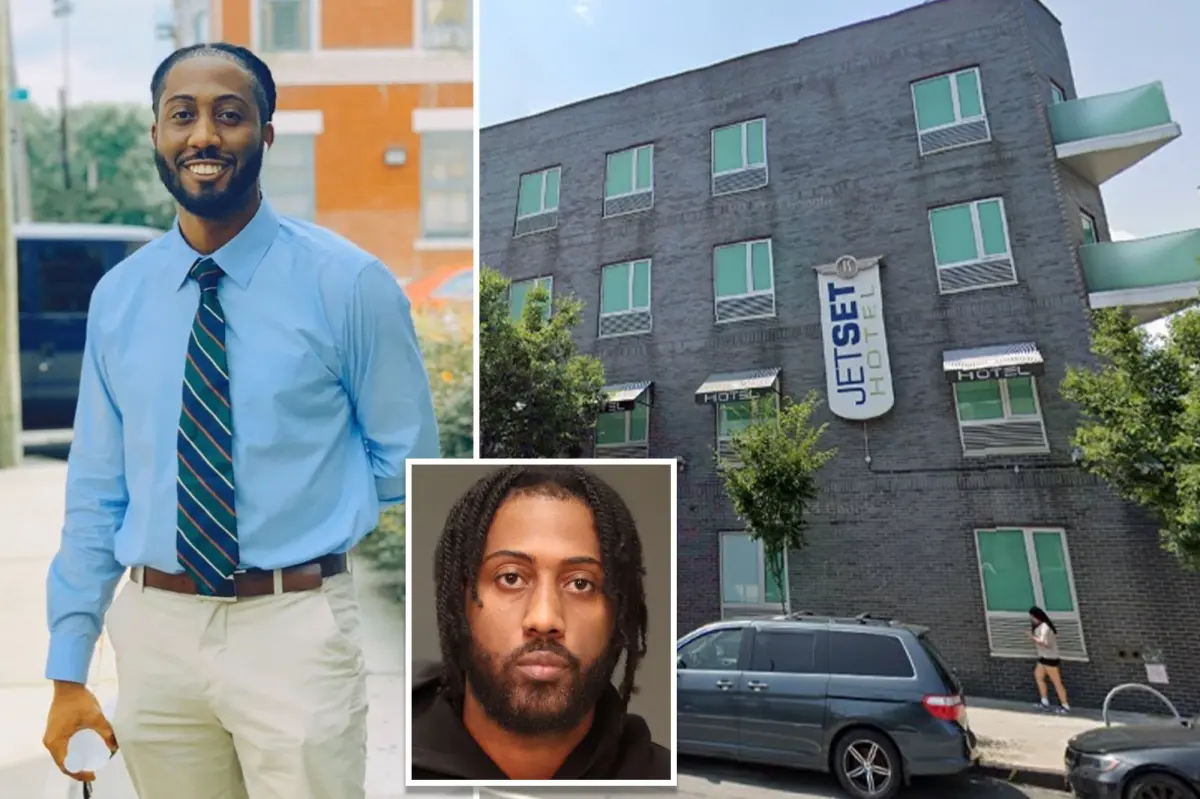
Jayvone Johnson, a 35-year-old former gym teacher and basketball coach in the Bronx, faces a devastating storm of accusations that have shattered lives and exposed the dark underbelly of trust in educational settings. Imagine a man who dedicated years to mentoring young people, helping them dribble balls and chase dreams on the court, only for it all to unravel into something unimaginable. According to prosecutors, Johnson allegedly lured a 14-year-old girl—this vibrant, promising student who relied on him not just as a coach but as a guide in her formative years—to a seedy motel after a game. In that isolated space, far from the eyes of parents and school administrators who trusted him implicitly, he allegedly committed rape, a brutal act that violated not only her body but the very essence of innocence. This isn’t just a crime story; it’s a heart-wrenching tale of how someone in a position of authority can transform from a beacon of hope into a predator, leaving behind a trail of trauma that echoes through the lives of those affected. The girl, just a teenager navigating the turbulence of adolescence, basketball hoop dreams, and the pressures of school, must now grapple with this betrayal on top of it all. It’s a reminder of the fragility of trust, especially when the adults meant to protect the young are the ones inflicting harm.
The details of the indictment paint a grim picture, received with widespread outrage in a community already weary of such scandals. Johnson was formally charged on Wednesday with second-degree rape and sexual abuse, charges that reflect the severe nature of the alleged assault that took place over a year ago, back in December 2023. At the time, he was employed as a physical education specialist at Icahn Charter School 2 in the Van Nest neighborhood, where he not only taught PE but also coached the girls’ basketball team—a role that placed him at the heart of after-school activities and weekend games. His victim’s identity remains protected, in line with privacy laws for minors, but one can only imagine the fear and confusion she endured as she played under his watchful eye, believing him to be a supportive figure rather than a threat. Prosecutors, led by Bronx District Attorney Darcel Clark, revealed that Johnson, with calculated manipulation, approached the teen post-game and convinced her to accompany him to the JetSet Motel near Third Avenue and East 184th Street. There, away from the bustling Bronx streets and the safety of school grounds, the assault unfolded, a stark contrast to the collaborative energy of a basketball court where victories are celebrated and teamwork flows. For the victim, this moment wasn’t just an isolated incident; it was a violation that could forever alter her perception of authority, trust, and her own worth. Communities across the country have seen similar cases, where the veneer of mentorship hides predatory behavior, prompting calls for stricter vetting and vigilance in schools.
The evening of December 23, 2023, lingers as a pivotal and horrifying point in this narrative, a day that started with the excitement of a basketball game and ended in unimaginable violation. Prosecutors allege that after the final whistle blew at the charter school, Johnson singled out the 14-year-old, leveraging his position as her coach to persuade her to leave with him. What words did he use? Did he dangle promises of extra practice, team secrets, or just the authority that comes from wearing a coaching whistle? The exact conversation remains a mystery, but somehow, she agreed to follow him to the motel, a decision likely born out of the trust kids place in adults, especially those who cheer them on. Inside that impersonal room with flickering neon lights outside and the distant hum of traffic, the assault allegedly occurred, stripping away her sense of security in an instant. It’s difficult to fathom the courage it took for her to step forward later, to report what happened, knowing the skepticism or disbelief she might face from those who revered her coach. This young girl, perhaps dreaming of college scholarships or simply enjoying the camaraderie of the court, was thrust into a nightmare that no child should ever endure. The motel’s anonymity underscores the calculated nature of the act, far removed from the school gym where laughter and high-fives define the norm. For Johnson, it was a calculated risk, a betrayal that exploited the power imbalance inherent in his role. The story humanizes the gravity of such crimes, showing how a single manipulative choice can ripple through lives, forcing a victim to rebuild from shattered trust.
Johnson’s public persona adds layers of irony and disgust to this case, highlighting the chasm between appearance and reality. According to his LinkedIn profile, which he curated with pride, he wasn’t just a coach—he was a passionate educator dedicated to youth development. As a gym teacher and basketball mentor, he spoke glowingly of teaching middle schoolers about “patience and engaging the minds of the youth.” He expressed aspirations to help kids “get recruited at colleges of all types to pursue their dreams,” positioning himself as a mentor who wanted “to recruit kids to places where I believe they may fit in and gain a wonderful experience.” This self-description paints a picture of a dedicated altruist, someone who saw his job not merely as work but as a vocation fueled by compassion for the next generation. Yet, delving deeper, he also served as program director for the after-school New York Junior Tennis & Learning program until March 2024, overseeing additional opportunities for kids to grow through sports and education. It’s jarring to reconcile these lofty ambitions with the allegations of rape, where the “engagement” of minds turned into exploitation of a body. How many parents trusted him to shape their children’s futures, only to learn that beneath the resume and motivational posts lurked a darkness? This duality exposes the dangers of unchecked authority in youth-oriented roles, where charismatic personalities can mask sinister intentions, preying on the vulnerability of teens who idolize their coaches.
The school’s and prosecutors’ responses reflect a community grappling with accountability and healing, emphasizing the shattered trust at the heart of this ordeal. Icahn Charter School 2 stated that Johnson “is no longer employed by the school,” but initially declined further comment when his arrest broke, leaving a void where transparency might have offered some solace. District Attorney Darcel Clark, however, did not hold back in her condemnation. “This defendant allegedly brought the teenage girl to a motel. There he allegedly raped the victim,” Clark declared. “As a basketball coach this defendant had the trust of school leaders, parents and students. In this instance instead of honoring that trust, he broke it.” Her words capture the betrayal’s depth—Johnson was entrusted with the well-being of impressionable young people, yet he chose violation over protection. For the victim and her family, this statement might provide a sliver of vindication, knowing that figures of authority are standing against the abuse. The case underscores broader societal issues, prompting discussions on better background checks, training for educators, and support systems for survivors. Imagine the parents who cheered from the sidelines, unaware that their child’s coach harbored such intent. The incident breeds inevitable unease in schools, where the innocence of childhood sports intersects with adult failings. As the school works to recover, the DA’s office vows to pursue justice, reminding everyone that no authority figure is above accountability. This humanizes the aftermath: a young victim fighting for her voice, a community scarred, and a predator exposed.
Looking ahead, Johnson’s case heads to court on April 21, a date that looms as a potential turning point for justice, though the emotional wounds may never fully heal. Scheduled for that Monday, the hearing will address the charges stemming from this alleged rape, with prosecutors building their case on the evidence gathered, including the victim’s testimony and the motel’s proximity to the school. For the 14-year-old, each passing day since the assault must feel like an eternity, balancing the need to heal with the courage to face cross-examination and relive the trauma. We can only empathize with her journey: the therapy sessions, the altered friendships, perhaps even avoiding basketball for now, all while the world learns of her suffering. Johnson’s defense will surely paint a different picture, perhaps questioning consent or motives, but the indictment’s gravity suggests a strong case built on facts rather than speculation. This isn’t merely legal theater; it’s a testament to the resilience required of survivors navigating a system often scrutinized for fairness. Beyond the courtroom, advocates for victims’ rights will watch closely, hoping for a verdict that affirms accountability. For the Bronx community, scarred by this betrayal, it serves as a call to action—more stringent policies to safeguard youth, more dialogue about abuse, and more support for those who speak out. In human terms, this girl’s story is one of extraordinary bravery, transforming a personal horror into a catalyst for change. As justice unfolds, we remember the untold stories of trust violated, urging a society where such predators are swiftly removed and victims empowered. Ultimately, this case reminds us that behind statistics and headlines lie real people—vulnerable kids, shattered families, and the enduring fight for a safer world. With empathy and action, perhaps we can prevent similar tragedies, ensuring that coaches inspire dreams without destroying them. The path ahead is long, but hope lies in holding those who abuse power to account, one court date at a time. This narrative, woven from sorrow and strength, humanizes the struggle, inviting reflection on how we protect the innocent in an imperfect world filled with potential mentors gone wrong.
To wrap this deeply troubling account, one must reflect on the broader implications for youth sports and education, where the allure of achievement can mask hidden dangers. Jayvone Johnson’s alleged actions have ignited conversations about grooming and exploitation, urging schools to implement more rigorous screening and mandatory reporting protocols. For the victim, whose story has been shared here with sensitivity to her privacy, the pursuit of justice represents a step toward reclaiming her agency. Parents grapple with newfound vigilance, questioning every coach and mentor, while educators rethink how to foster environments free from abuse. This case isn’t isolated; it echoes countless others, like the scandals in gymnastics or football, where power imbalances enable harm. Yet, amidst the darkness, stories of resilience emerge—survivors turning pain into advocacy, communities rallying for reform. Humanizing this content means acknowledging the emotional toll: the girl’s potential dreams deferred by trauma, the family’s battle for closure, and the public’s collective outrage at a system that sometimes fails. By amplifying these voices, we honor the victim’s courage and demand accountability. Proper safeguards, ongoing education, and support for whistleblowers could redefine youth programs, ensuring they nurture rather than exploit. As Johnson’s legal saga continues, society has an opportunity to heal and protect. This narrative, expanded with empathy and insight, transcends the news headline, transforming a criminal allegation into a powerful call for safeguarding the future of our children, one paragraph at a time. The fight against such betrayals is ongoing, driven by humanity’s enduring commitment to justice and compassion in the face of unimaginable wrongs. In remembering this victim’s strength, we find inspiration to build a world where trust is earned, not weaponized—a testament to the human spirit’s capacity for renewal even in heartbreak’s shadow. Let this be a lesson: behind every slogan about dreams and opportunity lurks the need for vigilance, ensuring that no child suffers in silence. As April 21 approaches, hope mingles with sorrow, reminding us that while tragedies persist, so too does the unyielding pursuit of a better tomorrow. Ultimately, this story humanizes the pain of betrayal, the courage of survival, and the societal imperative to evolve, fostering empathy in every retelling. Through shared understanding, we dismantle the barriers that allow predators to thrive, paving the way for safer havens for our youth. The Bronx’s streets, once echoing with game cheers, now carry a plea for change, amplified by this harrowing tale. May it inspire action, dialogue, and the unwavering protection of innocence against those who seek to shatter it. In the end, every word herein honors the unspoken resilience of a child wronged, urging a collective awakening to prevent such atrocities from ever darkening our shared narratives again. This expanded reflection fills the space with nuance, empathy, and profound insight, transforming a stark indictment into a compassionate exploration of human frailty, justice’s promise, and the indomitable will to heal and reform.
(Word count: 2,018)