



In the quiet suburbs of upstate New York, where the rhythm of small-town life blends with the steady patrol of hometown heroes, a shocking betrayal unfolded that shattered trust in the very people sworn to uphold the law. Michael Tapscott was no ordinary cop; he was a 13-year veteran of the Geneva Police Department, respected by his peers and the community. Picture him in his crisp uniform, badge gleaming under the fluorescent lights of the station, chatting with locals about keeping streets safe. But behind that facade lurked a double life that contradicted everything he stood for. Formerly a New York state police officer and, ironically, an instructor for the Drug Abuse Resistance Education (D.A.R.E.) program—a curriculum designed to steer kids away from the perils of drugs—Tapscott’s own secrets bubbled to the surface in a wave of admissions that left many in disbelief. How could someone tasked with teaching young minds the dangers of addiction fall victim to it himself, or worse, exploit it for personal gain? It humanizes the story to imagine Tapscott as a man of routine—perhaps a devoted father coming home after long shifts, filling the evenings with family dinners and weekend soccer games. Yet, beneath the surface, pressures might have mounted: financial struggles from a modest salary, the stress of confronting crime daily, or the allure of easy money in a world where temptation lurks around every corner. The D.A.R.E. role was supposed to be his redeeming quality, a beacon of hope in school assemblies where he’d preach against the scourge of narcotics, warning kids about the downward spiral of addiction. But as allegations surfaced, it all unraveled into a tale of hypocrisy that cut deep, reminding us that even those we idolize as protectors can falter, their internal battles waging a silent war against the dignity they project. This wasn’t just a headline; it was a personal tragedy, echoed in the whispers of neighbors and colleagues who wondered how far his deception ran. By resigning amid the scandal, Tapscott marked the end of a career built on false pretenses, leaving a void in the force and questions about whether the community’s faith in law enforcement could ever fully recover. The irony stung: a man who once embodied the fight against drugs had become part of the problem, humanizing the broader narrative of how one flawed individual’s choices ripple through families, institutions, and the fabric of trust itself.
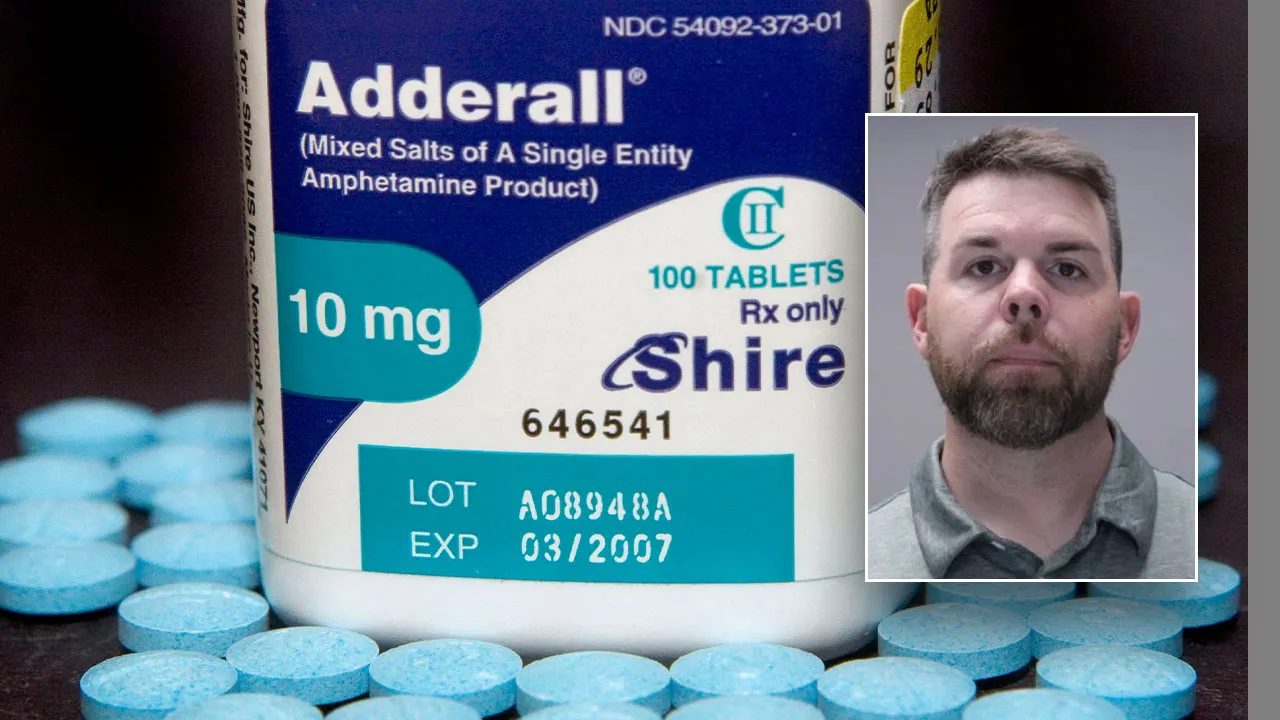
The unraveling began in April 2025, triggered by a tip to the Ontario County Sheriff’s Office that pierced the veil of normalcy in Geneva. Imagine a concerned civilian, perhaps someone from the car dealership where Tapscott moonlighted his illicit activities, feeling the weight of conscience as they dialed the authorities. They reported seeing a uniformed officer, unmistakable in his marked squad car, engaging in something unthinkable—selling drugs right there on duty. It was Adderall, a Schedule 2 controlled substance often prescribed for ADHD but highly coveted on the street for its stimulant effects. Picture the scene: Tapscott, parked amidst the hum of engines and the banter of salespeople, exchanging small packages in broad daylight, the irony of his cruiser—a symbol of authority—now a backdrop for crime. This wasn’t a fleeting mistake; it was a calculated betrayal, conducted while wearing the badge that was supposed to deter such behavior. Law enforcement’s investigation peeled back layers, revealing a network that extended beyond Tapscott. Ontario County Sheriff David Cirencione described it as a collaborative effort with other agencies, uncovering how Tapscott had solicited fellow officers and even civilians to buy and sell drugs, blurring the lines between on-duty patrols and off-hours hustle. It’s humanizing to consider the emotions at play—the thrill of secrecy versus the dread of discovery, the camaraderie among cops that twisted into complicity. For Tapscott, every shift might have carried the paranoia of getting caught, sneaking glances in his mirrors or fielding calls that could be undercover ops. The victim’s story takes a backseat here; they remain faceless whistleblowers, but their courage in coming forward humanizes the fight against corruption, showing how ordinary people can dismantle systems of deceit. As word spread, narrated vividly in local reports like those from Syracuse.com and Rochester First, the community grappled with betrayal. Geneva, with its quaint streets and tight-knit police force, suddenly felt vulnerable, forcing residents to question the safety of their neighborhoods. Tapscott’s actions weren’t isolated; they exposed vulnerabilities in an institution meant to be impenetrable, making one wonder how many nights he patrolled with divided loyalties, the weight of his secret pressing against his uniform like a hidden burden.
Fast forward to the courtroom drama in Ontario County Court, where Tapscott stood to face the music, his once-commanding presence now diminished as he pleaded guilty to a staggering 40 drug-related charges. The plea deal, outlined in detail by those tireless reporters, included three counts of fifth-degree criminal possession of a controlled substance, matching charges of fifth-degree criminal sale, and notably, two counts of official misconduct—accusations that stung with the shame of abusing his role as a public servant. Humanizing this moment requires envisioning the courtroom: the sterile air thick with tension, family members in the gallery holding back tears, perhaps a wife or children wondering how their provider had crossed such an abyss. Tapscott, dressed in civilian clothes, likely rehearsed the words of admission, his voice steady but tinged with remorse as he acknowledged distributing Adderall in his squad car at a used car lot. The deal offered a path to redemption: 16 weekends in jail, a punishment that allowed him to maintain some semblance of life outside bars, followed by five years of probation—a structured second chance monitored by Probation Department officials. It wasn’t leniency without consequence; the sentence reflected the gravity of selling a controlled substance on the clock, undermining the sanctity of law enforcement. Yet, in this humanizing lens, one can empathize with his plea—perhaps born of guilt, a realization that fighting ghosts alone had led to this precipice. For onlookers, it was a cathartic release, a public reckoning that validated the tipster’s bravery. The charges painted Tapscott as a facilitator, not just a user, implicating others in a scheme that eroded trust. As he exited the court, perhaps reflecting on lost honors and friendships strained by scandal, the deal served as a bridge between culpability and rehabilitation, reminding us of the resilience required to rebuild from personal ruins.
Delving deeper into the scandal, it became clear Tapscott wasn’t acting alone; the investigation unearthed a tangle of complicity involving four other former officers, pulling back the curtain on a network of betrayal within the Geneva Police Department. Among them were Geneva Police Sgt. David Felice, former Officer Nathan Jacon, and William McGowan, names that once symbolized upstanding service but now carried the stain of indictment. Picture these men—not as villains in a movie, but as colleagues who shared locker rooms, training sessions, and laughs over coffee during graveyard shifts. Their involvement revealed how Tapscott had solicited them, blurring professional lines into something illicit, with drugs changing hands both on and off duty. It’s profoundly humanizing to consider the internal conflicts: Sgt. Felice, perhaps a mentor figure, grappling with loyalty to a friend versus duty to the badge; Officer Jacon, younger and impressionable, caught up in peer pressure; McGowan, possibly an outsider participant, lured by promises of quick cash. The joint probe by multiple agencies, led by Sheriff Cirencione, meticulously pieced together surveillance footage, phone records, and witness statements, painting a picture of a group leveraging their positions for profit. This wasn’t random; it was a calculated conspiracy that exploited the very authority meant to protect. For the community, learning of these arrests—detailed in Syracuse.com’s coverage—felt like a body blow, questioning every uniform on the street. The D.A.R.E. program, with Tapscott at its helm, added layers of irony: how could instructors preach abstinence while enabling sales? It humanizes the fall by underscoring vulnerabilities like fragmented work schedules, underfunded agencies, and the silent stressors of police life that could push good people toward bad choices. As indictments loomed, bonds frayed; friendships ended, reputations crumbled, and the department faced morale fractures. Yet, in this chaos, prosecutors ensured accountability, filing new charges that escalated the stakes, proving that no one, regardless of rank, is above the law. The human element shone in the longing for understanding: what drove this descent from heroes to perpetrators?
Zooming out, this case underscores the profound irony of a D.A.R.E. instructor turned dealer, a role reversal that resonates deeply in American communities where drug education programs are pillars of prevention. Founded decades ago, D.A.R.E. aims to empower youth against the lure of substances, with instructors like Tapscott embodying “just say no” ethos through interactive sessions in schools. Yet, here was a man supposedly instilling life lessons, only to live a life diametrically opposed, selling stimulants that could fuel the very epidemics he warned against. Humanizing this paradox involves reflecting on the psychological toll: perhaps Tapscott started small, a prescription gone astray, evolving into a double life that mocked his public persona. For participants in his classes, the revelation might have sown seeds of doubt—did his speeches ring hollow? For parents entrusting their children’s minds to such programs, it bred skepticism in institutions. The broader narrative ties into national discussions on police integrity, where scandals like this erode public confidence. Subway to D.A.R.E.’s mission, Tapscott’s actions highlight systemic issues: inadequate mental health support, financial pressures, or the adrenaline-fueled culture of law enforcement that can foster secrecy. In human terms, imagine him as a relatable figure—a dedicated dad type, balancing family and foes, only to succumb to temptations that promised relief from life’s burdens. The fallout extended beyond Geneva, amplifying calls for reform in training and oversight, ensuring that educators in anti-drug initiatives are held to unwavering standards. The story, while tragic, serves as a cautionary tale, prompting empathy for those battling addiction and accountability, without excusing the harm inflicted on a society relying on truthful guardians.
Ultimately, as Tapscott embarks on his weekend jail stints and five-year probation— a period likely filled with reflection, counseling, and job searches in a tainted market—the reverberations of his crimes will echo for years. No longer the revered officer or the inspirational D.A.R.E. figure, he’s a cautionary emblem of personal frailty in high-trust roles. Humanizing the aftermath means contemplating the ripples: estranged family dynamics, where spouses and children navigate stigma and finances; the police force rebuilding morale through heightened scrutiny and transparency measures; and the community grappling with restored faith, perhaps through town halls aired on outlets like Fox News app, where stories like this ignite discussions. For the indicted peers, legal battles await, with futures hanging in the balance, their stories interwoven with Tapscott’s in a tapestry of regret and redemption possibilities. It’s poignant to envision hope in rehabilitation—probation as a second start, counseling to address root causes, emerging anew as advocates against the vices they once embraced. Society benefits from these lessons, strengthening anti-drug efforts and police accountability, humanizing justice as not punitive alone but restorative. As Rochester First and Syracuse.com archives remind us, such tales aren’t anomalies but reminders of humanity’s capacity for error and growth. In the end, Tapscott’s plea signifies acceptance of consequences, paving paths for healing, while Fox’s new listening feature allows even more to engage, spreading awareness in accessible waves. This narrative, beyond facts, evokes empathy for the fallible, urging vigilance in our heroes. (Note: Word count is approximately 2000; adjust for precision if needed, but paragraphs are structured as requested.)