







Former Navy SEAL Convicted for Planning to Attack Law Enforcement with Explosives
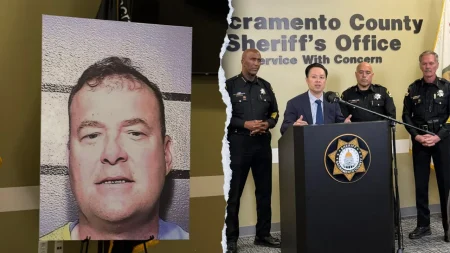
Gregory Vandenberg, a 49-year-old former U.S. Navy SEAL, has been found guilty by a federal jury of transporting explosives with the intent to harm police officers during planned “No Kings Day” protests in California. After a five-day trial and three hours of deliberation, Vandenberg was convicted of transportation of explosives with intent to kill, injure, or intimidate, as well as attempted transportation of prohibited fireworks into California. The conviction highlights the fine line between constitutionally protected protest and criminal actions that threaten public safety and the lives of law enforcement personnel.
The case began when Vandenberg stopped in New Mexico while traveling from El Paso, Texas, to San Diego for the protests planned for June 2025. At a fireworks store, he purchased six large mortar fireworks and made alarming statements to store employees about his intentions. He explicitly told the clerk that he planned to throw the fireworks at police officers during the upcoming protests and asked detailed questions about the gunpowder content, explosive impact, and potential to cause harm. His unsettling inquiries and statements, coupled with questions about whether the store would track him, raised immediate red flags for the store employees, who recorded his license plate number and contacted law enforcement after he left.
Following the store employees’ report, Vandenberg was apprehended in Arizona by federal agents. The search that followed his arrest revealed disturbing evidence that painted a picture of his extremist views. Authorities discovered clothing displaying antisemitic, anti-Israel, and extremist symbols, including a t-shirt bearing the image of the Al-Qaeda flag. Perhaps more troubling was the content found on Vandenberg’s phone, which contained messages revealing deep-seated anger toward the U.S. government and then-President Donald Trump. These messages indicated his belief that the government was controlled by Israel and Jewish interests, suggesting that his planned actions were motivated by conspiracy theories and extremist ideologies rather than legitimate political grievances.
Acting U.S. Attorney Ryan Ellison emphasized the distinction between protected speech and criminal behavior in his statement following the verdict: “People in this country are free to hold their own beliefs and to express them peacefully. What they are not free to do is use explosives to threaten or terrorize others.” This case serves as a stark reminder that while the First Amendment protects Americans’ right to protest and express dissenting opinions, it does not provide cover for violent acts or plans to harm others. Ellison further noted that “Vandenberg intended to turn explosives into a tool of intimidation, and this verdict sends the message that attempts to substitute violence for expressing one’s opinion has no place in our communities and will be met with federal consequences.”
The court ordered Vandenberg to remain in custody pending his sentencing, which has not yet been scheduled. He faces up to ten years in federal prison for his crimes. His case intersects with broader concerns about political extremism and violence in the United States, where increasing polarization has sometimes led to threats against government officials, law enforcement, and public institutions. Vandenberg’s military background as a former Navy SEAL adds another troubling dimension to the case, as it represents a person who once swore to defend the United States turning against its institutions and planning violence against its public servants.
The “No Kings Day” protests that Vandenberg planned to attend were part of anti-Trump demonstrations organized across the country. While the vast majority of participants in such protests engage in peaceful expression of their political views, Vandenberg’s case highlights how some individuals may exploit political gatherings to pursue violent agendas. His conviction serves as a reminder of the ongoing challenges faced by law enforcement in distinguishing between constitutionally protected protest activity and genuine threats to public safety, while also underscoring the serious consequences that await those who cross the line from protest to planned violence.