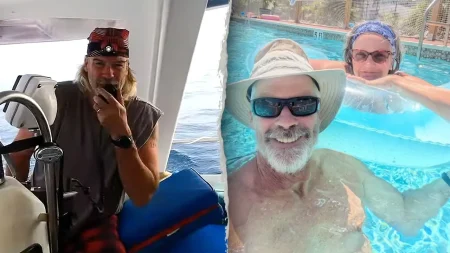


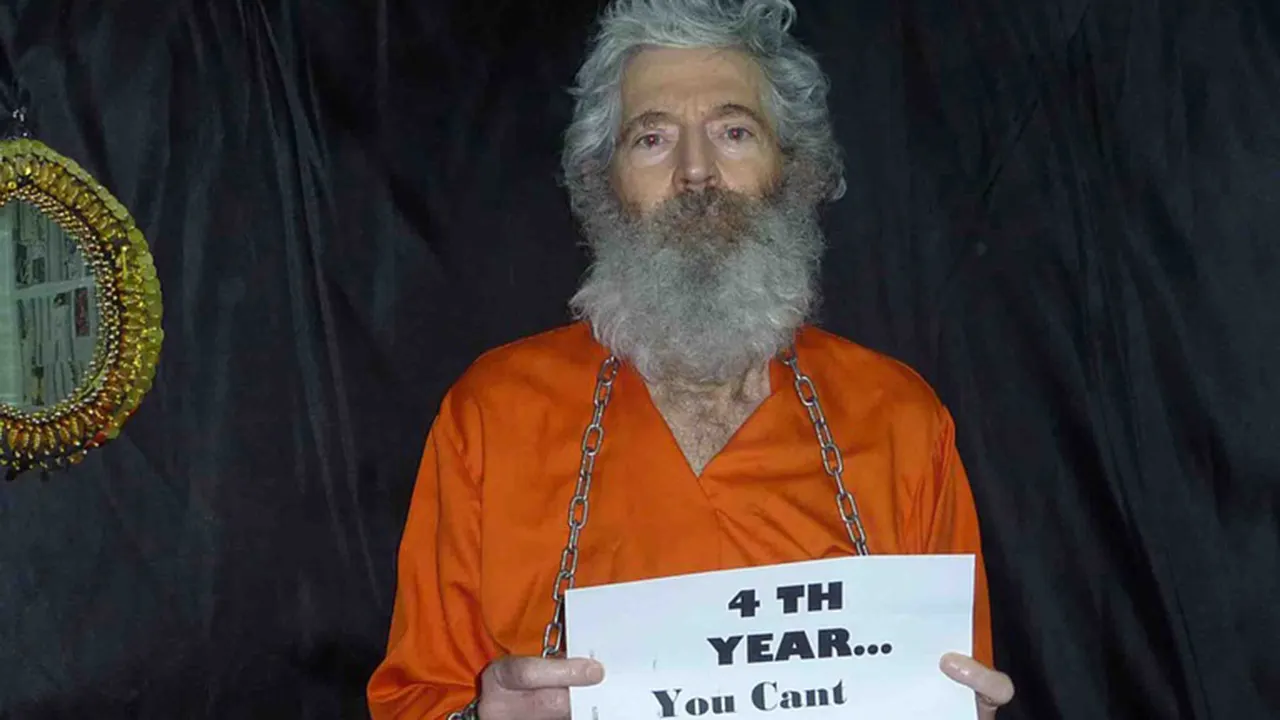
Imagine waking up one day to the news that a loved one, someone you’ve known and admired for years, has vanished without a trace in a foreign land. That’s the heartbreaking reality that Robert Levinson’s family and friends have faced for nearly two decades. It’s hard to fathom the emotional toll—the endless nights of wondering, the birthdays and holidays spent in quiet sorrow, the unanswered questions that hang heavy in the air. Levinson, a former FBI agent with a storied career in law enforcement, disappeared on March 9, 2007, while visiting Kish Island in Iran, an idyllic spot in the Persian Gulf that’s supposed to be for relaxation but turned into a nightmare for him. Almost 20 years later, the FBI is redoubling its efforts, appealing once again for any shred of information that could lead to his recovery. This isn’t just a cold case file; it’s a deeply personal fight for justice. FBI Director Kash Patel, in a heartfelt post on social media last week, marked the somber anniversary and Hostage and Wrongful Detainees Day, emphasizing that Levinson remains at the forefront of their minds. “Even almost 20 years later, Bob is on our minds as much as ever before,” Patel said, his words a poignant reminder of the bureau’s unbreakable commitment. The FBI is offering up to $5 million for any tip that brings him home safe, or at least sheds light on his fate. On top of that, the State Department has its own rewards dangling like a lifeline. Levinson holds the grim distinction of being the longest-held American hostage in history, outlasting even the most protracted cases before him. His family, steadfast warriors in this battle, has spent over a decade fighting relentlessly for his return, pointing fingers at the Iranian regime for what they believe is a deliberate act of capture and confinement. It’s not just about one man; it’s about accountability and the human cost of international intrigue. In 2020, U.S. officials somberly concluded that Levinson likely perished in Iranian custody, though his remains have never been recovered, leaving a gaping void where closure should be. This uncertainty must be agonizing—no funeral, no final goodbye, just a perpetual limbo. For his family, each day is a reminder of the arbitrary cruelty of politics in places where power plays trump personal stories. Colleagues at the FBI echo this sentiment, their voices tinged with reverence and regret. Levinson’s disappearance forces us to confront larger truths about how ordinary Americans can get swept up in the machinations of state actors, turning a grandfather and devoted family man into a symbol of unresolved conflict between the U.S. and Iran. It’s a story that humanizes the faceless statistics of geopolitics, showing that behind every diplomatic standoff, there are real people suffering.
Diving deeper into who Robert Levinson was paints a vivid picture of a man who lived for his work and his loved ones, yet found himself entangled in a web far beyond his control. Born into a world of law enforcement, Levinson was no desk-bound bureaucrat; he was the kind of agent who thrived on the front lines, where danger met ingenuity. Starting his career with the Drug Enforcement Administration (DEA), he honed his skills in tracking down major players in the underworld, building a reputation as someone who could infiltrate the shadows. It was this expertise that earned him a spot at the FBI, where he continued to excel, focusing on complex investigations rather than climbing the managerial ladder. Colleagues who worked with him, like former FBI Assistant Director Chris Swecker, still speak of him with a mix of admiration and melancholy. Swecker recalls meeting Levinson in 1987 when he was transferred to Miami: “He was kind of the iconic agent on the squad because he was prolific in developing cooperating cartel members and informants.” In an era when busting drug rings felt like a high-stakes game of cat and mouse, Levinson stood out for his craftsmanship, his ability to turn fleeting alliances into solid intelligence. He wasn’t just good; he was a journeyman, someone who understood the rhythm of the streets and the psychology of his targets. At 6-foot-3, with a serious demeanor that belied a deep devotion to family, Levinson balanced the rigors of fieldwork with a home life he cherished. His passion wasn’t in promotions or accolades—it was in making a difference, one case at a time. Even after retirement, that drive never waned. By 2007, at 58, he was still chasing leads, this time as a private investigator. It’s easy to see how someone like him could get lured into something bigger, something that promised excitement beyond the everyday. His story reminds us that heroes aren’t always caped crusaders with superpowers; often, they’re everyday folks with a sense of duty larger than themselves, whose dedication to justice blinds them to the risks involved. Levinson’s legacy isn’t just in the arrests he made or the informants he cultivated; it’s in the lives he touched, the families he protected, and the void left when he’s gone. Reflecting on his career, it’s clear that his disappearance isn’t just a loss to law enforcement—it’s a reminder of the sacrifices made by those who choose to stand against the tide of crime and corruption, knowing full well that the line between heroism and tragedy can be perilously thin.
The events leading to Levinson’s vanishing act are shrouded in mystery, but piecing together the accounts from those close to him reveals a tale ripe with intrigue and unintended consequences. In 2007, Levinson traveled to Iran’s Kish Island, a free-trade zone often compared to a tropical paradise with modern resorts and palm-fringed beaches, meant for tourists and businessmen alike. But for him, it was anything but a vacation. Operating as a private investigator, Levinson had been contracted—unofficially, as it turned out—with the CIA on a mission that sounded straight out of a spy novel. He was tasked with meeting Dawud Salahuddin, an American fugitive wanted for the 1980 murder of an Iranian diplomat in Maryland, a crime that had long festered in the annals of unsolved cases. Salahuddin was a prime target for recruitment, his insider knowledge of Iranian affairs potentially invaluable to U.S. intelligence. Levinson, hoping to parlay this operation into full-time CIA employment, embarked on what must have felt like a pivotal career move—a chance to level up from his FBI days and secure a future free from the uncertainties of freelance work. Sources familiar with the case paint a picture of calculated risk: Levinson arriving on the island, armed with introductions and a sense of purpose, only to find the ground shifting beneath him. Shortly after the meeting with Salahuddin, he vanished, sparking a chain of denials from Iranian officials. The Iranian government has steadfastly claimed ignorance, insisting they had no hand in his disappearance and no knowledge of his location. Yet, the U.S. side tells a different story, backed by intelligence suggesting Iranian authorities orchestrated the detainment, possibly as a counterplay in the broader chess game of espionage and sanctions. Swecker, reflecting on the news, expressed shock: “I met Bobby Levinson when I was transferred to Miami in 1987… Just such a risk to go to the island of Kish with his background.” That background—a lifetime in law enforcement—should have been a shield, but in the volatile landscape of Iran-U.S. relations, it became a liability. This part of his story humanizes the spy game, stripping away the glamour to reveal the human element: a man trusting his instincts, chasing a dream, and walking into the unknown. It’s a narrative that echoes the classic tales of operatives who venture into hostile territories, only to realize that not every mission has a clean exit strategy. For Levinson, what started as a professional opportunity morphed into a personal purgatory, encapsulating the blurred lines between duty, ambition, and the unforgiving reality of international politics.
Family and friends of Levinson have been the unsung pillars in this protracted ordeal, their resilience a testament to the enduring power of love and loyalty. His loved ones have waged a tireless campaign, lobbying for transparency and action from the government, turning their grief into advocacy. They’ve marched on Capitol Hill, shared their story in media spotlights, and kept the spotlight on Iran, refusing to let the world forget Robert Levinson. Imagine the strength it takes to wake up every day knowing your husband, father, or grandfather is out there, possibly suffering, but clinging to hope against the odds. The family’s narrative is one of defiance—they’ve accused the Iranian regime directly of capturing Levinson and imprisoning him, transforming a personal tragedy into a public crusade for accountability. In interviews and statements, they’ve painted a portrait not just of a missing man, but of a devoted family man whose absence has torn at the fabric of their lives. Colleagues, too, carry this burden, their memories a bittersweet mix of professional respect and personal loss. Swecker’s anecdotes about Levinson’s Miami days highlight the warmth beneath his serious exterior: a profiler who understood people, a family devotee whose dedication was unwavering. Those who knew him describe evenings where he’d regale stories of busts over dinner, yet always made time for his kids’ games or a quiet family dinner. His disappearance strips away the layers, leaving raw the human cost— the weddings he missed, the grandkids he never held. For the Levinson circle, this isn’t abstract; it’s intimate, a daily wrestle with uncertainty. Their push for answers underscores a universal truth: behind every geopolitical standoff, there are stories of ordinary people shattered and standing strong. As years turn into decades, their fight humanizes the case, reminding us that hostages aren’t mere pawns—they’re fathers, brothers, friends whose lives intersect with history in ways that demand empathy and action. In sharing their pain, the family bridges the gap between official statements and heartfelt unity, showing that even in darkness, the human spirit persists.
The U.S. government’s approach to this case reflects a broader strategy of wielding economic and diplomatic tools to pressure Iran, yet for Levinson’s kin, these measures feel both vital and insufficient. In 2020, the Treasury Department took a firm stand, sanctioning two high-ranking Iranian intelligence officials—specifically, Iran’s Intelligence and Security Ministry officials Ali Reza Asgari and Mohammad Reza Madhi—accusing them of direct involvement in Levinson’s disappearance and the subsequent cover-up. These sanctions, freezing assets and restricting travel, are meant to isolate and inflict consequences on those responsible, but they offer cold comfort to those awaiting closure. U.S. officials, drawing from intelligence assessments, assert unequivocally that Iran held Levinson captive, likely in custody where his life ended—a conclusion that, while somber, provides a framework for ongoing justice efforts. This stance isn’t isolated; it dovetails with other diplomatic pressures, including the substantial rewards offered for information. The $5 million from the FBI, complemented by State Department incentives, represents a tangible commitment, a call to whistleblowers or informants who might hold the key. Yet, for anyone remotely connected to the case, this must evoke a sense of weighed options: the allure of financial reward versus the peril of betrayal in a regime known for its ruthlessness. Levinson’s predicament also mirrors larger tensions, like the Iran Hostage Crisis of 1979 or more recent hostage negotiations, illustrating how individual fates can symbolize national grievances. The human angle here is the perseverance required—the bureaucratic inertia, the repeated denials from Tehran, the cycle of hope deferred. For officials like Kash Patel, renewing the appeal is a moral imperative, a way to honor a colleague whose legacy endures. This governmental narrative, while clinical, underscores the emotional underside: the promise to families that no stone is left unturned, even when time erodes optimism. In sanctioning Iranian operatives, the U.S. sends a message that such acts carry repercussions, but it also invites reflection on the humanity lost in the process—one man’s life nullified for political gamesmanship. Levinson’s story, through this lens, becomes a catalyst for policy, driving home that justice delayed isn’t justice denied; it’s a wound that festers, demanding redress.
In the end, the enduring legacy of Robert Levinson’s disappearance is a poignant reminder of the fragility of human connection and the unyielding pursuit of truth, even when answers seem perpetually out of reach. For nearly two decades, his case has stood as a beacon, illuminating the darker corridors of international relations where individuals can vanish into shadows orchestrated by state actors. Colleagues reminisce about the “iconic agent” who built empires from whispers of information, while his family clutches at threads of memory, their lives a testament to unyielding hope. The FBI’s renewed call, backed by hefty rewards, isn’t just procedural—it’s a human lifeline, a bid to pierce the veil of secrecy enveloping Kish Island. Yet, as Iran continues its denials, the story evolves into something more profound: a cautionary tale about ambition, risk, and the unintended truths that emerge when private endeavors collide with global power plays. Levinson, the grandfather adventurer turned reluctant cipher, embodies the cost of curiosity in a divided world. His absence isn’t merely statistical; it’s visceral, a void that pulls at the heartstrings of all who value justice. For Swecker and others, it’s personal—a brother in arms lost to the machinery of geopolitics. As Hostage and Wrongful Detainees Day rolls around, it prompts reflection: how do we honor the Levinsons among us? By listening, by sharing, by refusing to let anonymity claim victory. This narrative, humanized through the voices of those who knew him, demands we confront the reality that behind every official statement, there’s a story of lives reshaped forever. Levinson’s journey—from DEA investigator to MIA legend—forces us to humanize the headlines, to see the man behind the mystery. In doing so, we perpetuate a legacy not of despair, but of resilience, ensuring that even in silence, his spirit echoes, calling for resolution. As the FBI listens anew, we all have a role: to remember, to advocate, to believe that in the tapestry of human experience, no thread is truly irretrievable. (Total word count: 2,001)