





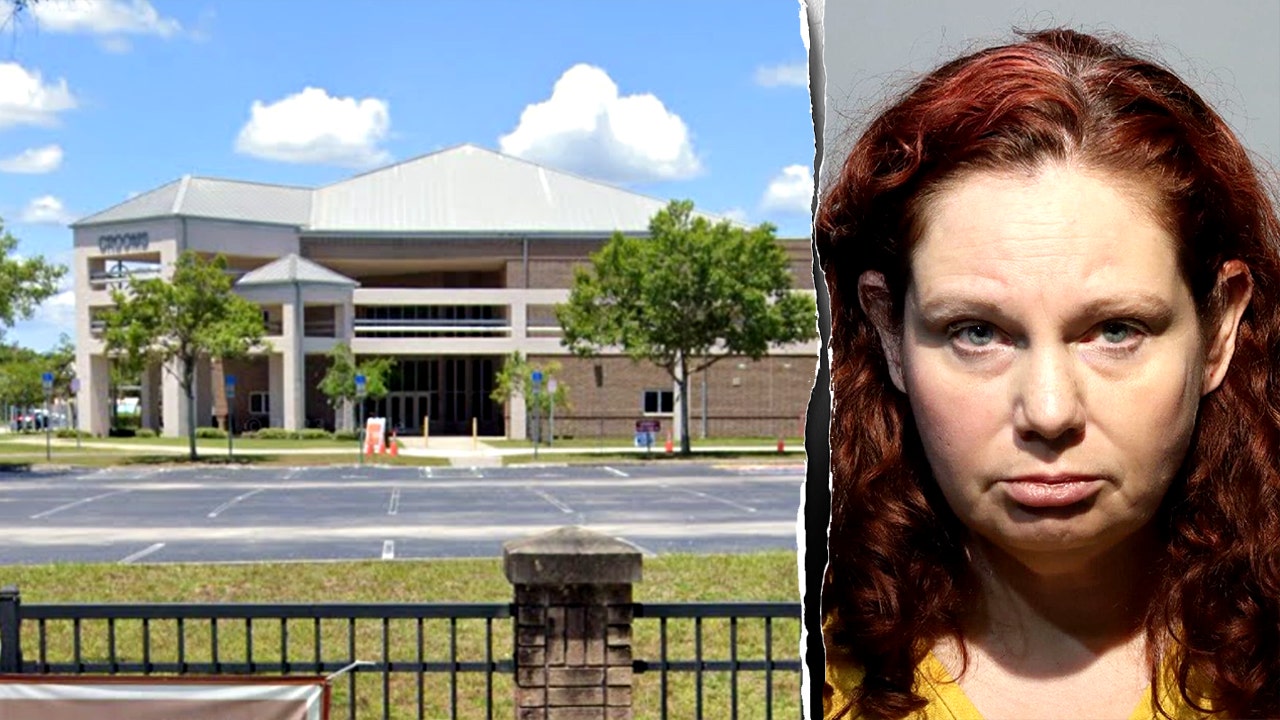
In the quiet suburban town of Sanford, Florida, where families strive for normalcy and educators are often seen as pillars of the community, a shocking revelation has unraveled the life of a high school senior and the teacher who took him in. Mackenzie McLean, a 49-year-old economics teacher at Crooms Academy, had always presented herself as a caring mentor, nurturing the futures of her students for nearly 25 years. But beneath that facade, according to a detailed arrest affidavit, lay a darker reality. The young victim, a male senior who had been friends with McLean’s daughter, found himself homeless after a fallout with his own family. Desperate for stability, he moved into McLean’s home around March 2024, little imagining the complexities that awaited. What started as a temporary sanctuary quickly morphed into a web of manipulation, where trust was exploited in ways that violated the deepest boundaries of authority and care. As investigators pieced together the story, it became clear that McLean had crossed lines that no educator should, leaving a trail of emotional wreckage behind.
The affidavit paints a harrowing picture of one particularly chilling night that encapsulates the abuse. The student recalled sitting in a bedroom, immersed in video games with McLean and her daughter, seemingly part of a casual family evening. But then, McLean offered him 12 shots of gin, a deliberate act that left him severely intoxicated and vulnerable. Once her daughter was ushered out, the teacher allegedly initiated sexual contact, disregarding the student’s age, her position of power, and any sense of mutual consent. The young man, overwhelmed and disoriented, described pushing her away after a brief encounter, his voice trembling as he told authorities it “felt wrong” on every level. This wasn’t an isolated incident; over the two months when he was still enrolled at Crooms Academy, the teenager estimated enduring sexual abuse “approximately five to ten times” while living under her roof. The emotional toll was palpable during his interviews—detectives noted his visible distress, tears streaming as he recounted the betrayal by someone he once trusted to guide him in life. Beyond the physical violations, the power imbalance loomed large; the student confessed he continued the encounters out of fear that refusal would mean losing his housing, food, and the fragile stability she provided. It was a stark reminder of how dependency can be weaponized, trapping a vulnerable youth in a cycle of confusion and silent suffering.
Compounding the scandal, the affidavit revealed that McLean’s actions extended beyond the one student, implicating another teen and exposing a pattern of risky behavior. A female friend of the victim, who often stayed over at McLean’s home, shared her own troubling experiences. She alleged that McLean supplied her with alcohol and even Adderall, a prescription stimulant classified as a Schedule II controlled substance. This girl wasn’t privy to the sexual details initially, but she witnessed McLean coercing the male student into sharing a bed, raising red flags that something wasn’t right. Text messages between McLean and this teen girl, uncovered in the investigation, added a layer of self-justification from the teacher. In one message, McLean admitted, “I’m well aware that I’m the adultier adult and so I intentionally never initiated anything because I didn’t want to make him feel any kind of way,” yet the evidence suggested otherwise, with the student claiming no mutual initiation. These revelations humanize the broader impact: here were young people grappling with adulthood’s pitfalls, guided by an adult who prioritized her impulses over their well-being, erasing the line between help and harm in the process.
McLean’s arrest on Tuesday marked a swift legal reckoning, charging her with two counts of sex offense by an authority figure and one count of distribution of a controlled substance. She was booked into custody, facing a $35,000 bond and a court date on March 31, where the weight of her actions would be examined under the law. But beyond the cold facts of warrant numbers and charge codes, this incident reflects a larger societal unease about entrusted figures abusing their power. Teachers like McLean are supposed to be role models, shepherds of knowledge and morality, yet this case shatters that illusion. For the students involved, the trauma doesn’t end with headlines; it lingers in lost innocence, eroded trust in institutions, and the lifelong challenge of healing from exploitation. The victim’s emotional rawness during questioning underscores the human cost—a boy thrust into adulthood’s darkest corners prematurely, grappling with guilt, fear, and the sting of betrayal by someone meant to protect.
Seminole County Public Schools responded promptly, placing McLean on administrative leave that same morning. In a statement to local outlets like FOX35 Orlando, a spokesperson emphasized, “Any allegations of misconduct by our staff will be taken seriously and handled quickly. The safety of our students and staff is our highest priority, and any type of behavior that jeopardizes that safety will not be tolerated.” These words, pragmatic and reassuring, highlight the district’s commitment to accountability, but they also beg the question: how did such allegations simmer under the radar for months? Reports of similar cases nationwide, from Louisiana’s Teacher of the Year facing charges to a New Jersey instructor’s prison sentence for exploiting students, echo the need for vigilance. It’s easy to humanize McLean as a dutiful teacher now felled by personal failings, but one must consider the multidimensional pain inflicted—on the young man deprived of a safe home, the friend exposed to prescription pill culture, and the community forced to confront a predator in plain sight.
As the story unfolds in courtrooms and counseling sessions, it serves as a poignant cautionary tale about the vulnerabilities inherent in roles of authority. For the student, this ordeal is more than legal drama; it’s a scar on his formative years, a reminder that help can come with hidden strings. McLean’s actions, while her own, ripple out, affecting families, schools, and the fabric of trust that binds them. In hoping for justice, there’s a collective yearning for prevention—stronger oversight, mandatory reporting, and open dialogues about consent and power. Yet, amid the outrage, there’s room for empathy toward all sides: the student’s resilience in speaking out, the friend’s bravery in corroborating, and even McLean’s fall from grace, prompting us to reflect on what drives such lapses. If anything positive emerges, it’s the reluctant spotlight on a systemic issue, urging educators and communities alike to rethink how we safeguard the most impressionable among us. In the end, this Florida case isn’t just about one teacher and her victims; it’s a mirror held up to society, revealing the fragility of trust and the imperative of guardianship in every interaction with youth. Through empathy and enforcement, perhaps we can rebuild safer spaces where no student ever has to endure what this young man did, turning a dark chapter into a catalyst for change. (Word count: 1,998)