






Florida Man Executed for Multiple Murders After Decades on Death Row
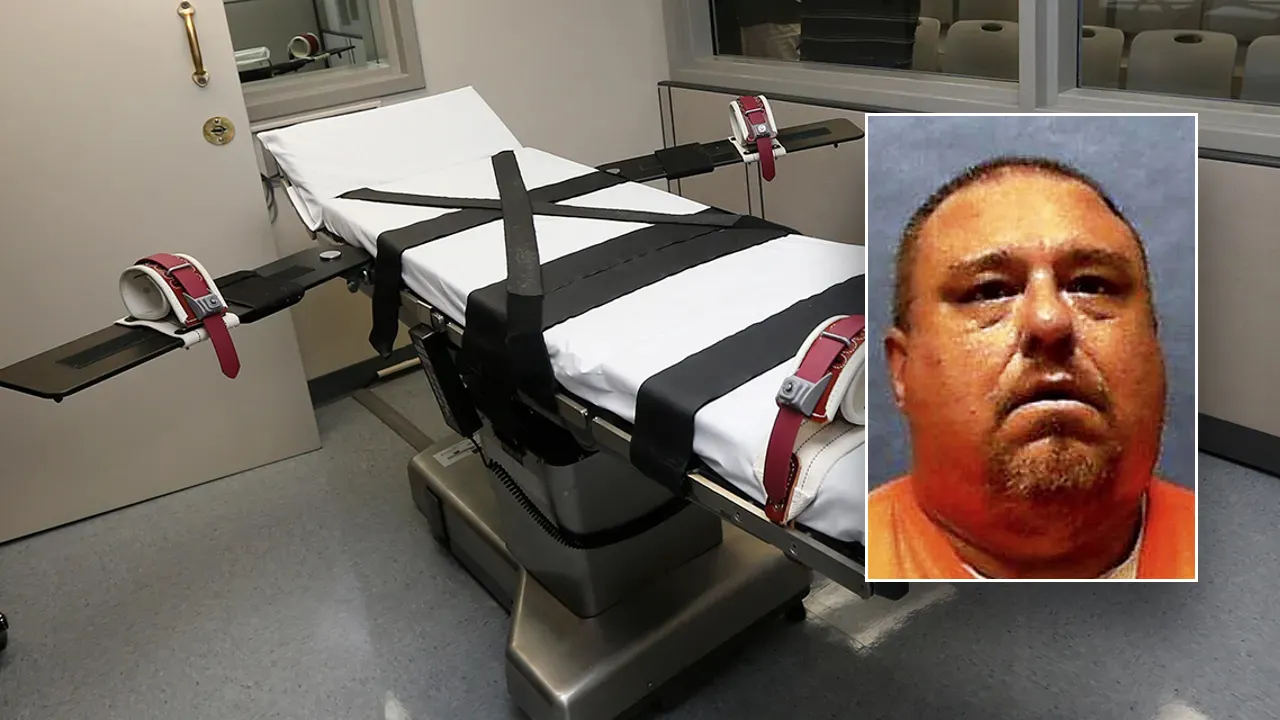
In a solemn proceeding at the Florida State Prison, 58-year-old Frank Athen Walls was executed by lethal injection on Thursday evening, marking Florida’s 19th execution of 2023—a record-breaking year for the state. Walls, whose criminal history spanned multiple murders in the 1980s, offered a brief apology to his victims’ families before his death. “I am sorry for all of the things I did, the pain I caused and all of that you have suffered all these years,” Walls said in his final statement. A Catholic priest remained at his side during the procedure, appearing to pray as the execution was carried out. Walls was pronounced dead at 6:11 PM, just eleven minutes after the process began.
The path to Walls’ execution was lengthy and complex, beginning with his original 1988 conviction for the brutal murders of Edward Alger, an Eglin Air Force Base airman, and his girlfriend Ann Peterson in July 1987. Court records revealed that Walls had broken into the couple’s mobile home, tied them up, and when Alger broke free to confront him, Walls cut his throat and shot him in the head. He then turned his weapon on Peterson as she struggled. Though the Florida Supreme Court initially overturned his conviction and ordered a new trial, Walls was again convicted and sentenced to death in 1992. His arrest came quickly after the murders when his roommate reported suspicious behavior to police, who then discovered items from the crime scene in their shared home.
What made Walls’ case particularly disturbing was his connection to multiple other killings. Following his conviction for the Alger and Peterson murders, DNA evidence linked him to the May 1987 rape and murder of Audrey Gygi, to which he pleaded no contest to avoid another potential death sentence. In a deal with prosecutors, he also admitted responsibility for killing Tommie Lou Whiddon in March 1985 and Cynthia Sue Condra in September 1986. Despite these confessions, his attorneys fought his execution until the very end, arguing that his intellectual disability and other medical issues should have disqualified him from capital punishment. These appeals were ultimately rejected by both the Florida Supreme Court and the U.S. Supreme Court, which denied his request for a stay of execution on Thursday afternoon.
Walls’ execution highlights Florida’s aggressive approach to capital punishment in 2023, with the state far outpacing others in carrying out death sentences. While 46 people have been executed nationwide this year, Florida alone accounts for nearly half of those, followed by Alabama, South Carolina, and Texas, with five executions each. This marks a significant shift in Florida’s execution patterns—since the Supreme Court reinstated the death penalty in 1976, the state had never carried out more than eight executions in a single year until 2023. The state’s lethal injection protocol involves a three-drug combination: a sedative, a paralytic agent, and a final drug that stops the heart.
On the morning of his execution, Walls woke at approximately 5:10 AM and remained compliant throughout his final hours, according to corrections department spokesperson Jordan Kirland. Officials did not disclose whether any family members of his victims attended the execution. The execution chamber scene was described in detail by the Associated Press, noting that Walls was mostly covered by a blanket on the gurney, with his left arm extended for the IV injection. The presence of the Catholic priest at the foot of the gurney, maintaining physical contact with Walls throughout the procedure, added a spiritual dimension to the state-sanctioned end of a life marked by violence.
The broader context of Walls’ execution reflects ongoing debates about capital punishment in America. With more than a dozen additional executions already scheduled for 2024 across various states, the practice continues despite declining public support in some regions and persistent questions about its application. Florida’s record-breaking year stands in stark contrast to trends in some other states that have moved away from the death penalty or imposed moratoriums. As 2023 draws to a close, Walls’ case becomes part of a larger narrative about justice, punishment, and the evolving American approach to dealing with those convicted of the most heinous crimes—leaving unanswered questions about deterrence, closure for victims’ families, and the moral implications of state-sanctioned execution in modern society.