


A Chilled Evening Turned into Horror in Washington, D.C.
On a seemingly ordinary May evening in the nation’s capital, a gathering meant to celebrate diplomacy and youth took a horrific turn outside the historic Capital Jewish Museum. Attendees had come together for a “Young Diplomats Reception,” an event bridging cultures and fostering connections among young professionals in international relations. Among them were vibrant young individuals like Sarah Milgrim and Yaron Lischinsky, eager to build bridges and share ideas in a spirit of goodwill. But as the night unfolded, terror struck in the most calculated and merciless way, shattering lives and exposing the raw underbelly of ideological extremism. The air was thick with the echoes of celebration just moments before, but now it bore witness to an act that would ripple through communities worldwide, forcing us all to confront the fragility of peace and the darkness that can lurk in the hearts of those driven by hate. Elias Rodriguez, a 31-year-old man from Chicago with a troubled past and seemingly unyielding beliefs, approached the group as they departed the museum. In a flash, he unleashed chaos, his actions painting a picture of premeditated rage that targeted not just individuals, but an entire community’s sense of security. This wasn’t a random outburst; prosecutors describe it as a meticulously planned ambush, fueled by ideologies that led to unthinkable violence. Imagine the shock of those who had just laughed and networked now running for cover, their minds racing with disbelief at how one person’s vendetta could disrupt a space dedicated to culture, education, and tolerance. The museum, a beacon of Jewish heritage, suddenly became a site of tragedy, its pillars of learning stained with the blood of innocent lives cut short.
The Deadly Ambush and Heart-Wrenching Details
As Lischinsky and Milgrim stepped out into the cool D.C. night, chatting perhaps about their shared passions for diplomacy or just unwinding after a productive event, Rodriguez emerged from the shadows. Armed with a semi-automatic handgun, he fired approximately 20 shots in a barrage that lasted mere seconds, each round a deliberate strike against unsuspecting souls. Sarah, 26, a bright young woman from Overland Park, Kansas, and Yaron, 30, an Israeli citizen on official business in the U.S., became the focus of this ideological fury. The reports are chilling: Rodriguez allegedly shouted “Free Palestine” as the gunfire rang out, not just an impulsive cry but a proclamation tied to a larger narrative of conflict and vengeance. Two embassy workers beside them were wounded, their bodies bearing the scars of survival in a moment when escape felt impossible. One can only imagine the panic—the screams of confusion, the scramble for safety amidst the acrid smell of gunpowder, and the realization that this was no accident but a targeted assault on symbols of a nation embroiled in global tensions. Rodriguez didn’t stop there; he ventured into the museum itself, still buzzing with the energy of the event. Pulling out a red keffiyeh, he declared, “I did it for Palestine. I did it for Gaza,” his words echoing like a twisted manifesto in a place meant for reflection and unity. This act, prosecutors argue, was meant to terrorize not just the immediate victims but the Jewish community at large, sending a message of fear to all who stood in solidarity with Israel. It’s a reminder of how personal grudges can morph into public spectacles of horror, leaving behind a trail of grief that families must navigate for years.
A Manifesto of Rage and Rodriguez’s Alarming Descent
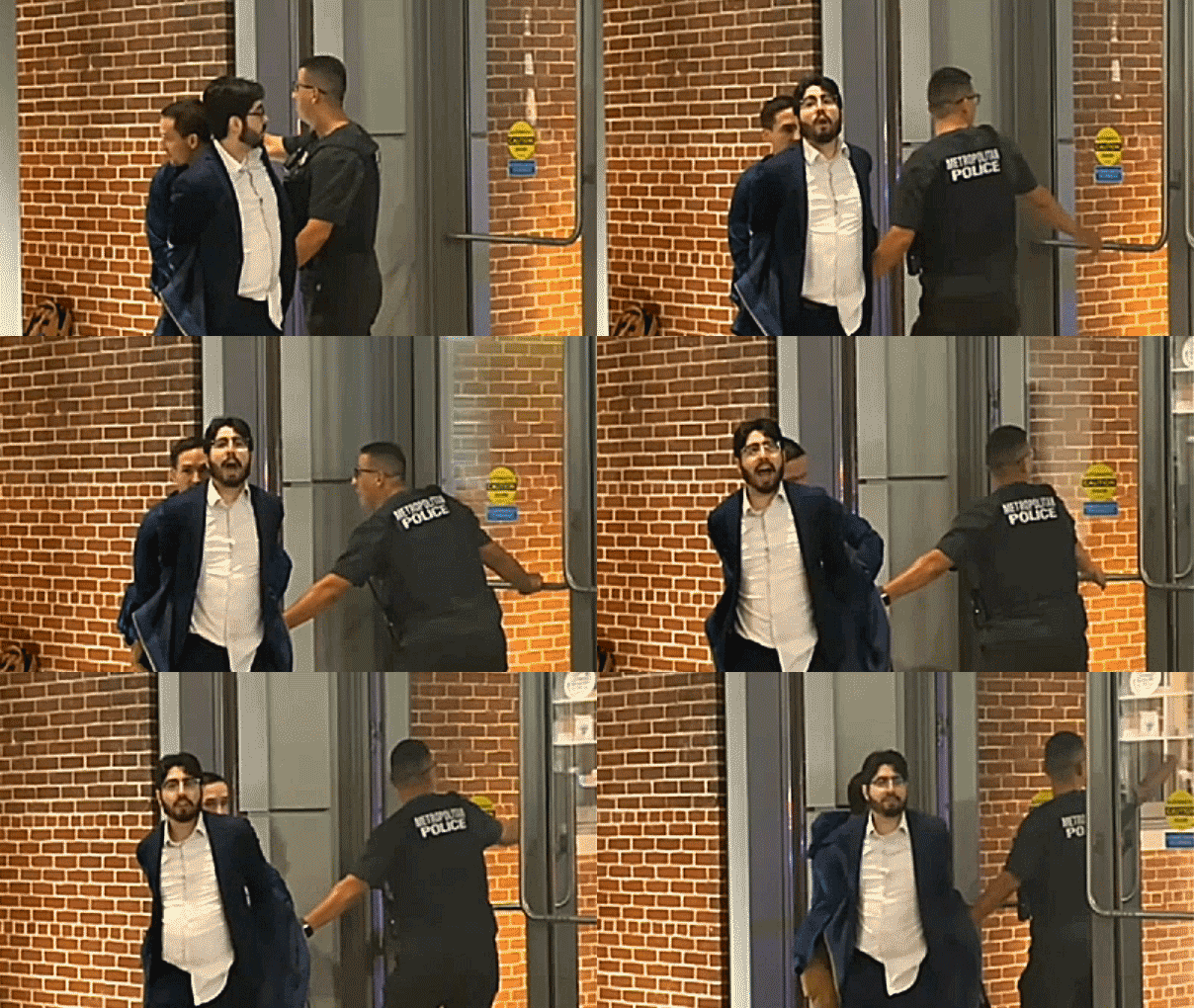
Delving into Elias Rodriguez’s mindset reveals a man who reportedly crossed a line from private discontent to public menace. Authorities allege he authored and published a manifesto, a digital diary of sorts, where he attempted to morally rationalize his violence, framing it as a noble stand against perceived injustices. In it, he seemed to invite others to join in similar acts of “political violence,” as if inspiring a wave of extremism that could engulf communities. This document, unearthed by investigators, paints a portrait of someone alienated, perhaps radicalized through exposure to polarizing narratives online or in real-world circles. Rodriguez’s background as a Chicago native adds layers to the story—growing up in a diverse city known for its resilience against division, how did he veer into this abyss? Friends and former acquaintances might recollect a once-ordinary guy, maybe struggling with personal demons, joblessness, or existential frustrations, who found solace in extremist ideologies. The red keffiyeh, a symbol often worn by Palestinians, became his banner, a cloth representing resistance twisted into a tool for terror. As he was apprehended by law enforcement inside the museum, his shouts of “shame on you” and “shame on Zio-nazi terror” at the horrified guests underscored his unrepentant stance. These moments humanize the tragedy in a haunting way: here was a man whose beliefs had blinded him so thoroughly that he could celebrate murder in the face of his victims’ fallen comrades. It’s a stark illustration of how ideology, when unchecked, can transform individuals into instruments of chaos, erasing empathy and replacing it with a cold calculus of revenge.
Remembering the Victims: Lives of Promise Lost
The two young souls lost that day—Sarah Milgrim and Yaron Lischinsky—weren’t just statistics in a news cycle; they were vibrant individuals with dreams and families who are now grappling with irreplaceable voids. Sarah, born and raised in Kansas, worked tirelessly for the Israeli Embassy, her life a testament to the American dream blended with international service. Friends describe her as outgoing, passionate about fostering dialogue, perhaps dreaming of world peace or carving out a career in diplomacy that honored her Jewish roots while embracing global perspectives. Yaron, an Israeli citizen embedded in the U.S. on official duties, was likely driven by a similar zeal for connectivity and security. In their prime years, they embodied hope—exchanging ideas at receptions like the one that night, bridging divides in a fractured world. Their deaths weren’t just about the embassy ties; they were personal tragedies for parents who raised kind children, siblings who shared laughs, and communities that cherished their contributions. The two embassy workers who survived, wounded and scarred, carry the physical and emotional tolls, reminding us of the human cost beyond the headlines. In a city like D.C., where policymakers weave intricate webs of alliances, these young diplomats represented the future of cooperation. Their loss feels profoundly unjust, a punch to the gut for anyone who believes in the power of education and good intentions to heal wounds. Reflecting on their stories, we see how one man’s darkness extinguished lights that shone brightly, leaving behind legacies of potential unfulfilled and hearts forever altered.
Facing Justice: Sweeping Charges and Harsh Penalties
The legal machinery has swung into action, with Rodriguez now facing a 13-count superseding indictment that escalates hisιος case from mere crime to terrorism. Previously charged with murder, firearm offenses, and hate crimes resulting in death, the new charges include acts of terrorism while armed, additional counts of first-degree murder and assault with intent to kill. Prosecutors, led by U.S. Attorney Jeanine Ferris Pirro, emphasize that these aren’t isolated acts but part of a broader strategy to instill fear and disrupt communal harmony. The charging document meticulously details the premeditation—the approach, the shootings, the post-attack declarations—all pointing to an ideologically driven motive that demands accountability. Some charges carry the ultimate penalty: death, while others mandate life without parole, underscoring society’s resolve to defend against such threats. Entities like the FBI, with Assistant Director Darren Cox underscoring the manifesto as evidence of encouragement for more violence, are treating this as a stark warning. In the courtroom, Rodriguez’s fate hangs in the balance, but the process is laborious, allowing time for evidence to build a case that could inspire policy changes in manhunting and countering radicalization. For victims’ families, this pursuit of justice offers a glimmer of closure, though no verdict can rewind the clock. It’s a human story of reckoning, where the law becomes a shield against the spread of hatred, aiming to prevent echoes of this tragedy in other venues.
Echoes of Broader Turmoil and Calls for Vigilance
This incident, unfolding against the backdrop of global tensions like those in Gaza and the Israel-Palestine conflict, amplifies conversations about extremism’s insidious reach into everyday lives. Rodriguez’s actions and words draw parallels to other high-profile cases, such as suspected jihadi plots or beach shootings linked to ISIS sympathies, highlighting how radical ideas can fester and erupt in peaceful settings. Officials like Pirro vow unyielding pursuit, ensuring the deceased are honored and the living protected from further intimidation. Yet, it prompts soul-searching: How do we combat ideologies that poison minds before they lead to violence? Communities, especially Jewish and diplomatic circles, might feel a heightened sense of vulnerability, prompting calls for enhanced security at cultural and embassy events. On a personal level, stories like this remind us of the ordinary heroes—first responders, witnesses who risked all to aid the wounded, and families forging ahead in grief. In humanizing terms, Rodriguez’s path might stem from isolation or online radicalization, a cautionary tale for parents, educators, and peers to engage those on the fringes. As we listen to Fox News articles or reflect on such reports, we’re urged to listen not just with ears but with hearts, fostering empathy to bridge divides before tragedy strikes again. The loss of Lischinsky and Milgrim isn’t forgotten; it’s a rallying cry for unity, urging society to choose dialogue over destruction in an ever-connected world rife with challenges. Too often, events like this fade into the news cycle, but their human toll lingers, shaping policies and personal convictions alike. In the end, this story isn’t just about crime—it’s about the human spirit’s resilience, the dangers of unchecked rage, and the unwavering quest for a safer, more understanding tomorrow. Community vigils, supportive networks, and global solidarity can emerge from such darkness, transforming pain into purpose and reminding us that in the face of terror, humanity’s best defense is compassion and vigilance.